
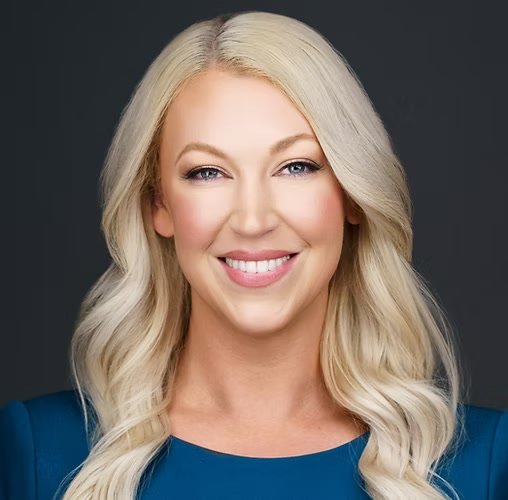
Theresa Campobasso
Senior Vice President, Aardwolf Global Solutions | Former U.S. Marine Corps Intelligence Officer
Theresa Campobasso is senior vice president at Aardwolf Global Solutions and a former U.S. Marine Corps intelligence officer who specialized in counterintelligence support to the Defense Intelligence Agency’s office of counterintelligence. Her expertise spans supply-chain security across the life sciences, with a deep focus on China and the Middle East.
Campobasso has joined Open Door Salon twice, opening and then extending the show’s series on China and the life sciences. In her most recent conversation she argued that the BIOSECURE Act is only an opening signal, and walked through what is coming next: the likely expansion of the rules to active pharmaceutical ingredients and precursors, the U.S. International Trade Commission’s investigation into Chinese state subsidies, and a June 2026 House bill that would add biotechnology to the COINS Act’s review of U.S. investment in China. She made the case that existing deals are unlikely to be grandfathered in, detailed the specific ways intellectual property is taken, and explained why the roughly 28 percent of top pharma deals tied to Chinese biotech is a concentration most dealmakers have stress-tested for the wrong risks.
In her first appearance, her central argument was that most companies do strong third-party risk management on the partner directly in front of them, then stop, and that is exactly where the risk begins. Obfuscated state ownership, Chinese government and military presence, and hidden foreign ownership, control, and influence (FOCI) tend to live in tiers three through five of the supply chain, below where almost anyone looks.
Across that conversation she covered intellectual-property and patent theft; forced-labor exposure under the Uyghur Forced Labor Prevention Act (UFLPA) and the “trust but verify” discipline it demands; and the BIOSECURE Act’s commercial-channel gap, where a private pharmaceutical company can still license molecules, co-develop IP, and run discovery on Chinese AI platforms untouched by the law. She also read the geopolitics: how the war in Iran and the closure of the Strait of Hormuz are handing China an opening on energy security.
Her throughline across both visits is an optimistic one. Mapping a supply chain down to the raw material, “the hole in the ground” it came from, is possible today in a way it was not five years ago, because big-data tools plus generative and agentic AI can surface hidden connections across vast datasets at a scale and speed no human team could.
Frequently Asked Questions About Theresa Campobasso
What is Theresa Campobasso an expert in?
Theresa Campobasso is an expert in supply-chain security across the life sciences, with a particular focus on China and the Middle East. Her work covers counterintelligence, foreign ownership, control and influence (FOCI), intellectual-property protection, and the national-security risks hidden inside pharmaceutical and biotech supply chains.
Who is Theresa Campobasso?
Theresa Campobasso is Senior Vice President at Aardwolf Global Solutions and a former U.S. Marine Corps intelligence officer who specialized in counterintelligence support to the Defense Intelligence Agency. She has appeared twice on Open Door Salon, the life sciences podcast hosted by Lori Ellis, leading its series on China and the life sciences.
How does Theresa Campobasso approach supply-chain risk in biotech?
Theresa Campobasso argues that most companies assess the risk of the partner directly in front of them and then stop, when the real exposure usually sits three to five tiers down the supply chain, where obfuscated state ownership and foreign ownership, control, and influence (FOCI) tend to live. Her approach is to trust but verify, mapping a supply chain all the way down to the raw material it came from.
What organizations is Theresa Campobasso affiliated with?
Theresa Campobasso is Senior Vice President at Aardwolf Global Solutions, a firm focused on supply-chain and security risk. She previously served as a U.S. Marine Corps intelligence officer, providing counterintelligence support to the Defense Intelligence Agency's office of counterintelligence.
On Open Door Salon
“The Regulatory Wave Reshaping China Biotech Deals”
Theresa Campobasso · June 2026
Episode page & show notes on Open Door Salon
In this episode
- Why China regulation matters now
- What the BIOSECURE Act actually covers (the 5 named companies)
- Why BIOSECURE is an early signal, not the finish line
- The next targets: APIs, raw materials, chemical precursors
- The USITC investigation and the COINS Act
- Does this hinder innovation? The window to act now
- Will existing China deals be grandfathered in?
- The different ways IP actually gets stolen
- 28% of top pharma deals are China, now what?
- Medtech, counterfeit hardware, and the Warp Speed catch
- How to read where the regulation is headed next
Topics
Watch on Open Door Salon
Open Door Salon brings life-sciences leaders into candid conversation. Every Monday, the week's takeaways land in your inbox.
Subscribe on Substack →