Theresa Campobasso, Ex-Marine Intel Officer, on the Regulatory Wave Reshaping China Biotech Deals
What you’ll learn
- Exactly what the BIOSECURE Act restricts, and the five Chinese companies the bill was built around
- Why it's an early signal, not the finish line, and what regulators target next
- What the COINS Act and the USITC investigation mean for China deals
- Whether existing deals get grandfathered in, and the red flags that make a partner high-risk
- Why 28% of top pharma deals run through China, and the one diligence question BD teams skip
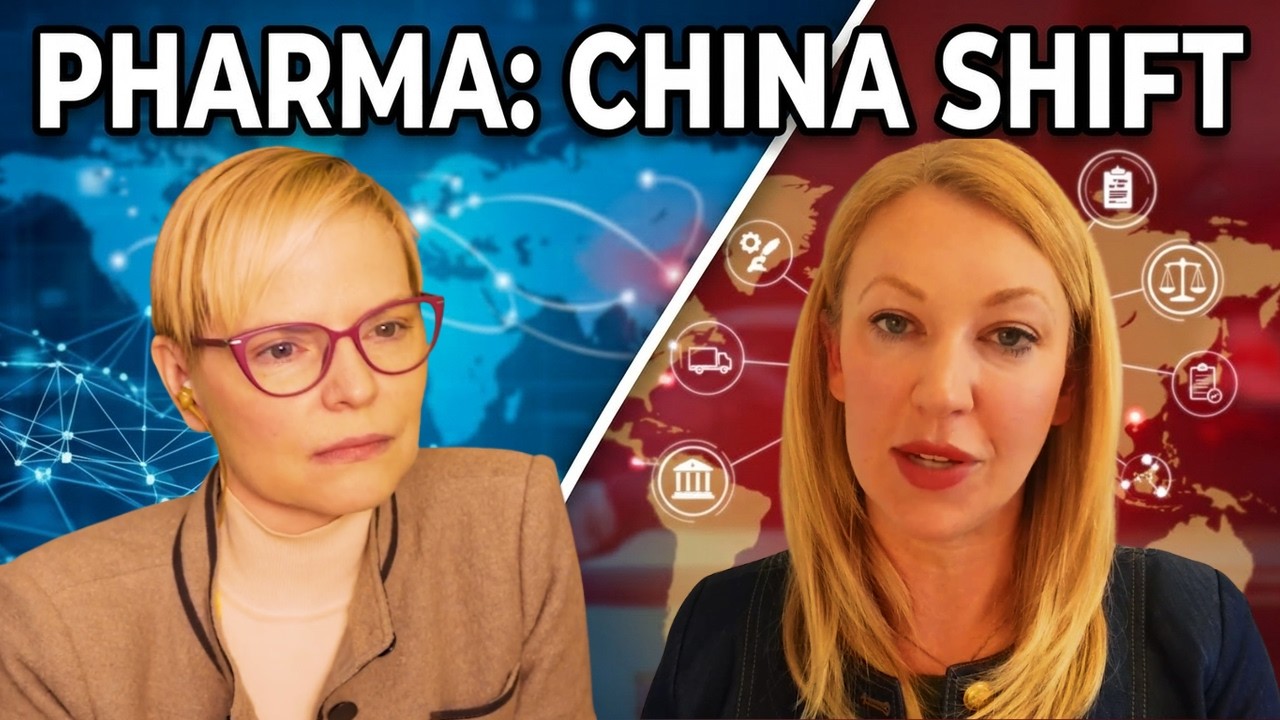
In her first appearance on Open Door Salon, Theresa Campobasso explained why the BIOSECURE Act, on its own, would not protect American pharma from China. In this follow-up conversation with host Lori Ellis, she returns to a landscape that has moved fast, and makes the case that BIOSECURE was never the finish line. It was the opening signal.
For a plain-English guide to the specific legislation at the center of this shift, read What Is the COINS Act? A Guide for Biotech Dealmakers.
Campobasso is a senior vice president at Aardwolf Global and a former United States Marine Corps intelligence officer who supported the Defense Intelligence Agency’s Office of Counterintelligence before moving into supply-chain security work for the life sciences. Her read on the current regulatory wave is built on that background: this is threat-based regulation, and it is accelerating.
What the BIOSECURE Act actually covers
The BIOSECURE Act was built around five Chinese companies: Beijing Genomics Institute, MGI Tech, WuXi AppTec, WuXi Biologics, and Complete Genomics. The version Congress enacted in December 2025 names no companies. It works from a government list. A biotechnology company of concern is a company on the Pentagon’s list of Chinese military companies that OMB identifies as a biotech supplier. That list includes BGI and MGI Tech. WuXi AppTec was added in June 2026, but in August a federal court barred the government from enforcing that designation while the company’s challenge proceeds. The Office of Management and Budget can designate others, and OMB’s first full list is due by December 18, 2026. Once its rules take effect, federal agencies may not buy biotech equipment or services from those firms, may not contract with companies that use them on the contract, and may not let grants or loans pay for them. Arnold & Porter’s summary covers the details. By her reading, the enacted list and the federal-contract limit are where the rules start.
Where the rules go next
Campobasso expects the regulated perimeter to widen in two directions: more named entities, and more use cases. The use case she watches most closely is active pharmaceutical ingredients, the APIs, raw materials, and chemical precursors most drugs are built from. Those sit largely outside the law today, and they are also where the United States carries real concentration risk, because a great deal of API supply traces back to one or two locations in China or India. That kind of exposure is difficult to unwind quickly, which is exactly what makes it the obvious next target.
From procurement to investment: the COINS Act
Two developments sharpened the picture. The United States International Trade Commission opened a formal investigation into Chinese state subsidies, market overcapacity, and pricing practices in biotechnology, with a report due by January 22, 2027. And a bipartisan House bill would add biotechnology to the COINS Act, the Comprehensive Outbound Investment National Security Act, requiring government screening of US investment in Chinese biotech. Under that proposal, licensing deals, joint ventures, and equity investments could be subject to Treasury review, with Defense consulted. BIOSECURE was about who a company can buy from. This, Campobasso explains, is about who it can invest in, and it would extend the same logic from a short list of companies to whole categories.
Don’t count on grandfathering
Asked the question many dealmakers are quietly asking, what happens to arrangements already signed, Campobasso is direct. She would be very surprised to see grandfathering, because this is not regulation written for trade or compliance reasons. It is threat-based, built on a documented pattern of Chinese biotech firms leveraging American patient data and taking intellectual property. The companies that come through well, she argues, are the ones using the current window, while the next rules are still only signals, to map their exposure before the line is drawn. As enacted, the BIOSECURE Act does give contracts signed before its rules take effect a five-year wind-down. The red flags are knowable in advance: Chinese state funding, a government-designated innovation zone, or a Chinese Communist Party committee embedded in a company’s governance, structures that are common and frequently undisclosed.
The many ways IP leaves
Campobasso describes three paths for intellectual property to walk out the door, and only one looks like a hack. The first is direct access through a partnership, where a company shares IP expecting it to be protected and it is not. The second is insider threat, phishing, solicitation, sometimes a person. The third is the one people underestimate: patent theft. China’s patent process moves faster than the US system, so a company can take unpatented IP, register it there first, and leave the original inventor unable to secure it. Her comparison is to lifting an artist’s design and selling it with no credit and no royalty, at the scale of a drug molecule.
Twenty-eight percent, and the question BD teams skip
Roughly 28 percent of the top twenty pharma deals have been tied to Chinese biotech. Campobasso’s concern is not that the deals happened, but that most were stress-tested for the wrong risks. Business-development teams run their standard diligence, IP ownership, clinical data, regulatory pathway, financial terms, and stop there. What they tend not to ask is who else has a claim on the molecule, and what happens to the deal if the partner becomes a restricted entity tomorrow. That second question is the one that matters now, and it is answerable before signing.
Medtech, hardware, and reading the signals
The risk does not stop at molecules. For medtech the exposure shifts to hardware, where counterfeit and compromised components are well documented. Campobasso points to Operation Warp Speed, where nearly half a billion dollars in fraudulent acquisitions were flagged, much of it tied to China, and caught only because the effort ran a threat-based screen over its purchasing. Reading where the regulation goes next, she says, is less mysterious than it looks: watch the hearing texts, the pace of new bills, and the topics that keep recurring. When the conversation turns to APIs or medtech, that is the tell. Most of it is public weeks ahead. It only feels sudden if no one is reading it.
Watch the full conversation with Theresa Campobasso above, and subscribe to Open Door Salon for more candid conversations with the people who build, fund, and fight for the life sciences.
The BIOSECURE Act is not the end-all be-all. I believe it should instead be seen as an early signal of where the regulatory environment is going.
Key takeaways
- BIOSECURE is where the rules start: the enacted law works from a government list of companies, and Campobasso expects the perimeter to expand.
- The next target is ingredients: APIs and precursors, where US concentration runs deepest.
- A House bill would move the line from procurement to investment: adding biotech to the COINS Act would put licensing, JVs, and equity under Treasury review.
- Don't count on grandfathering in the next rules: BIOSECURE gives existing contracts five years, and Campobasso would be surprised to see later rules do the same.
- IP leaves three ways: partner access, insider or phishing, and patent acceleration.
- Around 28% of the top pharma deals run through Chinese biotech (a figure raised in the conversation), most stress-tested for the wrong risks.
- The medtech risk is hardware. Operation Warp Speed caught nearly $500M in counterfeits by asking.
- The signals are public: hearing texts telegraph the next rule weeks ahead.
Key Questions, Answered
What does the BIOSECURE Act actually restrict?
It is an act that is focused on five Chinese companies... if you are a company in the US that has any federal contracts, you may not use those five companies for any genomic sequencing, for any drug development services, for anything that touches American patient data. And now that is the law.
The bill was built around five companies: BGI, MGI Tech, WuXi AppTec, WuXi Biologics, and Complete Genomics. The enacted law replaced the names with a government list.
Is the BIOSECURE Act the end of China biotech regulation, or just the start?
I absolutely do believe that the BIOSECURE Act is not the end-all be-all. I believe it should instead be seen as an early signal of where the regulatory environment is going.
The problem is far larger than five companies and three use cases, so the regulated perimeter will expand.
What will US-China biotech regulation target next?
Active pharmaceutical ingredients or APIs, raw materials, the chemical precursors that most drugs are built from... right now those are free and clear... APIs that is an area where the United States does have pretty significant concentration risk.
The next move is from companies to ingredients, where US dependence runs deepest.
What are the USITC investigation and the COINS Act?
Any licensing deals, any joint ventures, any equity investments in China could be subject to both Treasury and Department of War reviews.
The USITC opened an investigation into China's state subsidies and pricing in biotech (it reports to Congress within 12 months). A House bill to add biotech to the COINS Act would extend BIOSECURE-style restrictions to whole categories of Chinese biotech.
Will new China rules hurt biotech innovation and investment?
There are ways... for investors, for executives, for anybody listening to this podcast to buy down their risk right now today, before these things are enacted into regulation... the folks that are going to be best suited to come out of this with the least amount of impact are those that are using this window right now... to understand their exposure before that perimeter gets drawn.
There is a window between the signal and the statute. The companies that map their exposure now come out ahead.
Will existing China biotech deals be grandfathered in?
I would be very surprised if there was a grandfathering... because we're looking at real, legitimate risks... a real substantiated and evidence-driven pattern of behavior.
Red flags: state funding, or a Chinese Communist Party committee in the company's governance. Both are common and often undisclosed.
How does biotech IP actually get stolen?
The Chinese patent process is much more rapidly executed in China than it is in the United States... sometimes the IP theft will take the form of patent theft... the US company who originated the IP is unable to secure that now because they've registered it first.
Three routes: direct access through a partner, insider threat or phishing, and patent acceleration.
What does it mean that 28% of top pharma deals run through China?
BD teams are doing the same standard due diligence that they've always done... IP ownership, clinical data, regulatory pathways, and financial terms. And really, they're kind of stopping there because that's always worked for them... before they do the deal, if this partner becomes a restricted entity tomorrow, what happens to our business? ... that's a knowable question if you ask it.
By one figure raised in the episode, nearly a third of the top pharma deals run through Chinese biotech. The question BD teams skip: what happens if this partner becomes a restricted entity tomorrow.
How does the China risk change for medtech and hardware?
Almost half a billion dollars of fraudulent acquisitions were being considered... as part of Operation Warp Speed... fortunately they did have a very threat-based lens... if they hadn't been asking those questions... the US government would have conducted half a billion dollars of fraudulent acquisitions.
For medtech the risk shifts from molecules to counterfeit and compromised hardware.
How can you see new China regulations coming before they land?
As hearings are published and the text of those are published, you can read those and get a great sense of the follow-on actions... see where the trends are headed.
The signals are public weeks early; the rules feel sudden only if you're not reading them.
Resources
- BIOSECURE Act (enacted) Section 851 of the FY2026 NDAA (S.1071, 119th Cong.), signed into law December 18, 2025
- USITC Investigation No. 332-610 Impact on U.S. Industry of China's State Support and Pricing Practices in the Biotechnology Sector
- COINS Act Comprehensive Outbound Investment National Security Act; the biotech expansion is the proposed Biotech Investment National Security Act (BINSA)
- The five companies in earlier drafts BGI, MGI Tech, WuXi AppTec, WuXi Biologics, Complete Genomics
- Operation Warp Speed counterfeit screening GAO / DoD threat-based acquisition reporting
- NIH foreign-funding restriction referenced in the episode
Need the life-sciences signal but short on time?
Get the free quarterly briefing: every guest from the quarter, in one sitting. What decides whether a therapy reaches a patient, gets funded, and can be trusted.