Former FDA Commissioner Robert Califf on RFK Jr., the FDA Exodus, and China
What you’ll learn
- Why the loss of institutional knowledge at the FDA hits medical product developers years before an application is ever filed
- How political overruling of career scientists differs from setting policy, and why Califf calls the current pattern a kleptocracy
- What actually broke with Elsa, the FDA's AI tool, and why the failure was budgetary rather than technical
- The real numbers behind China's research lead, and why Califf believes containment is a doomed strategy
- Where Operation TrialBlazer aims, and why a former Commissioner thinks it is pointed at the wrong bottleneck
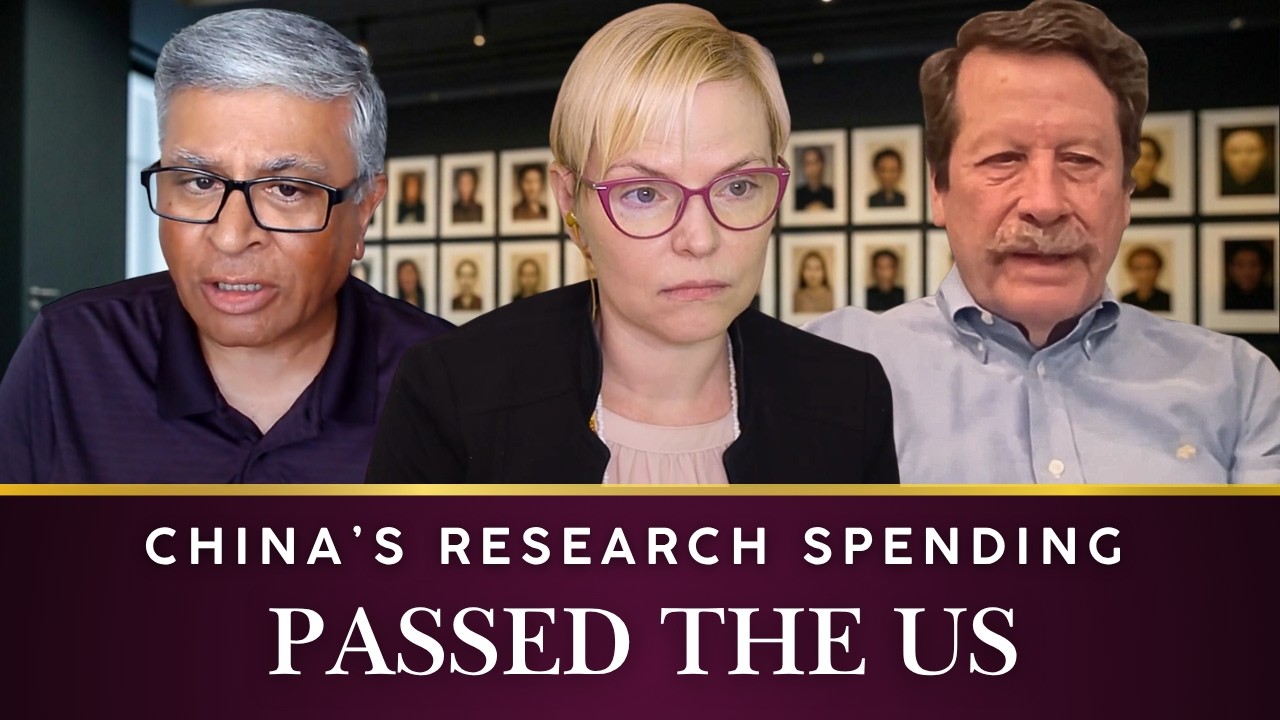
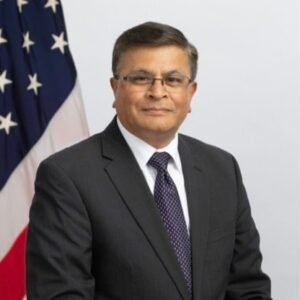
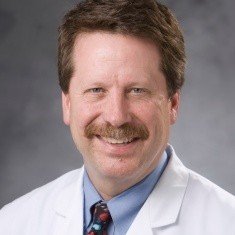
Robert Califf is the only person to have served twice as Commissioner of the U.S. Food and Drug Administration, first in 2016 and again from 2022 to 2025. Vid Desai spent six years modernizing the agency’s technology, first as Chief Technology Officer and then as the first Chief Information Officer in FDA history to report directly to the Commissioner. Both left in 2025. On this episode of Open Door Salon, they describe what they see happening to the agency now, and what it is costing the people who develop medical products.
What the turnover actually costs
Host Lori Ellis opens with the churn as she counts it: “six different CBER directors, six different CDER directors, we have an acting commissioner right now.” Her question is what that kind of turnover does to an agency, not only in the moment but over the years that follow.
Califf does not soften his answer. He calls it “calamitous for the United States and for the FDA,” then reframes the disagreement as a question about the civil service itself. “If you believe that there is value in having a civil service that provides continuity and standards and methods of doing things that are independent of politics, then I think you’d have to believe that we’re undergoing a very dangerous time right now.” He points to Project 2025 as the place where the opposing view is written down plainly, and notes that the document is clear about tearing the agencies down and silent on how they get rebuilt.
Desai’s concern is operational. The institutional knowledge, he says, “is obviously pretty much gone,” and it is not a line item that can be refilled by hiring. He arrived at the FDA from private industry and took six months to find his footing, a period he describes as genuinely difficult. Multiply that by thousands of positions turning over with every change of administration, he argues, and the agency never reaches the point where it can do anything significant.
Califf sharpens what this means for industry specifically. Most of the consequential work at the FDA happens long before a marketing application is filed, in the meetings where sponsors and reviewers work out what evidence will count. “If the people at FDA have no experience and they don’t understand how the system works, how can you bank on what they say five years later when you have to bring all this to the forefront to put your application in?”
Referees, coaches, and political overruling
Asked whether he expects scientific decisions to be overruled for political reasons, Califf says he has no inside knowledge of the current administration but describes what it looks like from outside as a different philosophy entirely, a view that all these decisions should be political. He goes further: “It looks somewhat like a kleptocracy, that is the political oversight is heavily influenced by who’s giving money and who’s benefiting, as opposed to the scientific merit.”
He offers a framing that runs through the rest of the conversation. The FDA is a referee. It does not own the team and it does not write the rules of the game, which are set by laws passed by Congress. Partway through he corrects his own analogy, and the correction is the sharper version: “I don’t see the commissioner as a referee. I see the civil servants as referees. I see the commissioner is more like the coach.” Referees who do not know the rulebook make bad calls, and it is the coach’s job to argue them.
On the national priority voucher program, Califf’s objection is procedural rather than ideological. He supports incentives for genuine national priorities, but he wants the priority list set by rule and applied by impartial civil servants, not decided case by case by political appointees. “If we prioritize everything then nothing has priority.” He is blunt about the failure mode: a celebrity making a phone call that turns into a priority designation is not a system.
He also flags a quieter problem, one he thinks people interested in FDA history should read for themselves. A recent reversal memo justified overturning a predecessor’s decision on the grounds that “my predecessor had overruled the civil servants twice but there is no record of why she did it.” The absence of an administrative record, Califf notes, left nothing to argue about.
Elsa, AI, and the money underneath it
Ellis raises Elsa, the FDA’s generative AI tool, which was announced and then found within months to be hallucinating. Desai’s answer complicates the easy story. The Elsa groundwork started while he and Califf were still at the agency, including model testing and proof-of-concept work with the Oncology Center of Excellence. The problem he sees is not the technology but the funding structure beneath it.
Temporary money, he explains, buys impressive things and then runs out. “AI is great, but it’s not cheap… eventually those funds go out and then what do you do?” Roughly 40 to 50 percent of an initial investment is needed just for day-to-day operations, and without a plan to replace temporary funds the program shuts down. He has watched it happen to COVID programs and infant formula oversight programs already.
Califf pushes back on the premise that AI agents reduce headcount. He expects the opposite at the FDA, because the agency has been underfunded for so long that freeing staff from routine work surfaces demand that was always there and never met. He points to the last two user fee negotiations, where the biggest ask from mature drug and device companies was not faster timelines but more meetings, and the agency simply did not have the people to hold them.
Desai closes the section with an example from outside healthcare. IKEA found its AI could answer about half of routine call center questions, then looked at the half it could not answer and discovered most were requests for design help. Rather than cut staff, the company retrained them into a new design service. His conclusion is about the question, not the tool: ask an AI how to cut costs and it will tell you, ask how to grow revenue and you get a different answer entirely.
China, Operation TrialBlazer, and the missing strategy
The last policy section is the one with the sharpest numbers. Desai says that last year, for the first time, China’s research funding exceeded that of the United States, roughly $1.3 trillion against about $1.2 trillion, at the same moment U.S. federal research funding is being cut. “We’re entering a fight with literally our hands tied behind our back,” he says.
Califf’s read is built on direct experience. He helped start a joint American-Chinese university outside Shanghai and ran clinical trials in the country. What strikes him is the absence of internal conflict of interest: a unitary national mission to lead in biotechnology, against a fragmented and litigation-wary American system. “You can do a phase one trial in China for a third the cost and 6 months quicker than you can in the US and Europe.”
On Operation TrialBlazer, the HHS initiative to accelerate U.S. clinical research, Califf is supportive of the attention and skeptical of the target. The bottleneck, he argues, is not the FDA. It is research sites that are slow, expensive, and bureaucratic, structured to protect revenue and guard against lawsuits.
His conclusion is the line that should worry anyone building a China strategy around containment: “trying to wall ourselves off from China is a doomed strategy. It won’t work… we got to figure out how to coexist with China. We can’t, we don’t have the power to hold China back.” He adds, plainly, that he wants to be friends and not enemies.
Why they did it
Ellis closes with two questions she asks every guest. Califf traces his career to a specific moment: taking over an intensive care unit the same year the first angiogram was performed on a patient having a heart attack, when you could see the clot and had nothing to treat it with. “We basically had prayer, morphine, and nitrates. That was pretty much it for treatment.” The hardest decision he names is a Christmas Eve when four consecutive patients died in front of him in the middle of an experimental protocol, and he had to decide to keep going.
Desai’s hardest decisions are quieter: the constant tension between announcing work early and waiting until it is ready. He calls his six years at the FDA the best of his career and the lowest paid, and says the one job he would consider returning to is the one he left unfinished.
Trying to wall ourselves off from China is a doomed strategy. It won't work.
Key takeaways
- Turnover compounds. Desai took six months to find his footing at the FDA coming from private industry. Multiply that across thousands of positions and an administration never reaches the point of doing anything significant.
- The damage lands pre-application. Most consequential FDA work happens in the meetings before a marketing application, so inexperienced reviewers create risk that surfaces five years later.
- Referees versus coach. Califf's framing: civil servants are the referees, the commissioner is the coach. The danger is referees who do not yet know the rulebook.
- Process, not ideology, on vouchers. Califf supports national priority incentives but wants them set by rule and applied impartially. If everything is a priority, nothing is.
- Records matter. A recent reversal was justified partly because no administrative record existed for the original decision, leaving nothing to argue against.
- Elsa's problem was funding. The AI groundwork predated the announcement. Temporary money buys launches; 40 to 50 percent of initial investment is needed just to operate.
- AI will not shrink the FDA. Califf expects freed capacity to surface unmet demand, pointing to industry's repeated ask for more meetings rather than faster timelines.
- China passed the US on research spend. Roughly $1.3 trillion against $1.2 trillion, with phase one trials running at a third the cost and six months faster.
Key Questions, Answered
What does rapid leadership turnover do to a federal health agency?
I think this is calamitous for the United States and for the FDA
Califf frames the turnover as a question about whether an independent civil service has value at all.
Why is institutional knowledge so hard to replace at the FDA?
the institutional knowledge is obviously pretty much gone
Desai notes the churn extends even to acting positions, so there is no stable layer underneath.
How long does it take a new FDA hire to become effective?
It took me six months before I found my feet at the FDA
Desai came from private industry and describes the first six months as genuinely difficult.
How does FDA staff inexperience affect drug and device developers?
if the people at FDA have no experience and they don't understand how the system works, how can you bank on what they say five years later when you have to bring all this to the forefront to put your application in?
Most consequential FDA interaction happens years before an application is filed.
Are FDA decisions now being overruled for political reasons?
It looks somewhat like a kleptocracy, that is the political oversight is heavily influenced by who's giving money and who's benefiting, as opposed to the scientific merit
Califf says he has no inside knowledge but describes what it looks like from outside.
Is the FDA Commissioner a referee or something else?
I don't see the commissioner as a referee. I see the civil servants as referees. I see the commissioner is more like the coach
Califf corrects his own analogy: referees who do not know the rulebook make bad calls, and the coach has to argue them.
Will the national priority voucher program survive?
if we prioritize everything then nothing has priority
Califf supports incentives for real national priorities but wants the list set by rule, not case by case.
Why did the FDA's Elsa AI tool run into trouble?
AI is is is great, but it's not cheap
Desai says the groundwork started before the announcement; the unsolved problem was sustaining funding, not the technology.
Will AI reduce the number of people the FDA needs?
the biggest demand from the mature industries and that is I'm talking about mostly drugs and devices was for more meetings not for faster timelines
Califf expects freed capacity to surface unmet demand that has always existed.
Has China overtaken the United States on research funding?
for the first time... China's research funding exceeded that of the US
Desai puts it at roughly $1.3 trillion against about $1.2 trillion, as US federal funding is being cut.
Should the US try to decouple from China in biotech?
trying to wall ourselves off from China is a doomed strategy. It won't work
Califf argues for an American strategy built on coexistence, noting the US lacks the power to hold China back.
Is the FDA the real bottleneck in US clinical trials?
I don't think the FDA is the place to focus the activity. The issue is we have research sites that take forever and are very expensive and bureaucratic
On Operation TrialBlazer, Califf supports the attention but says the constraint sits at the research sites.
Resources
- FDA Actions to Accelerate and Modernize Early and Late-Stage Clinical Development The FDA's own page for Operation TrialBlazer, the HHS initiative discussed at 32:50. Note the spelling: TrialBlazer, a pun on clinical trials.
- Robert Califf — FDA Commissioner biography The FDA's official record of Califf's two terms as Commissioner, 2016 to 2017 and 2022 to 2025.
- FDA Center for Drug Evaluation and Research (CDER) One of the two review centers whose director turnover Lori Ellis raises at the top of the episode.
- FDA Center for Biologics Evaluation and Research (CBER) The second review center named in the opening question.
- Duke Clinical Research Institute The clinical research organization Califf founded in 1996, referenced in his account of early thrombolytic research.
Need the life-sciences signal but short on time?
Get a free quarterly briefing: four pages on what life-sciences operators are actually saying about Biosecure, AI hype vs. substance, and the $50,000 cell-therapy question. Ten minutes, in your inbox.