
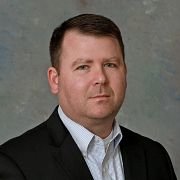
Matthew Hewitt
VP & CTO, Manufacturing Business Division, Charles River Laboratories | Cell & Gene Therapy Manufacturing
Matthew Hewitt is the vice president and chief technical officer of the manufacturing business division at Charles River Laboratories. He oversees the company’s advanced-therapy contract development and manufacturing organization (CDMO), which produces plasmids, viral vectors, and cell therapies, as well as its multi-modality testing and microbial-sterility-solutions businesses. He has spent his career at the intersection of immunology, synthetic biology, and the manufacturing of advanced therapeutics.
Before Charles River, Hewitt led biologics and advanced-therapeutic CMC at Lonza, where his teams launched the Cocoon manufacturing platform for automated, patient-scale production of autologous cell therapies. Earlier, he designed cell therapies using synthetic biology and logic gates in industry, and he began his advanced-therapeutics career at the University of Pennsylvania, as associate director of the immunology core within the gene therapy program led by James Wilson. A PhD immunologist, he earned his doctorate in physiology and immunology from the University of Alabama at Birmingham and completed postdoctoral training at Johns Hopkins University. He also holds roles across the field with the Alliance for Regenerative Medicine and the International Society for Cell and Gene Therapy, and serves on the board of the Coriell Institute for Medical Research.
Hewitt appeared on Open Door Salon alongside Jeff Holder, a partner and managing director at L.E.K. Consulting, for a conversation on why only a fraction of eligible patients receive approved cell and gene therapies. Hewitt’s central, and deliberately contrarian, argument was that manufacturing cost is not the true barrier to access: the price of these therapies, he contended, has never been tightly linked to the cost of making them, and the field’s growth reflects a problem of supply rather than demand.
Across the conversation he and Holder examined the structural obstacles to broader adoption: reimbursement systems built around monthly pharmacy payments rather than one-time cures, the question of whether cell therapies should be treated as procedures rather than drugs, and the education gap among the community clinicians who manage most cancer patients. Hewitt reframed the industry’s “vein to vein” manufacturing language as a “brain to vein” challenge, arguing that the patient journey begins when a clinician understands the therapy well enough to recommend it.
He grounded the discussion in the human stakes of the work, describing the patient days his teams hold at Charles River and the hardest moments of his career: telling desperate parents that an experimental therapy will not arrive in time for their child. The science, he noted, only matters because of the people it is meant to reach.
Frequently Asked Questions About Matthew Hewitt
What is Matthew Hewitt an expert in?
Matthew Hewitt is an expert in cell and gene therapy manufacturing, spanning plasmids, viral vectors, and cell therapies, at the intersection of immunology, synthetic biology, and advanced-therapeutic CDMO operations.
Who is Matthew Hewitt?
Matthew Hewitt is the vice president and chief technical officer of the manufacturing business division at Charles River Laboratories, where he oversees its advanced-therapy CDMO. A PhD immunologist, he previously led biologics and advanced-therapeutic CMC at Lonza, where his teams launched the Cocoon manufacturing platform, and began his career in the gene therapy program at the University of Pennsylvania. He appeared on Open Door Salon, the life sciences podcast hosted by Lori Ellis.
How does Matthew Hewitt think about cell and gene therapy access?
Matthew Hewitt makes the deliberately contrarian argument that manufacturing cost is not the true barrier to access, contending that the price of these therapies has never been tightly linked to the cost of making them and that the field's growth reflects a problem of supply rather than demand. He reframes the industry's “vein to vein” manufacturing language as a “brain to vein” challenge, because the patient journey begins when a clinician understands the therapy well enough to recommend it.
What organizations is Matthew Hewitt affiliated with?
Matthew Hewitt is vice president and chief technical officer of the manufacturing business division at Charles River Laboratories. He holds roles with the Alliance for Regenerative Medicine and the International Society for Cell and Gene Therapy, serves on the board of the Coriell Institute for Medical Research, and previously worked at Lonza and the University of Pennsylvania.
On Open Door Salon
“Why Only 20% of Eligible Patients Get Cell Therapy & What Needs To Change”
Matt Hewitt & Jeff Holder · March 4, 2026
Episode page & show notes on Open Door Salon
In this episode
- JPM 2026: cell & gene therapy interest — real or cooling?
- Manufacturing cost is not the real barrier to adoption
- "Do boring better" — the 2026 investor thesis for modular modalities
- The reimbursement problem: monthly payments vs. one-time cures
- Should cell therapy be classified as a procedure, not a drug?
- "The cheapest patient is a dead patient" — European payer realities
- 80% of cancer patients are managed in community settings
- "Brain to vein" — why clinician education is the real bottleneck
- Only 20% of eligible US patients get cell therapy (5% globally)
- Cell therapy reached 600 pipeline candidates in 8 years — vs. 22 for antibodies
- The hardest decision: telling parents you can't help their child
Topics
Watch on Open Door Salon
Open Door Salon brings life-sciences leaders into candid conversation. Every Monday, the week's takeaways land in your inbox.
Subscribe on Substack →