
When Should Reimbursement Strategy Start for a Device?
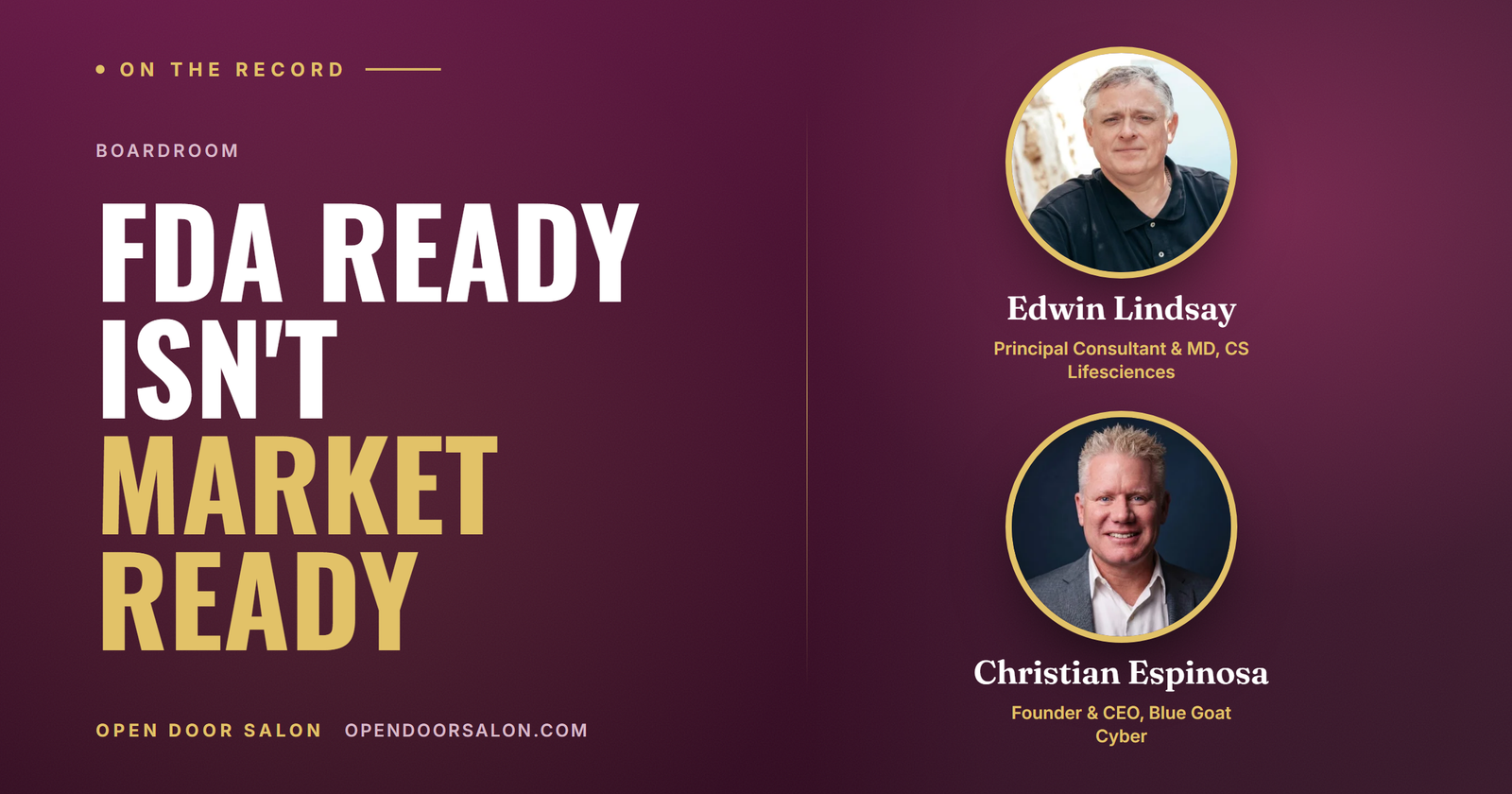
Reimbursement strategy for a medical device should start at the concept stage, alongside product design, not after FDA clearance. By the time a device is cleared, the questions that decide whether anyone will pay for it are already years behind schedule. On Open Door Salon, Edwin Lindsay, principal consultant and managing director at the regulatory consultancy CS Lifesciences, laid out why the payer is the launch force founders plan for last and regret first.
Why is reimbursement the force founders underestimate?
Teams pour their attention into whether the device works and whether the FDA will clear it. Whether a payer will cover it is treated as a later problem, and that ordering is the trap.
"Companies make a mistake that they run expensive clinical studies to satisfy the FDA, but it doesn't satisfy the payer."
A study can be designed perfectly for regulatory clearance and still tell a payer nothing it needs to decide on coverage. When that happens, the company has spent millions proving the wrong thing and has to go back and prove it again. Investors screen for the same instinct: two brain health investors say the founder trait they weigh most is a scientist who treats the venture as a commercial one from the start.
How early is early enough?
Lindsay's answer is unambiguous: as early as possible, while the product is still being designed. Christian Espinosa, founder and CEO of Blue Goat Cyber, framed it as reverse-engineering the launch, working backward from every requirement that will eventually matter so you can plan for it now.
"If I can reverse engineer all these things that matter, or most of them, I can reduce the risk of my launch because I can start planning for these things in advance."
Reimbursement, market, and security decisions made at the design stage cost far less than the same decisions forced after clearance, when changing anything means redoing work.
What is the most expensive reimbursement mistake?
Lindsay described a company that assumed its device would slot into an existing reimbursement code. It secured its clearance, then discovered no one would pay.
"They presumed that it would fit into an already existing code… it took them nearly five or six years to get the reimbursement codes."
For those five or six years the product existed, worked, and could not be sold at any real scale. The company survived by selling into private clinics that would pay out of pocket, enough to stay alive but nowhere near the trajectory it had promised investors.
What do you do while you wait for a code?
The interim is brutal, and Lindsay was honest about it. Host Lori Ellis called it a new level of scrappy, and the description fit. A company in that position runs studies where it can, sells to private buyers who will pay directly, and sometimes offers the product at or below cost just to build usage and evidence.
"You've got to move fast to get the reimbursement code and get convince the payers to pay you. And that's the bit that takes time."
The people using the device may love it, but affection does not fund a business plan. Without a code, adoption stays capped at whoever will pay out of pocket.
What is the practical rule for a medtech founder?
Bring reimbursement into the room at concept, not after clearance. Ask whether a code exists for what the device does or diagnoses, design the clinical evidence to satisfy the payer as well as the FDA, and confirm there is a workflow a clinician will actually use and a buyer who will actually pay. FDA readiness and market readiness are different questions, and the second one takes longer. The same working-backward logic applies to the questions sitting next to reimbursement: whether the FDA will treat the product as a cyber device at all, and what the agency now expects from the software development process behind it. This was one of the three forces Lindsay and Espinosa walked through on Open Door Salon, drawn from the recorded, on-the-record conversation. Companies pressure-testing their own path to revenue can work with Open Door Salon to reach the operators who have lived it.