Emily Whitehead: The CAR-T Treatment That Saved Her Life | Tom Whitehead & Tori Lee
What you’ll learn
- Why 22 months of standard chemotherapy failed Emily Whitehead before CAR-T was ever offered
- What the first pediatric CAR T-cell treatment actually looked like, including the two-week coma
- Why eligibility rules still require a child to relapse before the treatment is on the table
- How manufacturing went from six weeks to under a week, and where the cost floor sits now
- What survivorship looks like when the late effects arrive from three directions at once
Emily Whitehead spent twenty-two months in standard treatment for leukemia. It failed her twice. She was cancer-free twenty-three days after receiving a therapy that had never been given to a child. The distance between those two facts is what this conversation is about, and most of that distance is not scientific.
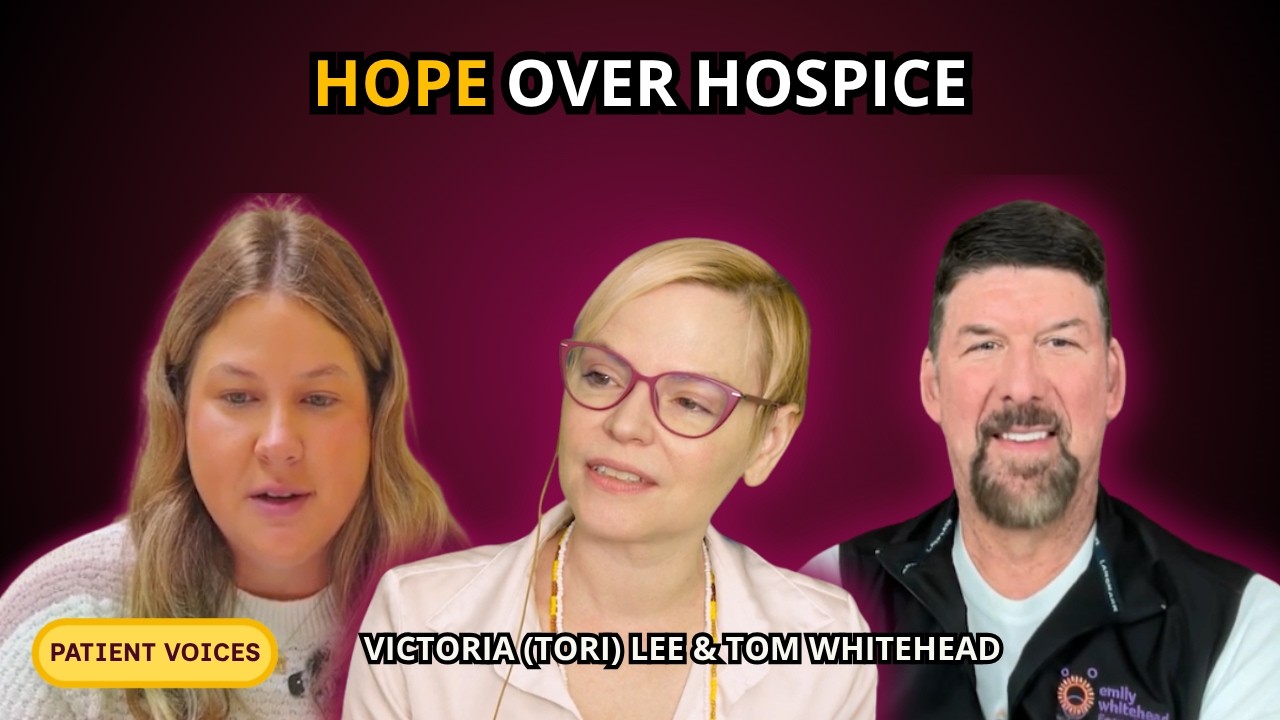
Tom Whitehead is co-founder of the Emily Whitehead Foundation and Emily’s father. When his daughter was diagnosed with acute lymphoblastic leukemia in 2010, weeks after her fifth birthday, he had one reference point for the disease. “All that I knew about leukemia at that point was the people that I knew that got it didn’t make it,” he says. The family was told this was the most curable form of pediatric cancer, the kind you would choose if you had to choose. That reassurance did not survive the first two rounds of chemotherapy.
Tori Lee was the tenth pediatric patient to receive CAR T-cell therapy at Children’s Hospital of Philadelphia. She was diagnosed at five in 2008, relapsed, and spent four years in treatment before the therapy that ended it. She is now a health policy major who presented at ACRP on the bioethical implications of CAR-T access, which makes her a rare thing in this field: a patient who went on to study the system that treated her.
Twenty-two months, then twenty-three days
The standard-treatment years are the part of the story that usually gets compressed into a sentence. Whitehead does not compress it. “Just after two doses of chemotherapy, Emily developed necrotizing fasciitis in her left thigh,” he says, “and her right calf.” The family went from being told this was the garden variety kind of cancer to being told, in his words, “you need to save her life tonight. Cancer’s not our problem.” Surgeons saved her legs. The cancer came back anyway, twice.
The experimental therapy worked on a different timescale entirely. “When we entered this experimental trial and she got the CAR T-cell therapy, then she was cancer-free 23 days later,” Whitehead says. He does not present this as painless. As the first child in the world to receive it, Emily spent two weeks in a coma on a ventilator before she recovered. The contrast that matters is not gentle versus harsh. It is twenty-two months of a treatment that failed against three weeks of one that did not.
Night and day, from the patient’s side
Lee is the only person in the conversation who received both, and her account is the clearest argument in the episode for why access is worth fighting over. She was a delayed responder to chemotherapy. “I underwent cranial radiation, so high-dose chemo on top of cranial radiation for 4 years,” she says. Then CAR-T, roughly six months of preparation and about a week of managing the effects.
Her summary is three words. Chemo versus CAR-T was “night and day for me.”
That comparison is not available to most patients, because most patients never reach the second option.
Twenty percent, and what stops the rest
Whitehead puts a number on it. “We’re being told that 20% of the patients that qualify for these treatments, these new advanced therapies, are actually getting them,” he says. “That just means 80% aren’t.”
Lee identifies where the gap opens. Centers need trial approval and specific accreditation to administer CAR-T, which concentrates delivery in large cities, and the funding to maintain that capacity is not universal. Then there is price. “Some of the cost for like one dose of CAR-T cell therapy is a mortgage for a lot of people,” she says, “and that’s not feasible, and it’s so unfortunate because this is survival for so many people.” The structure behind that price is its own subject.
What “not sick enough yet” actually means
Patients asking their doctors about cell and gene therapy increasingly hear a version of the same answer: you are not sick enough yet. Both guests treat this as an eligibility rule rather than a clinical judgment, and both think it is the wrong rule.
Lee read a paper that named the problem precisely. Access to advanced therapy, it found, requires a tenacious parent. “You’re not sick enough means that you have to relapse or there needs to be refractory in your disease before you can enter the trial,” she says. The burden that sits inside that phrase is financial and physical, and it falls on families.
Whitehead has watched the threshold move once already. “When Emily was treated, you couldn’t get in the trial until you’ve relapsed twice,” he says, “and by the time that happened, most children are too sick to be able to handle the trial.” Today, after one relapse, CAR-T can be chosen instead of a bone marrow transplant. He wants it moved again. “It’s high time in our mind that a standard risk child with B cell ALL should be allowed to opt into this treatment. When it works, you’re done in 30 days.”
Under a week, under fifty thousand dollars
The manufacturing argument against wider access is weaker than it was. Whitehead has toured cell manufacturing facilities internationally and reports both halves of the change. “They can make these cells in under a week vein to vein when it took 6 weeks when Tori and Emily were treated,” he says. “I know that there’s places that can make them for under $50,000.”
He is careful about the caveat. It is not scalable yet. The reimbursement side of the same problem runs on a separate clock. But the numbers are far enough from the ones that set current pricing and current waiting lists that they change what is arguable, and at least one government has moved on them: he describes Mexico agreeing to pay for treatment if the cost lands at that level.
Where most adults stop
The pattern Whitehead sees in adult patients is different from the one in pediatrics, and it is quieter. “The adults are afraid they’re going to leave a debt to their estate or their spouse,” he says, “and that leads them to not looking further into these treatments.” An insurance denial then finishes the search. “If you get an initial denial from your insurance, a lot of people just give up and don’t realize you can push back.” His foundation now works with companies using AI to contest denials, which he says “really seems to be making a big difference.”
Parents behave differently. They keep going, travel further, and exhaust more options. The result is that the access gap falls hardest on adults who have already been sick for a long time, and it closes quietly, without anyone recording a refusal.
Hope over hospice
The phrase Whitehead uses for the work is deliberately chosen. “We try to provide hope over hospice,” he says. Last year the foundation “helped 40 patients find a trial,” and he hears from a patient or a parent somewhere two or three times a week, increasingly for autoimmune and rare disease rather than only cancer.
The scale of what CAR-T has done is easy to state and easy to forget: in roughly a decade the field went from one child to more than 45,000 people treated. What that has not done is close the distance between the people who qualify and the people who receive.
He is also watching that distance widen geographically. In the last two years, for the first time, he has seen American families leave for treatment. “I’ve seen where patients are leaving places like MD Anderson and getting in a trial in Italy,” he says, and describes an Australian mother who would once have traveled to the United States and instead “ended up in a trial in Beijing.”
The work costs both of them something. Lee is direct that “it’s hard to decide to want to talk about the worst days of your life” in public, and does it because it helps other patients find the option. Whitehead’s reward is more concrete. He describes a mother recognizing him at Children’s Hospital of Philadelphia and telling Emily, “I want you to know that to my daughter, you’re as famous as Taylor Swift.”
Survivorship, and what he tells the next parent
Survivorship, in Lee’s account, is not a finish line either. Her late effects arrive from three directions at once, “coming from the chemo, it’s coming from the radiation, and it’s coming from the long-term effects of CAR-T cell,” and separating them is largely impossible. She counts the research value of her own case as worth it.
Asked what he tells the next parent, Whitehead gives the same answer he has given for over a decade. Do as much research as you can, and then trust your instincts. He has a specific reason for the second half. During the weeks when Emily was headed for hospice, “we made six decisions in that time frame that saved her life. Every one of them saved her life, and twice we went against what the doctors recommended.”
One of those two is the title of this episode. “We signed her out against medical advice, and it saved her life.”
We signed her out against medical advice and it saved her life.
Key takeaways
- Standard treatment failed twice over 22 months. CAR-T cleared Emily Whitehead's leukemia in 23 days.
- The first-in-child dose was not gentle. Emily spent two weeks in a coma on a ventilator before recovering.
- Tori Lee, the tenth pediatric patient cured, calls it night and day. Four years of chemo and cranial radiation versus about one week of CAR-T side effects.
- Access is the unsolved half. Whitehead cites roughly one in five qualifying patients actually receiving these therapies.
- Manufacturing is no longer the constraint it was. Under a week vein-to-vein, and under $50,000 demonstrated, though not yet at scale.
- A first insurance denial ends the search for many adults, who fear leaving debt to a spouse or an estate.
- “Not sick enough yet” is an eligibility rule, not a clinical judgment. It requires a patient to relapse or become refractory first.
- Late effects arrive from three directions for patients who had chemo, radiation, and CAR-T.
- Trials are moving offshore. Whitehead reports families leaving US centers for trials in Italy and Beijing for the first time.
Key Questions, Answered
Who is Emily Whitehead, and what was she treated for?
All that I knew about leukemia at that point was the people that I knew that got it didn't make it... it was very very scary to hear how fast acute lymphoblastic leukemia can grow.
Tom Whitehead on his daughter Emily's 2010 diagnosis with acute lymphoblastic leukemia, the most common form of pediatric cancer. She would become the first pediatric patient in the world treated with CAR T-cell therapy.
What happened to Emily Whitehead before CAR T-cell therapy?
Just after two doses of chemotherapy, Emily developed necrotizing fasciitis in her left thigh... and her right calf and we went from being told... this is the garden variety kind of cancer to being told, you need to save her life tonight. Cancer's not our problem.
Standard chemotherapy nearly cost Emily her legs and failed her twice across 22 months before CAR-T was ever offered.
How quickly did CAR T-cell therapy work for Emily Whitehead?
When we entered this experimental trial and she got the CAR T-cell therapy, then she was cancer-free 23 days later... she spent 2 weeks in a coma on a ventilator, but completely saved her life.
Twenty-two months of standard treatment failed. CAR-T cleared the cancer in 23 days, though the first-in-child dose put Emily in a two-week coma.
How does CAR T-cell therapy compare with chemotherapy and radiation for the patient?
I underwent cranial radiation, so high-dose chemo on top of cranial radiation for 4 years... chemo versus CAR T-cell therapy was just night and day for me... 4 years on standardized treatments, and then 6 months preparing for CAR T-cell, but then really only a week dealing with the effects of it.
Tori Lee, the tenth pediatric patient cured, on four years of chemo and cranial radiation versus roughly one week of CAR-T side effects.
Why does the cost of CAR T-cell therapy stop patients who qualify?
Some of the cost for like one dose of CAR-T cell therapy is a mortgage for a lot of people, and that's not feasible, and it's so unfortunate because this is survival for so many people.
Tori Lee on price as a survival barrier. Tom Whitehead adds that only about a fifth of patients who qualify for these therapies actually receive them.
How fast and how cheaply can CAR-T cells be manufactured now?
I know for a fact now that they can make these cells in under a week vein to vein when it took 6 weeks when Tori and Emily were treated. I know that there's places that can make them for under $50,000. It's not scalable yet, but that would save the next patient.
Manufacturing has gone from six weeks to under a week, with sub-$50,000 production demonstrated but not yet at scale.
Why do adult patients give up on advanced therapies?
The adults are afraid they're going to leave a debt to their estate or their spouse, and that leads them to not looking further into these treatments, and then if you get an initial denial from your insurance, a lot of people just give up and don't realize you can push back.
Financial fear and a first insurance denial end the search for many adults. Whitehead's foundation now works with companies using AI to fight denials.
What does a doctor mean by “you’re not sick enough yet” for cell and gene therapy?
You're not sick enough means that you have to relapse or there needs to be refractory in your disease before you can enter the trial... the financial burdens and the bodily harm that is assumed in that phrase... it's a lot on the parents and the patient.
Tori Lee on eligibility rules that require a patient to deteriorate first, and the burden that places on families. She notes research finding that trial access effectively requires a tenacious parent.
What counts as sick enough for CAR T-cell therapy, and should that change?
When Emily was treated, you couldn't get in the trial until you've relapsed twice, and by the time that happened, most children are too sick to be able to handle the trial... it's high time in our mind that a standard risk child with B cell ALL should be allowed to opt into this treatment. When it works, you're done in 30 days.
Eligibility has loosened from two relapses to one, but Whitehead argues CAR-T should be available frontline rather than after standard therapy has caused lasting damage.
What does survivorship look like after CAR T-cell therapy?
I've been pretty lucky so far with minimal long-term side effects, but I think it's inevitable and it's coming from three different angles. It's coming from the chemo, it's coming from the radiation, and it's coming from the long-term effects of CAR-T cell.
Tori Lee on carrying three overlapping sets of late effects, and why she counts the research value of her own case as worth it.
What should a parent do when looking for a cell or gene therapy trial?
The number one thing I tell the next parent or patient... do as much research as you can and then trust your instincts, because when Emily was in that headed for hospice stage, we made six decisions in that time frame that saved her life. Every one of them saved her life and twice we went against what the doctors recommended.
Whitehead's standing advice: research hard, then trust your own read. Two of the six decisions that saved Emily went against medical advice.
Resources
- Emily Whitehead Foundation Tom Whitehead's foundation. Helped 40 patients find a trial last year.
- Tori Lee's patient story The Foundation's account of Tori Lee's diagnosis, treatment and recovery.
- Support the Foundation Connects patients to trials, funds research, and advocates for wider access.
- CHOP Cancer Immunotherapy Program Children's Hospital of Philadelphia, where Emily and Tori were treated.
- FDA: Kymriah (tisagenlecleucel) The CAR T-cell therapy Emily received in trial, later the first gene therapy approved in the US.
- NCI: Childhood ALL Treatment Primary-source overview of acute lymphoblastic leukemia and its standard treatment path.

Need the life-sciences signal but short on time?
Get the free quarterly briefing: every guest from the quarter, in one sitting. What decides whether a therapy reaches a patient, gets funded, and can be trusted.