
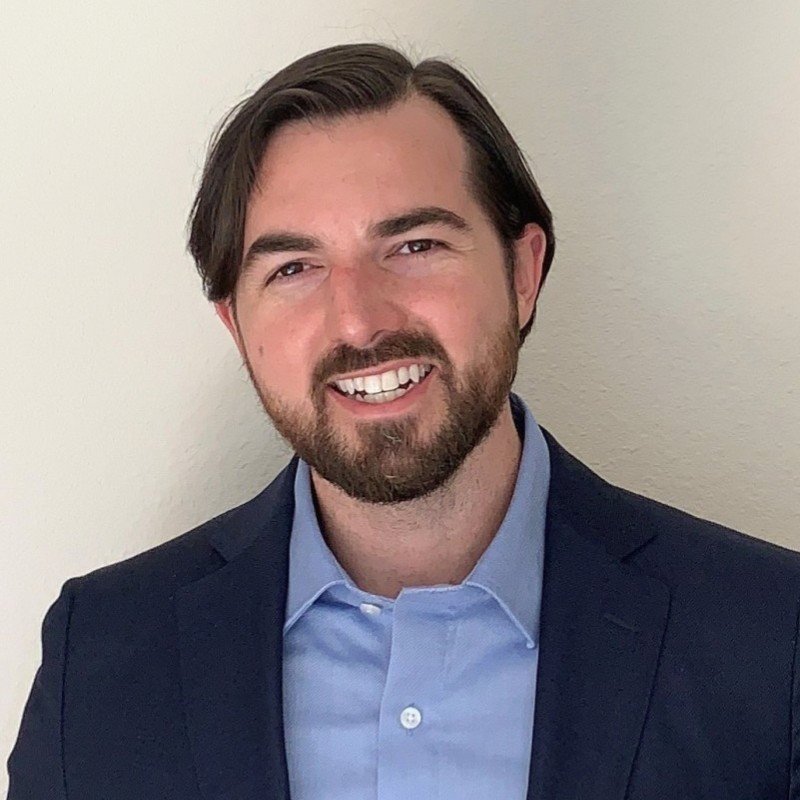
Jeff Holder
Managing Director & Partner, L.E.K. Consulting | Cell & Gene Therapy Strategy & Life-Sciences Enablers
Jeff Holder is a managing director and partner in the life sciences practice of L.E.K. Consulting, a global strategy consulting firm, based in San Francisco. He advises biopharmaceutical companies and investors on the tools, services, and business strategies behind advanced therapeutic modalities, including cell, gene, and nucleic-acid therapies.
Holder holds a PhD in organic chemistry from the California Institute of Technology and a bachelor’s degree in chemistry from Harvard University, and was an NIH postdoctoral fellow at the University of California, Berkeley. He joined L.E.K. in 2016 after concluding that he wanted to work on bigger-picture strategic questions than a research-bench career would allow. His work centers on what L.E.K. calls life-sciences enablers: the business-to-business companies that supply tools and services across the value chain, from discovery through manufacturing and supply.
Holder’s work in advanced therapies began around 2017, advising investors evaluating the field at the time of the first CAR-T approvals, Kymriah and Yescarta, and the gene-therapy launches that followed. Since then his advisory roles have expanded across the cell- and gene-therapy ecosystem, from the manufacturing and supply-chain plays to the companies developing the therapies themselves. He is also a co-author of a 2024 Harvard Business Review article on the business strategies that next-generation drug therapies require.
Holder appeared on Open Door Salon alongside Matthew Hewitt, chief technical officer of the manufacturing business division at Charles River Laboratories, for a conversation on why only a fraction of eligible patients receive approved cell and gene therapies. Holder’s lens was that of the strategist and investor: he argued that the cost of manufacturing is not the field’s real constraint, and that the harder problems are structural, including a reimbursement system built around recurring pharmacy payments rather than one-time cures, and a payer model complicated by how often patients change insurers.
He also offered a historical benchmark for impatient investors, noting that the antibody-drug market took more than two decades to mature into its first blockbusters, while cell and gene therapy has scaled its pipeline roughly three times faster. The field, in his framing, is only in its early innings, and the expectation that a market this new would develop overnight is the mistake that keeps tripping up its backers.
Frequently Asked Questions About Jeff Holder
What is Jeff Holder an expert in?
Jeff Holder is an expert in cell and gene therapy strategy and the life-sciences “enablers”, the business-to-business companies that supply tools and services from discovery through manufacturing and supply. He advises biopharmaceutical companies and investors on advanced therapeutic modalities, reimbursement, and market access.
Who is Jeff Holder?
Jeff Holder is a managing director and partner in the life sciences practice of L.E.K. Consulting, based in San Francisco. He holds a PhD in organic chemistry from Caltech and a bachelor's degree in chemistry from Harvard, was an NIH postdoctoral fellow at the University of California, Berkeley, and joined L.E.K. in 2016. He appeared on Open Door Salon, the life sciences podcast hosted by Lori Ellis.
How does Jeff Holder think about cell and gene therapy access?
Jeff Holder argues that the cost of manufacturing is not the field's real constraint, and that the harder problems are structural, including a reimbursement system built around recurring pharmacy payments rather than one-time cures, and a payer model complicated by how often patients change insurers. He frames the field as in its early innings, noting that the antibody-drug market took more than two decades to mature while cell and gene therapy has scaled its pipeline roughly three times faster.
What organizations is Jeff Holder affiliated with?
Jeff Holder is a managing director and partner at L.E.K. Consulting. He holds a PhD in organic chemistry from Caltech and a bachelor's in chemistry from Harvard, was an NIH postdoctoral fellow at the University of California, Berkeley, and is a co-author of a 2024 Harvard Business Review article on the strategies that next-generation drug therapies require.
On Open Door Salon
“Why Only 20% of Eligible Patients Get Cell Therapy & What Needs To Change”
Matt Hewitt & Jeff Holder · March 4, 2026
Episode page & show notes on Open Door Salon
In this episode
- JPM 2026: cell & gene therapy interest — real or cooling?
- Manufacturing cost is not the real barrier to adoption
- "Do boring better" — the 2026 investor thesis for modular modalities
- The reimbursement problem: monthly payments vs. one-time cures
- Why employment-linked insurance breaks the payer model
- Should cell therapy be classified as a procedure, not a drug?
- 80% of cancer patients are managed in community settings
- The biologics benchmark: 12 years from first approval to first blockbuster
- Cell therapy reached 600 pipeline candidates in 8 years — vs. 22 for antibodies
- "Top of the third inning" — why investors keep getting the timeline wrong
- Only 20% of eligible US patients get cell therapy (5% globally)
Topics
Watch on Open Door Salon
Open Door Salon brings life-sciences leaders into candid conversation. Every Monday, the week's takeaways land in your inbox.
Subscribe on Substack →