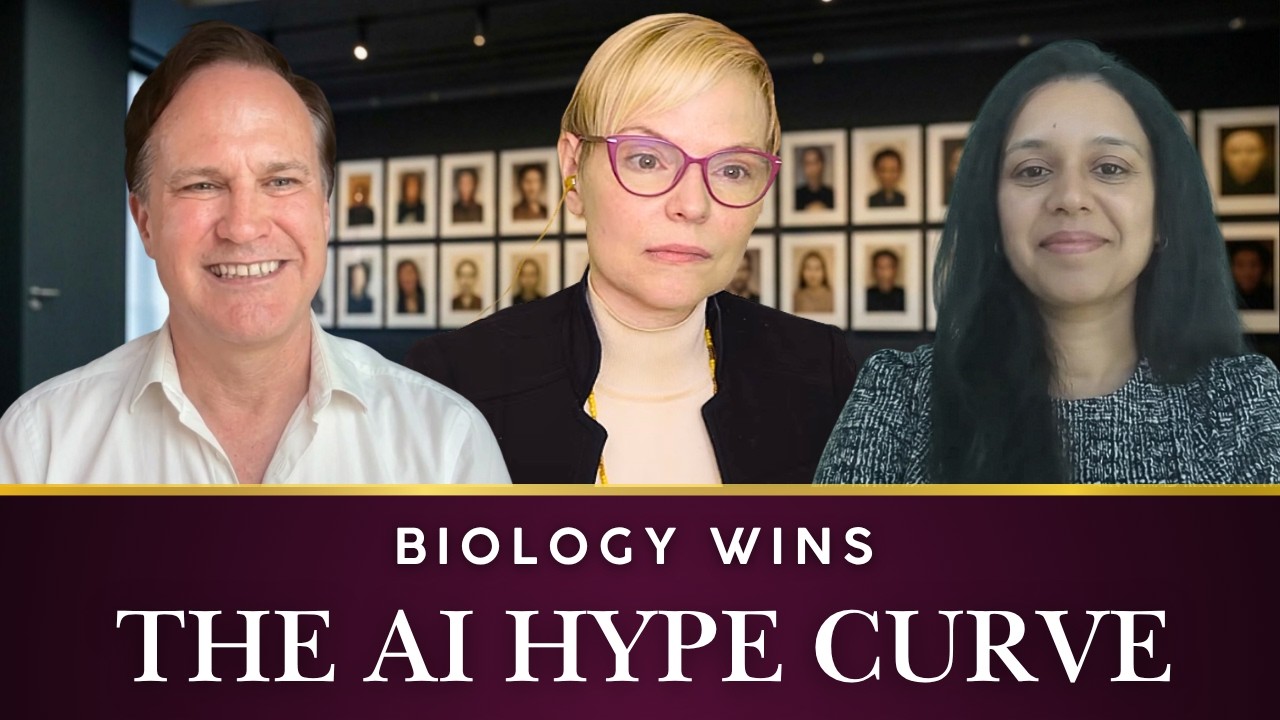
Nindhana Paranthaman and Paul Agapow on What AI Delivered in Clinical Development
What you’ll learn
- Which AI gains in clinical development actually materialized, and which were always marketing
- Why a digital twin cannot replace a patient, and the one place twins genuinely help
- The estimate that about a third of today’s AI work is still standing in five years, with the breakdown
- Why biology breaks AI in a way that forecasting sales does not
- What both guests tell investors to look for, and the red flag they each name
AI arrived in drug development carrying a very large promise. Nindhana Paranthaman and Paul Agapow work on opposite sides of it, and they agree on more than the marketing would suggest.
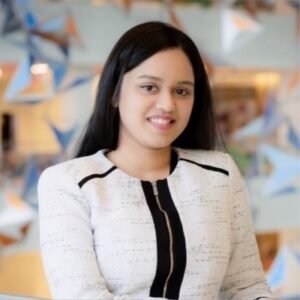
Nindhana Paranthaman is Vice President, Early Clinical Development at Bicara Therapeutics, where she runs oncology trials. Paul Agapow is Chief Scientific Officer at Bayezian and works on machine learning inside regulated drug development. Lori Ellis opened with a deliberately unflattering question: what has AI actually delivered in clinical development, and what was sold that never showed up?
What actually arrived
Paranthaman answered first, and concretely. The gains that materialized are operational. What was sold, she said, is “really improving… operational efficiencies… with how we run our clinical trials and I do see some progress made on that front,” particularly in how contract research organizations handle site selection and projections around patient recruitment and study length.
The second gain is quieter and, on large trials, substantial. AI-based dashboards now sit inside clinical data review. On a study carrying six hundred to a thousand patients, a monitor previously worked the listings line by line, building patient profiles by hand.
Then she named what has not arrived: more drugs actually advancing into the clinic. That count has not shifted the way the promise implied, though she does not assume it stays that way over a five to ten year horizon.
The gaping hole in the hype
Agapow framed the same period more sharply. For years, he argued, the attention and the capital went to early discovery while “a lot of our problems a lot of our budget a lot of our complexity are all coming in at the clinical stage.” Clinical was where the money was being spent and where almost nobody was building.
He is direct about the part that has not worked. Asked about vendors promising a trial completed inside a year, he said the claim is marketing, and reached for an image: “I feel we’re just one stage removed from, you know, a man coming to town and offering to sell us a monorail.” Biology moves at its own speed, and so do patients. A trial can be run more efficiently, but it cannot be made short.
He was equally clear this is not a case against the technology. There are real efficiency gains, and a period of experimentation ahead in which the industry works out what integrates into regulated workflows. His summary: less a revolution, more an evolution.
Why a digital twin cannot replace a patient
Lori Ellis raised digital twins because, as she put it, she already knows what her inbox will look like if she does not. Agapow took the concept apart.
The term came from industrial process engineering, where you build a mechanistic replica of a production line and interrogate it: change this input, and what happens downstream? In biology it has stretched to cover simulation, predictive models trained on historical data, and counterfactuals, all weaker things wearing a stronger word.
“A digital twin is a copy of a process that we do know and we understand perfectly,” he said. A randomized clinical trial exists for the opposite reason: something we do not know and want to prove. So when people say “we won’t need patients or we won’t need as many patients… And this idea is almost entirely wrongheaded.”
Where twins could genuinely work
Paranthaman did not dismiss the category, and her version is narrower. She sees possible value in supplementing early-phase safety data so fewer patients are exposed to therapies that may carry risk without benefit. She also raised synthetic control arms in rare disease and rare tumor types, where patients are scarce and few want to be randomized to control. A two-to-one design leaning on a synthetic comparator could, in principle, reach regulators faster.
Agapow agreed the opportunity sits before a trial rather than inside one, and noted that several things marketed as twins in press releases are AI models used to select and treat patients. The tension was never resolved on air, which is roughly where the science sits.
About a third, and the breakdown
Asked how much of what is being built today is still standing in five years, Agapow gave a number and then showed his working: “I would guesstimate around about a third of what we’re building today is still going to be standing in five years.”
The arithmetic runs in three parts. Roughly a quarter of current AI initiatives are fundamentally solid and, in his description, barely AI at all, being “a little bit of AI lipstick put on a statistically conventional pig.” Adaptive trial designs sit here and would survive without AI. Another quarter is genuinely experimental but has a reasonable chance, including protocol and report drafting and patient identification, of which he expects about half to come through. The remaining half he considers largely disconnected from the real world, and expects most of it to fail.
The unglamorous work that pays
Both guests landed on the same unfashionable answer. Paranthaman described the front end of a trial: eligibility criteria pulled from historical studies into spreadsheets, then tuned by hand to the population in front of you. If models can inform that work “and… actually enhance how we… set up protocols and minimize protocol amendments because that also has an operational impact on trials,” the effect on recruitment across sites and countries is material. She acknowledged it is not glamorous work.
Agapow put the commercial case plainly. A tedious task that has to be done correctly every time, done faster and with fewer people, is “just complete gold on the balance sheet.” Low risk and not complex. He also credited Paranthaman’s point that the industry is poor at learning from its own failures, scrapping a failed line rather than mining it.
Why biology breaks AI
Agapow gives two reasons biology is hard for machine learning. The first is epistemic: “the data we have for biology is it is something that we are discovering, not something that we are inventing.” Sales figures and flight delays can be cataloged completely. Biological data is contingent on the cells, the patients, and the conditions of collection, and the coverage is thin.
His second reason is cultural. Many initiatives launched on hype and hope, poorly aligned to enterprise need, and clustered on generative chemistry because the data was available and success easy to measure. The clinical counterpart is harder to quantify, so fewer people went there.
The consequence shows up in an anecdote about a drug discovery startup approaching a contract research organization to synthesize its first compound: “one of the first questions the CRO asked was they said do you have a medicinal chemist on your staff? We ask this because people are continually showing up to ask us to synthesize compounds that are impossible that don’t exist.” It is the same instinct, he suggests, behind looking for one trick that routes around biology. He has seen it cost real money, describing a pipeline “grinding out junk for 18 months” before anyone established it was not working. Our conversation with two biotech CEOs on what happens when AI is confidently wrong in drug discovery covers the discovery side of that line.
Target herding, and what investors should ask
The closing stretch turned to capital. Paranthaman described a pattern she sees from the investment side: “if one person or maybe two companies have shown success with one asset, then a hundred new companies pop up that are also trying to develop the same asset,” and expects AI investment to behave the same way. Agapow called it target herding and cited a fall in pipeline diversity of around fifty percent over roughly fifteen years, with charity for those doing it, since novel drug development is expensive and crowding a proven target reduces the risk.
Their advice to family offices, venture funds and private equity converged. Agapow looks for an opinionated stance on a specific disease and modality. Companies promising to solve all diseases everywhere are the ones he treats warily. He warns investors to “look out for anyone who’s trying to use technology to hack their way around biology.” Engaging with wet lab biology early is, in his view, non-negotiable. Paranthaman’s version is focus: the successful small teams she has seen “weren’t… split across the board with multiple assets in their portfolio but they decided to… laser focus on one or two.” She gives AI companies the same counsel, to get one therapeutic area right before generalizing. Our episode on what separates a biotech pitch that gets funded from one that does not takes that from the other side of the table, and where biotech money goes when venture capital stops covers the funding environment they describe.
Lori Ellis closed by asking each for the hardest decision of their career. Agapow’s answer inverted the question. He was primarily responsible for canceling a very large clinical trial, and that decision was straightforward because the data was in front of him. “The tough decisions in our lives in our careers are the ones where we have no data to go upon,” he said. Paranthaman named carrying a program forward when someone should have raised a hand sooner, and the difficulty of go and no-go calls on thin data.
I feel we’re just one stage removed from, you know, a man coming to town and offering to sell us a monorail.
Key takeaways
- The operational gains are real. Site selection, recruitment projections and AI-assisted clinical data review have genuinely improved, which matters most on trials carrying six hundred to a thousand patients.
- More drugs reaching the clinic has not happened. That was the headline promise, and it is the one Nindhana Paranthaman says has not been delivered yet.
- Clinical was where the cost sat and where nobody was building. Attention and capital went to early discovery while the budget and the complexity stayed in the clinic.
- A trial completed inside a year is marketing. Biology and patients progress at their own speed, so a trial can be run more efficiently but cannot be made short.
- A digital twin replicates a process you already understand. A randomized trial exists because you do not understand something yet, which is why a twin cannot stand in for a patient.
- Twins are plausible before a trial, not inside one. Early-phase safety signals and synthetic control arms in rare disease are the credible uses Paranthaman names.
- About a third of today’s AI work survives five years. A quarter is solid and barely AI, a quarter is experimental with roughly even odds, and the remaining half is largely disconnected from biology.
- The unglamorous work is where the return is. Protocol drafting and cutting protocol amendments is low risk, inexpensive, and materially changes how a trial runs.
- Biology is discovered rather than invented. Its data is contingent on cells, patients and collection conditions, and sparse, which breaks assumptions machine learning carries in from domains we observe completely.
- Both guests warn against routing around biology. Engaging with wet lab work early is, in Paul Agapow’s view, non-negotiable.
Key Questions, Answered
What has AI actually delivered in clinical development?
what was sold is really improving … operational efficiencies … with how we run our clinical trials and I do see some progress made on that front
Nindhana Paranthaman puts the real gains in operations: site selection, recruitment projections and study-length forecasting through CRO partnerships.
Why was clinical the gap in the AI hype narrative?
a lot of our problems a lot of our budget a lot of our complexity are all coming in at the clinical stage
Paul Agapow argues attention and capital went to early discovery while the cost and complexity of drug development sat in the clinic.
Is the promise of a clinical trial completed in one year realistic?
I feel we’re just one stage removed from, you know, a man coming to town and offering to sell us a monorail
Agapow calls the one-year-trial claim marketing. Biology and patients progress at their own speed, so trials get more efficient but not short.
What patient factors can no AI platform solve?
it’s really driven by … factors around the patients and their families and you know things that are … beyond even our control in terms of you know whether they’re able to continue on treatment
Paranthaman points to retention and discontinuation driven by logistics and convenience rather than toxicity, a systemic issue no platform resolves today.
Can a digital twin replace a patient in a clinical trial?
we won’t need patients or we won’t need as many patients … And this idea is almost entirely wrongheaded
Agapow says the claim conflates a mechanistic twin with simulation and predictive models, using a strong word to carry a weaker thing.
What is the difference between a clinical trial and a digital twin?
a digital twin is a copy of a process that we do know and we understand perfectly
The logical objection: a randomized trial exists because something is unknown, while a twin presupposes the process is already understood.
Where could digital twins genuinely work?
maybe there is some value in … introducing this … especially with regards to trying to identify … safety signals … with new drugs and supplementing data that we’re generating in early phase … studies
Paranthaman sees credible use in early-phase safety supplementation and in synthetic control arms for rare disease and rare tumor types.
How much of today’s AI work is still standing in five years?
I would guesstimate around about a third of what we’re building today is still going to be standing in five years
Agapow splits it: a quarter solid and barely AI, a quarter experimental at roughly even odds, and half disconnected from biology.
Where is the real opportunity in clinical documentation?
if there’s a way for … systems or models to inform that and … actually enhance how we … set up protocols and minimize protocol amendments because that also has an operational impact on trials
Protocol development and amendment reduction is unglamorous, low risk and changes recruitment across sites and countries.
What happens when a startup tries to route around biology?
one of the first questions the CRO asked was they said do you have a medicinal chemist on your staff? We ask this because people are continually showing up to ask us to synthesize compounds that are impossible that don’t exist
Agapow recounts a contract research organization screening for basic chemistry competence because AI-first startups keep requesting impossible compounds.
Why does biology break AI?
the data we have for biology is it is something that we are discovering, not something that we are inventing
Unlike sales or flight data, biological data is contingent on cells, patients and collection conditions, and the coverage is thin.
What does target herding look like in practice?
if one person or maybe two companies have shown success with one asset, then a hundred new companies pop up that are also trying to develop the same asset
Paranthaman expects AI investment to crowd the same way assets do. Agapow ties it to a fall in pipeline diversity of around fifty percent over roughly fifteen years.
Resources
- Bicara Therapeutics Nindhana Paranthaman’s company. She leads early clinical development in oncology there.
- Bayezian Paul Agapow’s company, which describes itself as the intelligence layer for clinical development.
- Nindhana Paranthaman on LinkedIn Vice President, Early Clinical Development at Bicara Therapeutics.
- Paul Agapow on LinkedIn Chief Scientific Officer at Bayezian.
Need the life-sciences signal but short on time?
Get the free quarterly briefing: every guest from the quarter, in one sitting. What decides whether a therapy reaches a patient, gets funded, and can be trusted.