Karen Harris and Mahesh Narayanan on Why Alzheimer’s Startups Still Struggle to Raise Money
What you’ll learn
- Why early-stage neuroscience became the hardest money in biotech to raise, and what actually changed in the last five years
- Why reimbursement and prescriber strategy belong in the pre-IND conversation rather than after FDA clearance
- How venture philanthropy and venture capital divide the risk, where they converge, and where one hands off to the other
- The non-dilutive federal stack (NIH, DARPA, ARPA-H) and the dual-use advantage that is specific to brain health
- The red flags that end a raise: a part-time CEO, and a founder who will not be coached
Alzheimer’s science is finally moving. Two disease-modifying drugs are approved. Two blood tests are approved. And the companies working on what comes next still cannot raise money at the earliest stage.
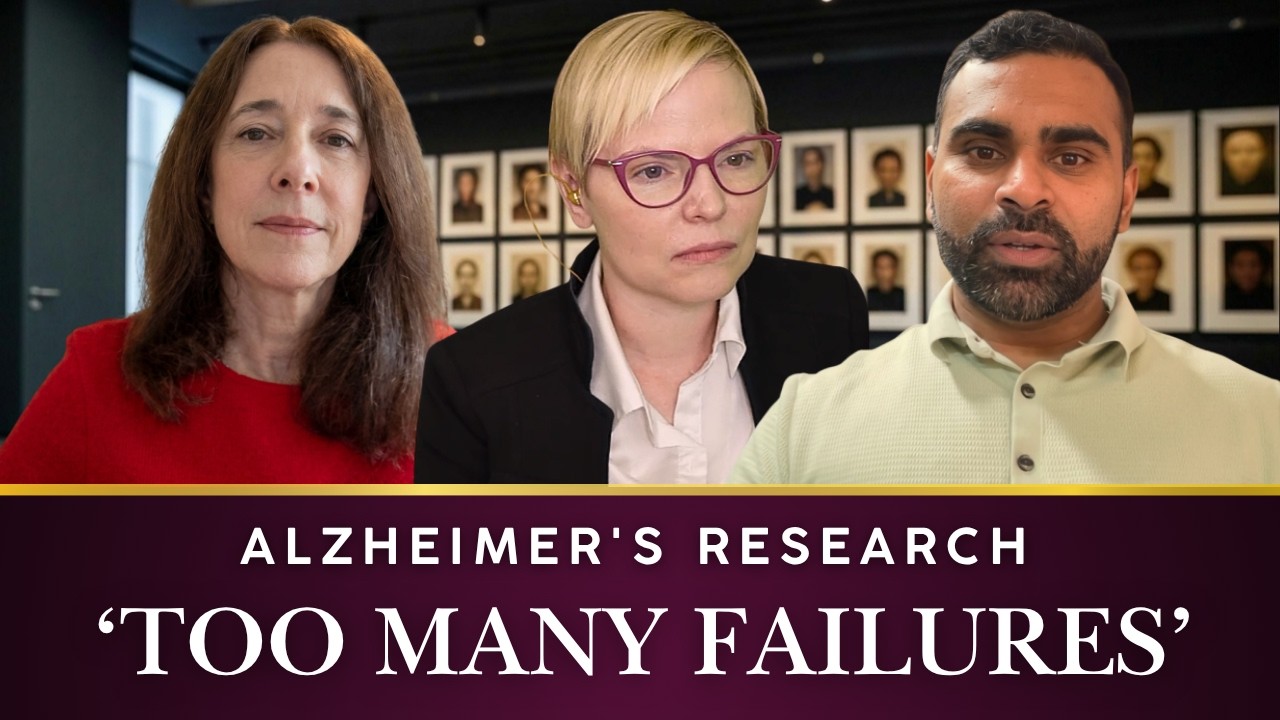
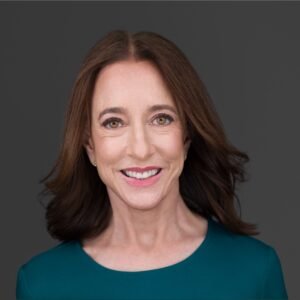
That gap is the subject of this conversation. Lori Ellis sits down with two investors who fund brain health from opposite ends of the capital stack: Karen Harris, Executive Director of Mission-Related Investing and Finance at the Alzheimer’s Drug Discovery Foundation, and Mahesh Narayanan, Managing Partner and Founder of Neuvation Ventures. They do not entirely agree about how much has changed, and the disagreement is the useful part.
Why neuroscience became the hardest early-stage money to raise
Harris frames the moment as genuinely improved. Two disease-modifying drugs have FDA approval. Two blood tests have FDA approval, and she expects those to enable earlier detection, better monitoring of treatment, and leaner clinical trials. Pharma has been doing Alzheimer’s deals. Her read is that venture capital eventually follows pharma.
Narayanan is more blunt about why it got this hard in the first place.
There’s just been too many failures, to be honest. And whether that’s done by big pharma, whether it’s done by smaller companies, it just hasn’t been enough to show a lot of major capitalists that there’s returns in the neuro space.
His point is not that investors were irrational. It is that the track record earned the caution, over a period he puts at roughly fifty years. What he argues has changed is the last five: more approvals, and more acceptance of these drugs as standard of care.
The commercial question scientists defer for too long
Both investors converge on one failure pattern, and it is not scientific.
I think what I like to see most is a scientist who also understands that this has to be a commercial venture as well.
Harris adds the reason it is so easy to get wrong in this particular field: with Alzheimer’s, commercialization is far enough away that founders forget it is coming. The distance between a promising target and a paying customer is measured in many years, so the commercial work feels like somebody else’s problem until it is suddenly the only problem.
Narayanan puts the same idea in harder terms, and he includes the two constituencies founders reach out to last.
We can make the drugs, we can get them in the market, but if physicians aren’t willing to prescribe it or payers aren’t willing to pay for it, those drugs end up being a failure either way.
That is the practical case for starting the payer and prescriber conversation before the IND rather than after approval. A drug that works and cannot be prescribed or paid for is not a commercial product, and the people who decide both are reachable years earlier than most founders assume.
What a coverage decision signals
The clearest recent evidence in the conversation is a coverage decision. Anthem moved to cover a blood-based biomarker for Alzheimer’s, and Harris treats it as significant well beyond the single test.
Her argument is economic rather than clinical. Blood-based biomarkers are dramatically cheaper than the imaging and spinal-fluid pathways they can partly replace, so a payer covering one is a payer accepting that earlier, cheaper detection saves money downstream. For any diagnostics developer in this space, that is the signal worth reading: the reimbursement path for this category is being established in public, one policy at a time.
Where the non-dilutive money is
Federal funding runs through the middle of the discussion. NIH is releasing more money and more grants. Beyond NIH, Lori raises conversations with the Department of War, DARPA, and ARPA-H, where brain health carries a dual-use argument that most therapeutic areas cannot make. Work on traumatic brain injury, cognition, and neural interfaces has obvious defense relevance, and that opens funding doors that are not open to a typical early-stage biotech.
It is worth putting alongside the broader research-funding picture, including how US research spending now compares internationally. Non-dilutive capital does not just extend runway. It changes what a founder has to give up to reach the next milestone.
Venture philanthropy and venture capital are not competitors
The two investors sit at different points on the same pipeline, and both are explicit that this is complementary rather than competitive.
We’re investing primarily in the IND enabling phase to phase 2A and we view venture as completely complementary, and what we’re doing is trying to get our companies to an inflection point where venture will invest, where pharma will invest.
Harris describes ADDF working closely with VCs specifically to pull further investment into its portfolio companies. Narayanan describes the mirror image from the seed side: he expects more validation than a venture philanthropy funder would at the earlier stage, because his fund cannot absorb the same risk.
So it has to be what we call an MVP. There has to be some kind of minimum viable product for us to see. It has to be much further than just an ideation.
The practical read for a founder is that these are sequential doors, not alternative ones. Venture philanthropy is designed to get an asset to the point where venture will look at it, and the two funders talk to each other.
Reading a founder
Both investors are unusually direct about how they judge people, and neither relies on the pitch.
I always tell the science people, I can tell who’s going to be a good CEO just by the way that they handle those negotiations.
Harris structures and negotiates the deals herself, so she watches the negotiation as the tell. Narayanan runs something more deliberate, which he calls the caddie test.
The goal of a caddie is not necessarily to go play the game for the golfer. The golfer is the one that’s hitting the ball. So it’s just telling them where to go.
His firm builds small tasks into diligence and watches how founders execute them independently. The concern is not difficulty in the personal sense. It is whether a founder can absorb direction, because a seed fund managing twenty-five to thirty companies cannot be present every day.
The two red flags that come up are a CEO who will not commit full time, and a founder who cannot be coached.
The through-line across both perspectives is that the science is rarely the reason an early-stage neuro company fails. The commercial design is, and the same pattern shows up in other categories where the cost and access questions arrive long after the science works.
Open Door Salon convenes these conversations on the record. If your company wants to reach the operators and investors in this room, that is what sponsorship is for.
An A team can take a B product and make it successful. But a B team with A product is gonna fail every time.
Key takeaways
- The caution was earned, not prejudiced. Repeated failures across both big pharma and smaller companies left venture investors without a track record of returns in neuro.
- The last five years changed the inputs. More FDA approvals, wider acceptance of these drugs as standard of care, and neuroscientists moving into venture roles where they can judge the science themselves.
- A drug that cannot be prescribed or paid for is a failure either way. Physician willingness and payer coverage decide the outcome as much as the clinical data does.
- Reimbursement strategy is a pre-IND question. Neuvation asks founders for a reimbursement plan and a go-to-market plan before an IND filing, not after clearance.
- Prescriber input reshapes the product itself. Route of administration and dosing frequency get decided by what physicians will actually put a patient through.
- Federal money is the non-dilutive base layer. NIH, DARPA and ARPA-H all run brain-health programs, and nearly every Neuvation portfolio company pairs a federal grant with venture capital.
- Brain health carries a dual-use advantage few fields have. Concussion, stroke and neurodegeneration each have a military application alongside the civilian one.
- Venture philanthropy de-risks and venture capital scales. ADDF funds IND-enabling work through Phase 2a to reach the inflection point where VCs and pharma will invest.
- Two red flags end a raise. A CEO who will not go full-time, and a founder who will not take coaching.
Key Questions, Answered
Why has early-stage neuroscience been so hard to fund?
there have been a lot of failures. There’s just been too many failures, to be honest. And whether that’s done by big pharma, whether it’s done by smaller companies, it just hasn’t been enough…
Mahesh Narayanan puts the caution down to a track record rather than prejudice. Repeated failures on both sides of the market left investors without evidence of returns.
What has changed for neuroscience investment in the last five years?
we can make the drugs, we can get them in the market, but if physicians aren’t willing to prescribe it or payers aren’t willing to pay for it, those drugs end up being a failure either way.
More FDA approvals and wider standard-of-care acceptance moved the field. Narayanan’s point is that prescriber and payer behavior still decide whether a drug succeeds.
When should a brain-health startup start its reimbursement conversation?
one of the first things we ask our founders, even before they get in front of an IND filing with the FDA… one of the main things we ask is what is your reimbursement strategy and then what is your go-to-market strategy?
Neuvation Ventures treats reimbursement and go-to-market as pre-IND diligence questions rather than post-approval commercial work.
How do prescriber conversations change the product itself?
are we gonna just bore a hole into the brain to throw something into the brain or are we gonna disrupt the blood-brain barrier to the point where it won’t recover? All of those aspects physicians think about, and they think about it every day.
Route of administration and dosing frequency are clinical-adoption decisions. Narayanan describes rejecting a weekly intrathecal dosing plan because physicians would not put a patient through it.
Why does Anthem covering a blood-based biomarker matter?
Anthem announced that they would cover the blood-based biomarker for Alzheimer’s, which is huge. And if you think about it, the blood-based biomarkers are gonna save so much money for the healthcare system… I think that will enable fewer PET scans, earlier diagnosis and that’s gonna be really game-changing.
Karen Harris frames biomarker coverage as the unlock for earlier diagnosis and cheaper trials. Anthem’s coverage took effect July 1, 2026, and a revised policy widens the pathway from October 1.
Who funds Alzheimer’s research besides venture capital?
for Alzheimer’s anyway, it takes a village. So you need the government funding, you need university funding, you’re gonna need venture funding, venture philanthropy and pharma. So those trials are so expensive that we really try to help our companies maximize the number of dollars that they can bring in.
Harris describes Alzheimer’s financing as a stack rather than a single source, because trial costs exceed what any one funder carries alone.
How much does the NIH spend on Alzheimer’s research each year?
the funding is certainly there, I believe almost $4 billion annually has been spent by NIH on Alzheimer’s.
The figure checks out. Federal Alzheimer’s and dementia research funding is roughly $3.9 billion for FY2026, following a $100 million increase signed into law in February 2026.
What is the dual-use advantage in brain health?
practically every company that we have invested has a dual use component… whether it’s concussions, whether it’s strokes, anything related to the cardiac, there’s always some kind of components there that the army and the military in general are very interested in.
Brain-health startups can pair non-dilutive defense funding with venture capital because the same technology serves civilian and military use cases.
Where does private equity actually fit in brain health?
traditional private equity, they’re very good at buyouts and then they’re very good at growth capital. So their strongest role has always been to come in during scaling of care delivery or scaling of commercialization and not necessarily playing a role in drug development or medical device innovation.
Both investors describe private equity as a later-stage handoff rather than early-stage competition.
How do venture philanthropy and venture capital differ structurally?
Venture philanthropy more often than not is an evergreen fund or they have a much different life cycle than venture funds do.
A venture fund runs a fixed ten to twelve year life with limited partners to return capital to. An evergreen philanthropic fund can hold risk longer, which is why it invests earlier.
What does a venture philanthropy funder need to see from a founder?
what I like to see most is a scientist who also understands that this has to be a commercial venture as well… with Alzheimer’s particularly, the commercialization is so far away that it’s easy to forget.
Harris looks for scientific founders who treat commercial viability as a parallel requirement rather than a later problem.
What does a seed-stage brain-health investor need to see?
There has to be some kind of minimum viable product for us to see. It has to be much further than just an ideation or much further than just a credible paper we can kind of jump into.
Narayanan wants validation data, animal or model evidence, and a minimum viable product before a seed check, with an IND filing in view by Series A.
What are the red flags that end a raise?
one of the big red flags for us is if the team is not even full-time… when the founder or the CEO, whoever’s willing to run the company, they’re not willing to put the full-time effort to the company. That becomes a huge red flag
A part-time CEO signals the founder will not back their own product. The second red flag Narayanan names is a founder who will not take coaching.
What is the caddie test?
the goal of a caddie is not necessarily to go play the game for the golfer. The golfer is the one that’s hitting the ball. So it’s just telling them where to go. And so we kind of do that even during diligence.
Neuvation sets small execution tasks during diligence to see whether a founder can operate without constant supervision.
When should a neuroscience founder start raising?
companies should start really early trying to raise funds before they think they need them because it takes so long to raise a series A, can take a year and a half, two years.
Harris advises building VC relationships well ahead of the round, and flags a founder who does not know where to look for funding as a warning sign.
Resources
- Alzheimer’s disease drug development pipeline: 2026 Cummings et al., Alzheimer’s & Dementia: Translational Research & Clinical Interventions. 158 agents across 192 active trials, and the shift in mechanism away from amyloid-only approaches.
- Anthem medical policy LAB.00046 Testing for biochemical markers for Alzheimer disease. Blood-based biomarker coverage effective July 1, 2026, with a revised technology-agnostic pathway effective October 1, 2026.
- Alzheimer’s Drug Discovery Foundation Karen Harris’s organization. Venture philanthropy funding IND-enabling research through Phase 2a.
- Neuvation Ventures Mahesh Narayanan’s fund. Early-stage venture capital focused on brain health.
Need the life-sciences signal but short on time?
Get the free quarterly briefing: every guest from the quarter, in one sitting. What decides whether a therapy reaches a patient, gets funded, and can be trusted.