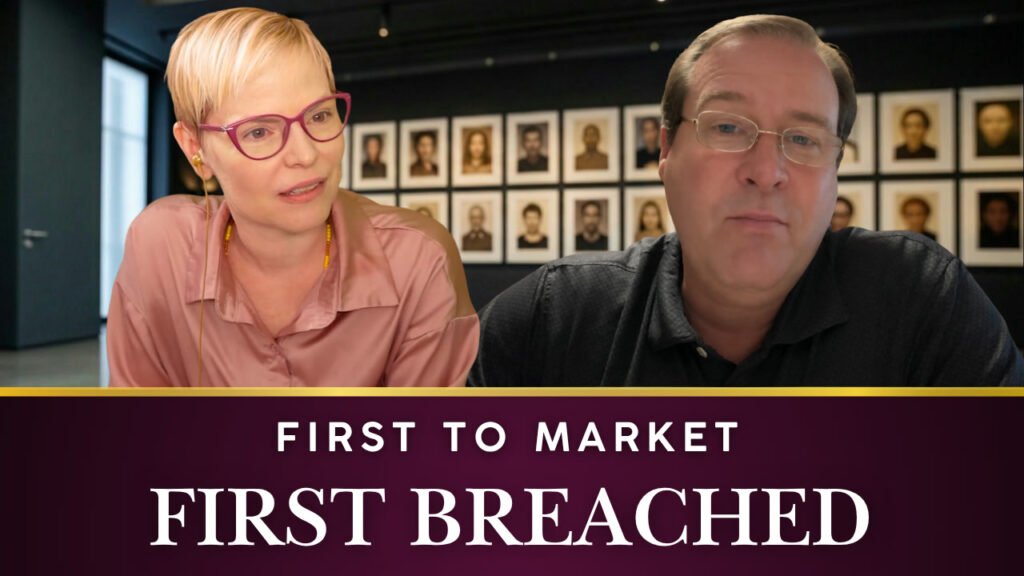
Phil Vanek and David Crean on What Cell and Gene Therapy Investors Need to See
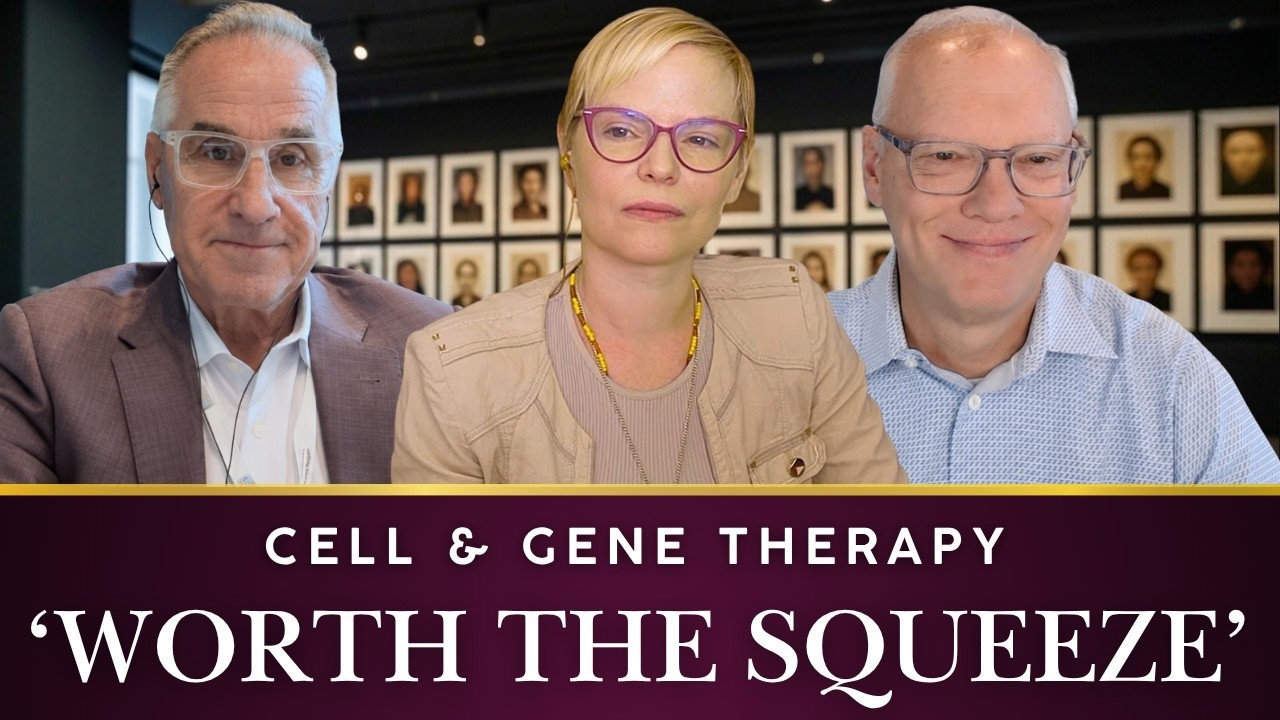
What you’ll learn
- How seed-stage investors judge the asset, the platform and the team
- Why CMC belongs near the top of the agenda, not in the appendix
- What it means to write the label first with a target product profile
- How an investment banker ranks capital, reimbursement and manufacturing
- Why deals announced at JPM start months before the headline
Phil Vanek and David Crean come at cell and gene therapy funding from different sides of the table, and on what a founder has to show first they largely agree. Vanek is Chief Commercialization Officer of the International Society for Cell & Gene Therapy (ISCT), chairs the CGT Catapult Technology Advisory Board in the UK and invests in early-stage, founder-led platforms. Crean is founder and managing partner of Cardiff Advisory and a general partner at 1004 Venture Partners, with more than 30 years across investment banking, business development, M&A and chief business officer roles.
Lori Ellis opened with a tension she keeps hearing: the market looks strong from one side, while small and emerging biotechs say they cannot get capital. Her question was simple. If a cell and gene therapy company comes to you today looking for capital, what does it have to show before the conversation goes anywhere?
What a seed-stage founder has to show
Vanek described the programs that reach him as very early: ideas and founder-led platforms looking for a starting point, with seed rounds he put at $100,000 to $500,000. Non-dilutive research funding is harder to get in the US, though he still sees companies succeed with Small Business Innovation Research grants. The size of the check does not lower the bar. A founder still needs a business plan that leads to clinical translation, and he said the evaluation comes down to three things: “We really look at quality of asset, quality of platform and quality of the team and their ability to execute.”
Show me the asset, and the manufacturing plan
Crean said the platform story no longer sells enough on its own. Investors want a de-risked asset: evidence that the biology is real, ideally clinical data or at least clinically meaningful proof of concept, and proof that the product can be manufactured reproducibly. His frustration is CMC, the chemistry, manufacturing and controls work, treated like an item on the last five minutes of a board agenda. “I’ve seen so many cell and gene therapy companies fail on the CMC aspect,” he said. “It cannot be a part of the appendix.”
He framed it with a principle he was taught, that the product is a process and the process is the product. “If you cannot demonstrate consistency, scalability, and credible cost structure on this CMC, I frankly feel that the clinical story is really incomplete.” Vanek agreed from the ISCT side, calling manufacturing and control of the supply chain “the backbone of a successful product.” If a company cannot make the product or manage its supply chain, he said, it is dead in the water anyway.
Write the label first
Vanek’s starting point is the target product profile, the document that defines what will make a product succeed: whether the therapy matters, whether it can win in the market, whether there is enough therapeutic headroom, and whether the market needs another asset like it at all. “We encourage people to think with the end in mind and work backwards,” he said, so that the science justifies a medicine rather than “just a laboratory curiosity.”
Crean, who has written about the TPP, compared it to writing the label. “You should be doing that right up front,” he said, not at the end of phase two or going into phase three. “It’s not a marketing exercise. It’s guiding, frankly, your entire development strategy.” He said the FDA once published guidance on the subject and later pulled it, and that he still uses it with entrepreneurs. Vanek added that a good TPP sets a base case, best case and worst case, which forces a founder to face their assumptions against competing platforms.
Show me the data
Lori Ellis raised a newer worry: AI can now fabricate clinical studies, data and medical records. Does that change what an investor asks for? Crean’s answer was “Show me the data,” not data generated by artificial intelligence. “Capital today is underwriting the evidence and the milestones, not some scientific ambition or something made up.” Vanek said AI has a place in drafting documents and reviewing regulatory pathways, but that access to the experimental data, and how and where it was generated, still decides the question.
Capital, reimbursement, manufacturing, in that order
Asked when a founder should bring a reimbursement plan, Crean ranked the three pressures: “Capital first, reimbursement second and manufacturing costs third.” Without capital, a program stops before the other two matter. Reimbursement comes next because of a lesson from more than 30 years in the industry. He was taught that a drug was about safety and efficacy, and he now calls that incomplete. “It’s actually a four-legged stool. Safety, efficacy, who’s going to pay for it, and what price?”
He put manufacturing cost third on purpose. It is a major problem, but it is the one engineers can work against through process improvement, scaling and automation. Payment is not. “You cannot manufacture your way out of a product that no one’s going to be reimbursing,” he said. “These aren’t cash pay.” The cost side is covered in more depth in why cell and gene therapy is so expensive, and the capital side in where biotech money goes when venture capital stops.
Who pays, and how it differs by country
Vanek, speaking from ISCT’s global view, said payment systems differ around the world, so a launch strategy has to decide which geographies a high-priced therapy will reach. In the US, he said, price expectations tend to anchor on CMS and Medicare, and insurers’ willingness to pay is only part of the problem. “I think the bigger challenge is the willingness to pay but also the rules of how they will reimburse.” A hospital often pays for a CAR-T or a gene therapy first and is reimbursed later, after pre-approvals and negotiation with the insurer, a gap explored in why gene therapy reimbursement takes so long.
He pointed to the UK as a system that handles this well, setting pricing guidance from a broader analysis of therapeutic headroom and bringing a recommended price to the payers, and to the health technology assessments used across Europe. Crean’s cautionary case came from outside cell and gene therapy: Biogen’s aducanumab for early Alzheimer’s disease, which he described as having safety and efficacy but failing on reimbursement in the US and abroad. His point for founders was that a partner or an acquirer will not solve the payer question for them. “At some point you have to turn that light switch on,” he said, and the earlier it goes into the target product profile, the better.
Durability, and the juice worth the squeeze
Vanek explained what keeps investors interested despite the risk: unmet medical need in indications that conventional methods cannot treat, and durability, the promise of a cure or something close to it. Building the real-world evidence takes time, and there is a lot of complexity. “The juice has to be worth the squeeze,” he said, which is also why a costly therapy will not win in an indication that conventional treatment already serves well.
Deals start long before the headline
On mergers and acquisitions, Crean corrected a common founder assumption about the J.P. Morgan Healthcare Conference. A deal announced on the first Monday of JPM did not come together that week. “Those discussions started like nine months prior to that and they just held on to it,” he said, and with Asia-Pacific partners it can be two years. His advice is to learn your buyer and partner universe early and keep larger companies updated on your progress. Vanek added that founders should do diligence on their own investors, because they bring networks as well as capital, and should build their own reputation. For how investors read a founder in return, see what investors look for in a biotech founder.
The hardest call: a program that works
Crean, who has served as a board chair and lead independent director, said killing a program whose biology is not working is easy. The difficult case is “when you know that a program works, the biology is there, the rationale is there and you have some encouraging evidence but the company doesn’t have enough capital to fund everything.” It becomes portfolio management, and shareholders will ask whether the board did its fiduciary duty. His book, Dual Fluency, makes the broader case behind the whole conversation: science and capital have to learn to speak to each other.
For founders, both closed on fundamentals. Crean said he has never seen innovation progress as fast, that capital is out there but more selective, and that it takes grit. Vanek said not to forget the business questions: can you win in the market, can you progress the asset, and can you attract the investment you need. Vanek’s earlier Open Door Salon conversation on what cell and gene therapy costs picks up the affordability side of the same problem.
There’s a lot of complexity. So the juice has to be worth the squeeze.
Key takeaways
- Seed checks get full rigor. Phil Vanek evaluates the quality of the asset, the platform and the team’s ability to execute, even on rounds of $100,000 to $500,000.
- De-risk the asset. David Crean says investors want evidence the biology works and that the product can be manufactured reproducibly, not a platform story on its own.
- CMC belongs up front. Crean has seen many cell and gene therapy companies fail on CMC and says it cannot sit in the appendix.
- Write the label first. A target product profile written at the start guides the whole development strategy and forces a base, best and worst case.
- Show me the data. With AI able to fabricate evidence, Crean says capital underwrites evidence and milestones, not ambition.
- Capital, then reimbursement, then manufacturing cost. Crean’s ranking rests on a four-legged stool: safety, efficacy, who pays and at what price.
- Payment rules differ by country. Vanek calls US reimbursement rules the bigger hurdle and points to the UK’s pricing guidance as a model.
- Deals start early. A JPM announcement usually reflects discussions that began about nine months before, so founders should build buyer and partner relationships early.
- The hardest board call is cutting a program that works when there is not enough capital to fund everything.
Key Questions, Answered
What do seed-stage cell and gene therapy investors look for first?
We really look at quality of asset, quality of platform and quality of the team and their ability to execute.
Phil Vanek says a seed check of a few hundred thousand dollars still gets full rigor: the asset, the platform and whether the team can execute.
Why do investors want a de-risked asset rather than a platform story?
I want to see evidence that the biology is real, that it works... and that you can actually manufacture the product reproducibly.
David Crean says investors want proof the biology works and that the product can be made reproducibly, ideally with clinical data or a meaningful proof of concept.
Why does CMC matter so early for a cell and gene therapy company?
I've seen so many cell and gene therapy companies fail on the CMC aspect, and so it cannot be a part of the appendix.
Crean argues manufacturing and controls belong near the top of the agenda, because a clinical story without consistent, scalable, credibly costed production is incomplete.
When should a biotech write its target product profile?
It's like writing the label, if you will, and you should be doing that right up front.
Crean treats the target product profile as the label written first, a guide to the whole development strategy rather than a marketing exercise.
Has AI-generated evidence changed what investors ask for?
Capital today is underwriting the evidence and the milestones, not some scientific ambition or something made up.
Asked about fabricated studies and data, Crean's answer is to see the underlying data; Phil Vanek adds that how and where it was generated matters.
How do investors rank capital, reimbursement and manufacturing risk?
Capital first, reimbursement second and manufacturing costs third.
Crean ranks capital first because without it the program stops before the other two constraints are ever tested.
What is the four-legged stool of drug value?
It's actually a four-legged stool. Safety, efficacy, who's going to pay for it, and what price?
Crean says safety and efficacy are only half the case; a therapy also needs a payer and a price, and one-time therapies strain that equation.
Why is reimbursement for advanced therapies hard in the US?
I think the bigger challenge is the willingness to pay but also the rules of how they will reimburse.
Vanek describes hospitals paying for a CAR-T or gene therapy up front and being reimbursed later, after pre-approvals and negotiation with insurers.
What does the aducanumab story teach founders about payers?
It goes well beyond just, you know, from a safety and efficacy standpoint, that it's showing competitive differentiation versus standard of care and that you really need to understand that other dynamic, the payer dynamics.
Crean cites Biogen's aducanumab as a drug he says had safety and efficacy but failed on reimbursement, and urges early-stage companies to study payers early.
Why do biotech deals announced at JPM start so much earlier?
Those discussions started like nine months prior to that and they just held on to it.
Crean says a deal announced at the J.P. Morgan Healthcare Conference usually reflects months of relationship-building, sometimes two years with Asia-Pacific partners.
How should a cell and gene therapy company harden its supply chain?
Do you have redundancy where needed? If it is a sole source product, is the supplier up to the quality standard?
Vanek checks manufacturing supply for redundancy, supplier quality and scale, and the distribution side for cold chain and patient identity management.
What is the hardest decision a biotech board faces?
The difficult situation is when you know that a program works, the biology is there, the rationale is there and you have some encouraging evidence but the company doesn't have enough capital to fund everything.
Crean, a former board chair and lead independent director, says the hard call is choosing among working programs when capital runs short.
Resources
- International Society for Cell & Gene Therapy (ISCT) The global society where Phil Vanek is Chief Commercialization Officer.
- ISCT names Phil Vanek Chief Commercialization Officer ISCT’s announcement of the appointment.
- CGT Catapult Technology Advisory Board The UK advisory board Vanek chairs.
- Cardiff Advisory The life sciences M&A and strategic advisory firm David Crean founded and leads.
- 1004 Venture Partners The venture firm where Crean is a general partner.
- David H. Crean on Substack Crean’s writing on science, capital and governance, the themes of his book Dual Fluency.
- SBIR program The US Small Business Innovation Research program Vanek mentions as a route to early non-dilutive funding.
- NICE The UK body that appraises new therapies for the NHS; our pointer for the UK pricing approach Vanek describes.
- Biogen to Realign Resources for Alzheimer’s Disease Franchise Biogen’s January 31, 2024 announcement discontinuing Aduhelm (aducanumab), the case David Crean cites.

Need the life-sciences signal but short on time?
Get the free quarterly briefing: every guest from the quarter, in one sitting. What decides whether a therapy reaches a patient, gets funded, and can be trusted.