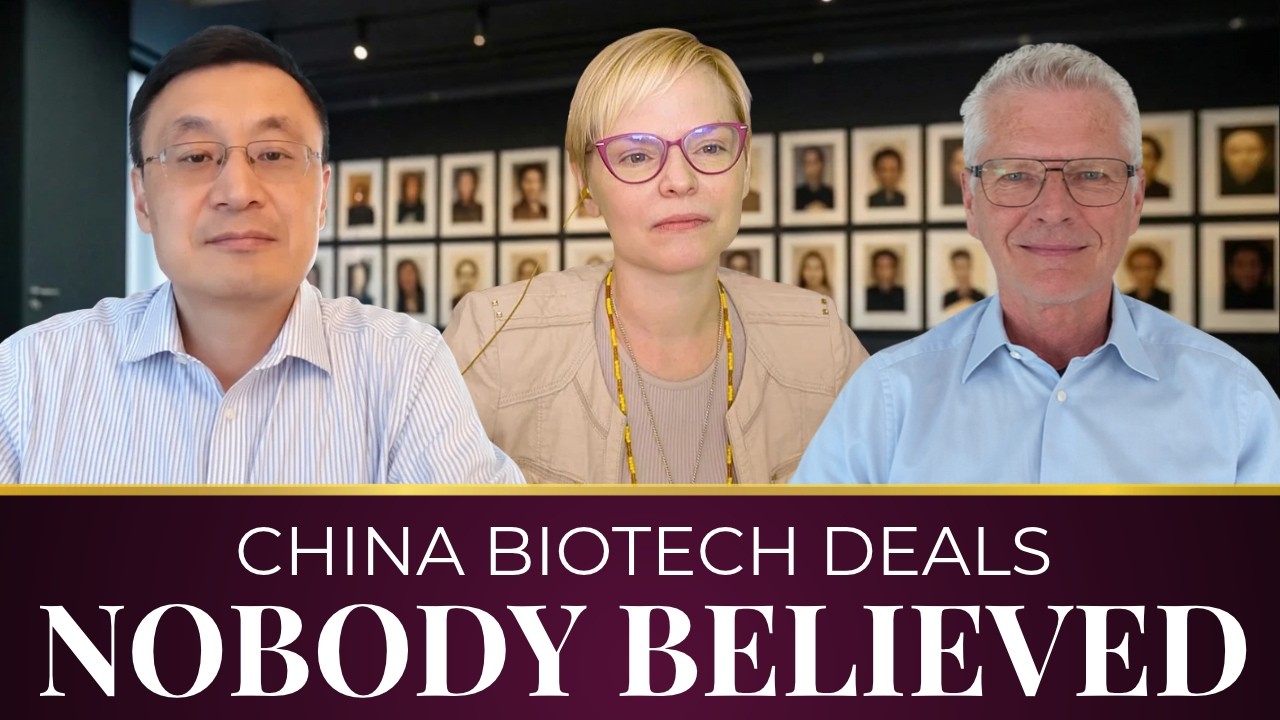
Ying Huang and Ansbert Gadicke on China Biotech Licensing, Deal Prices and Trust in Trial Data
What you’ll learn
- Why large drug companies first doubted clinical data from China, and what Johnson & Johnson checked before backing Legend Biotech
- How K2 Therapeutics uses a Singapore base and a portfolio of licensed assets to lower development risk
- Why big pharma licenses Chinese assets instead of acquiring Chinese companies, and whether the bargain era is over
- What US biotech founders competing with Chinese assets for the same capital should build
- What new rules in Washington and Beijing, and trial deaths in China, mean for diligence and trust
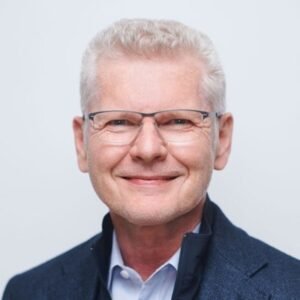
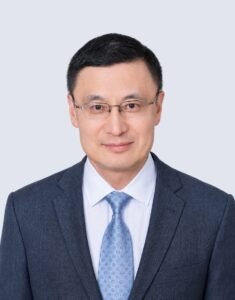
Not long ago, large drug companies doubted clinical data from China. Now they license Chinese assets at a pace that is changing how biotech is funded. Ying Huang is chief executive officer of K2 Therapeutics and was chief executive officer of Legend Biotech, whose China-born cell therapy Carvykti was approved in the US and Europe in partnership with Johnson & Johnson. Ansbert Gadicke is founder and managing partner of MPM BioImpact, a biotech venture firm. With host Lori Ellis they covered how trust in China’s data was earned, why licensing has become the standard deal, what US founders should build now, and what the new rules in Washington and Beijing ask of everyone.
Why didn’t drug companies believe Legend’s data?
When Legend signed its global collaboration with Johnson & Johnson in 2017, a licensing deal for a China-developed therapy was unusual, and the first question from potential partners and investors was whether the data could be trusted. Huang said the answer came from diligence: J&J went through patient-level data and interviewed the principal investigator, with a language barrier and a team that had to travel to China to do it.
Fortunately, our partner, Johnson & Johnson, did great and very deep diligence on the Legend dataset.
Gadicke remembered the skepticism from the other side of the table. At the time, he said, China was known for low-cost manufacturing and generics, and no first-in-class or best-in-class drugs had come out of it:
At the time, several large pharma companies told me in those discussions, well, we don’t believe the data.
What is K2 Therapeutics trying to build?
A portfolio company incorporated in Singapore that licenses promising assets and develops them for global markets. Huang described it as a hub-and-spoke model.
I firmly believe in this risk-taking, but also a balanced approach by assembling a portfolio of assets.
Part of the case is risk. If a partner has already run a phase one study in China, Huang said, the safety and pharmacology data come from human patients before K2 brings the asset to the US:
For example, if our partner has already gone through a phase one study in China, then we know that the safety, the PKPD, and also maybe even a preliminary efficacy signal has been demonstrated already in a study in human patients.
Is China’s share of biotech deals here to stay?
Both guests expect it to last. Gadicke said that before Legend there were essentially no first-in-class or best-in-class drugs coming from China, and that today business development deals from China already run a little above 50% when set against US biotech. The open question, in his view, is where it levels off.
Huang laid out both sides of the market. On demand, large drug companies face roughly $300 billion to $350 billion of products losing patent protection by the early 2030s and need to refill their pipelines. On supply, more than 4,000 biotech companies operate in China, each with several programs, and China’s domestic market cannot fund them all, so out-licensing is how many of them raise capital. Asked whether India could follow, Gadicke said he has not seen the same development there and pointed to the state support Chinese biotech companies receive. Huang pointed to the ecosystem: around Shanghai’s Pudong district, contract research, manufacturing and clinical providers sit close together, and that kind of cluster takes a long time to build.
Why does big pharma license instead of buy?
Huang could name one full acquisition of a Chinese biotech by a Western drugmaker, AstraZeneca’s purchase of the cell therapy company Gracell. Nearly everything else is licensing, he said, partly because acquiring a Chinese company means government and antitrust reviews and complicated ownership structures. Gadicke said investors prefer licensing too, because equity carries more geopolitical risk, governance is hard to enforce, and Chinese biotech companies are hard to exit:
We actually, as a principle for now at least, don’t invest in equity in China and only do licensing deals.
On price, both see inflation in upfront payments, driven by more bidders than assets. Gadicke said Chinese companies often start out asking for the large pharma deals that only a few projects get each year, and lower their numbers once they meet venture investors or biotech buyers. Huang said reasonable deals are still available outside the most crowded target areas.
How can US biotech founders compete for capital?
By working where the West still leads. Gadicke said Western founders are competing with Chinese assets for the same funds, and that one kind of company has stopped getting funded:
A few years ago, a US biotech company could get funded if it was doing an interesting me too product. That is not fundable anymore because everybody knows if you’re looking for something that comes slightly better, you’ll probably find 20 in China.
His example was Orna Therapeutics, a circular RNA company MPM helped build that Eli Lilly agreed to acquire. By the time of the sale, he said, dozens of Chinese companies were working on the same idea, and Lilly still chose the original innovator. Huang added a second route: cross-border work. K2 has taken a novel target and its biology from a Boston research institution to a company in China to build drug candidates, with the plan to bring a successful asset back to the US for development.
How are they handling the new rules in Washington and Beijing?
Lori asked about proposals in Washington to review Chinese assets and limit how China trial data is used. Gadicke started from patients, saying the best products cannot be kept from them, though some leveling of the playing field may make sense:
To basically ban Chinese products in general from the US market, I think is not a good idea. And I think it’s probably not doable at all.
Huang noted that China had just published its own draft rule restricting the export of cell and gene therapy and siRNA technology platforms. He argued that licensing deals give US patients medicines cheaper and faster and give Chinese companies non-dilutive capital. K2’s Singapore incorporation is meant to buffer that cross-border work, he said, and the FDA remains the standard K2 develops to.
What diligence does a China partner need?
Lori raised a question an earlier guest had put to dealmakers: what happens if a partner becomes a restricted entity tomorrow? Huang said K2 plans for business continuity, checks that partners are purely drug discovery organizations, studies their ownership and their intellectual property, and spreads risk across a basket of assets. Gadicke said the diligence has to match what a company would do in the US:
I think due diligence in getting products from China has to be as thorough as what you would do in the US. And I think that absolutely requires that one has a team locally. The team must be bilingual.
K2 and MPM keep teams in Singapore and Shanghai, he said, because site visits mean reading patient charts written in Chinese, and it runs a full-time IP team that rejects projects infringing on Western intellectual property.
What would rebuild trust after trial deaths in China?
Lori asked about deaths in Chinese clinical trials that became public months later, and lawmakers’ calls for the FDA to audit trial sites in person. Huang said he agrees the FDA should audit those sites, that adverse events and deaths must be reported transparently, and that K2 designs even its China protocols to global standards:
At the end of the day, I think quality and standard is non-negotiable.
What has to go right for patients?
Differentiation, both guests said. Huang returned to Carvykti: patients with multiple myeloma who had failed the three major classes of treatment had a life expectancy of less than a year, and in the CARTITUDE-1 trial median survival reached about five years.
So essentially we prolonged the survival from less than a year to on average five years for those patients.
Gadicke agreed that marginal improvements are not the goal at K2 or MPM. The two also described what drew them to the work. Huang moved from pharma research to Wall Street and back because he wanted to work on an approved drug. Gadicke left oncology practice for research, then built a specialized biotech investment firm.
The full conversation is above. For more on the policy side, see the earlier episode on the regulatory wave reshaping China biotech deals and our post on whether clinical trials in China are reliable.
This page is drawn from the recorded, on-the-record conversation on Open Door Salon; quotes are lightly edited for clarity, and the full episode is the record.
If you can really improve the quality of life and prolong the survival time for cancer patients, that’s the gold standard.
Key takeaways
- Trust was earned through diligence. Johnson & Johnson reviewed Legend’s patient-level data and interviewed the principal investigator before backing a therapy developed in China.
- Skepticism was the starting point. Ansbert Gadicke recalled large drug companies telling him they did not believe the data, at a time when China was known for generics and low-cost manufacturing.
- Data from patients lowers risk. Ying Huang said an asset that has already completed a phase one study in China arrives with human safety and pharmacology data.
- The shift looks durable. Gadicke estimated that business development deals from China already run a little above 50% when set against US biotech. Huang pointed to $300 billion to $350 billion of products losing patent protection and more than 4,000 Chinese biotechs needing capital.
- Licensing is the standard deal. Acquisitions of Chinese companies face government and antitrust review, and MPM BioImpact, as a principle for now, licenses assets and does not take equity in China.
- Me-too products no longer get funded in the US. Gadicke said founders should work on new technologies and novel targets, where the West still leads.
- Diligence has to be local. Gadicke said a China partner needs the same diligence as a US one, from a bilingual team that can read patient charts on site and an IP team that screens out infringement.
- Differentiation is the test. Huang said Carvykti mattered because it extended survival for heavily pretreated patients with multiple myeloma from less than a year to about five years.
Key Questions, Answered
How did Johnson & Johnson get comfortable with Legend’s data from China?
Fortunately, our partner, Johnson & Johnson, did great and very deep diligence on the Legend dataset.
Ying Huang said J&J reviewed patient-level data and interviewed the study’s principal investigator, with more diligence than it would usually run on a Western company.
How did large drug companies first react to clinical data from China?
At the time, several large pharma companies told me in those discussions, well, we don’t believe the data.
Ansbert Gadicke said several large drug companies doubted the data, and an academic expert questioned how side effects were recorded in China.
Why do assets already tested in China lower development risk?
For example, if our partner has already gone through a phase one study in China, then we know that the safety, the PKPD, and also maybe even a preliminary efficacy signal has been demonstrated already in a study in human patients.
Ying Huang said licensing assets with human data from China gives K2 a higher likelihood of success in global development.
How does China compare with US biotech on business development deals?
Right now, if we look at the number of business development deals and compare China with US biotech, it’s already probably a little bit above 50%.
Ansbert Gadicke expects the shift to last; the open question, he said, is where it levels off.
Why are drug companies licensing so many Chinese assets?
So we know that there are many, many major pharmaceutical companies out there who actually need to replenish their pipeline.
Ying Huang pointed to patent expirations on the demand side and more than 4,000 Chinese biotech companies that need capital on the supply side.
Why does MPM BioImpact license Chinese assets without taking equity?
We actually, as a principle for now at least, don’t invest in equity in China and only do licensing deals.
Ansbert Gadicke cited geopolitical risk, hard-to-enforce governance and the difficulty of exiting Chinese biotech companies.
Is the bargain era for Chinese assets over?
So by definition, the vast, vast, vast majority of projects don’t get this pharma deal that they want.
Ansbert Gadicke said asking prices have risen, but most companies lower them once they meet venture or biotech buyers.
What can US biotech founders still get funded for?
A few years ago, a US biotech company could get funded if it was doing an interesting me too product. That is not fundable anymore because everybody knows if you’re looking for something that comes slightly better, you’ll probably find 20 in China.
Ansbert Gadicke said founders should focus on truly new technologies and ideas, where the West still leads.
Why is K2 Therapeutics incorporated in Singapore?
That’s where we’re legally incorporated because we think that location offers a buffer for this kind of cross-border collaboration.
Ying Huang said Singapore lets K2 combine development in China with global trials run to US and European standards.
What diligence does licensing an asset from China require?
I think due diligence in getting products from China has to be as thorough as what you would do in the US. And I think that absolutely requires that one has a team locally. The team must be bilingual.
Ansbert Gadicke said that means site visits, patient charts read in Chinese and a full-time IP team.
How should sponsors respond to trial deaths in China?
At the end of the day, I think quality and standard is non-negotiable.
Ying Huang said he agrees the FDA should audit China trial sites in person and that adverse events must be reported transparently.
What did Carvykti show about differentiation?
So essentially we prolonged the survival from less than a year to on average five years for those patients.
Ying Huang said the first test for any asset is whether it is differentiated in safety and efficacy for an unmet medical need.
Resources
- MPM BioImpact The venture firm Ansbert Gadicke founded in 1992 and leads as managing partner.
- K2 Therapeutics appoints Ying Huang as CEO BioSpectrum Asia, August 2026: K2’s Singapore base and its portfolio of licensed programs.
- CARTITUDE-1 five-year final analysis Journal of Clinical Oncology, 2025: long-term remission and survival after cilta-cel (Carvykti) in heavily pretreated multiple myeloma; median overall survival 60.7 months.
- Lilly to acquire Orna Therapeutics Eli Lilly’s February 2026 announcement of its agreement to acquire the circular RNA company.
- AstraZeneca completes Gracell acquisition Pharmaceutical Technology, February 2024: the acquisition of the China-based cell therapy company.
- China proposes biotech export restrictions Morgan Lewis, October 2026: the draft rule on cell and gene therapy and siRNA platforms, and what it means for licensees.
- China clinical trial deaths and FDA oversight PharmaVoice on the trial deaths disclosed months later and lawmakers’ calls for FDA audits of China trial sites.
Need the life-sciences signal but short on time?
Get the free quarterly briefing: every guest from the quarter, in one sitting. What decides whether a therapy reaches a patient, gets funded, and can be trusted.