When War Stops a Patient’s Treatment: Anna Titkova and Prashant Yadav on Global Health in Crisis
What you’ll learn
- Why clinical trials cannot simply pause when a war begins, and what it took to keep Ukrainian patients in treatment
- How pharmaceutical supply chains push low- and middle-income countries to the back of the queue in every crisis
- Why confidence in the US FDA as the global gold standard is eroding, and why it is not a partisan story
- What China's bilateral health diplomacy actually offers, and the accountability it leaves out
- Why reforming global health institutions is not the same as dismantling them
The instinct, when a crisis hits, is to treat it as its own event, separate from the last one and the next. Anna Titkova and Prashant Yadav spent this conversation arguing that the instinct is wrong, and that the cost of getting it wrong lands on the patients least able to absorb it.
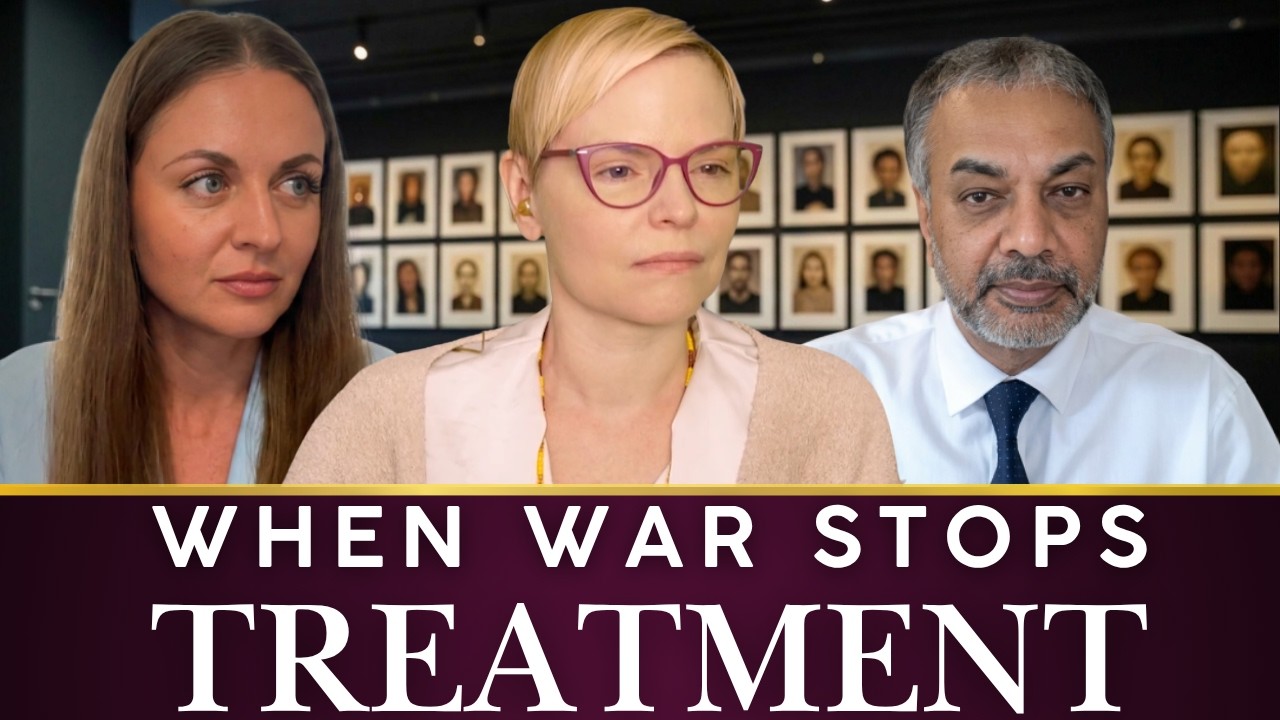
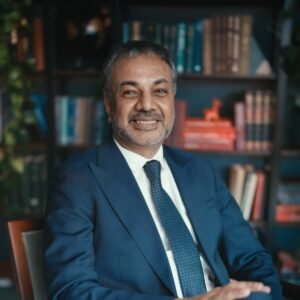
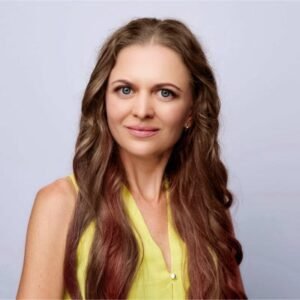
Anna Titkova (MD, PhD, MBA) leads Pratia’s clinical research site network across multiple European countries, and previously built and led clinical research operations in Ukraine. Prashant Yadav is a Senior Fellow at the Council on Foreign Relations, a professor and internationally recognized expert in pharmaceutical supply chains, global health, and access to medicines. Host Lori Ellis brought them together to look at what happens to global health when two wars, a fragile regulatory environment, and the threat of another pandemic arrive at once.
Clinical trials do not pause for a war
Anna Titkova was running clinical operations in Ukraine when the invasion began in 2022. She described the first days plainly: shock, then a focused urgency, then colleagues calling each other not as coworkers but as people, asking whether everyone was still alive. Her patients were vulnerable before any of it started. They depended on the trials for treatment, and when shipments stopped, that lifeline stopped with them.
She returns often to one case: a young woman with Hodgkin lymphoma who had exhausted every available treatment in Ukraine and was, in Titkova’s words, literally dying. A single clinical trial fit. The patient started in December 2021, completed three rounds of chemotherapy with positive results, and then the war stopped the treatment. Titkova’s team managed to transfer patients out of Ukraine to sites that were never set up to receive them. She tells the story to remind the industry that the people inside these trials are not data points. They are the reason the work exists.
The market does not see the patients at the back of the queue
Prashant Yadav widened the lens. Every conflict, and the pandemic before them, disrupts pharmaceutical supply chains in a familiar pattern. Wealthy markets have buffers. Low- and middle-income countries, small buyers, humanitarian programs, and government purchasers do not, so they get pushed to the back of the queue. A war or a humanitarian emergency then turns a supply disruption into an access problem for exactly the populations with the least margin.
Yadav is, by his own description, a believer in markets and a business school professor. That is what makes his warning land. The market does not see the patient on lifelong HIV treatment in Africa, the person who needs second-line TB drugs in Ukraine, or the child who still needs vaccinating in a country at war. Those gaps used to be filled by grant funding and multilateral aid. As that architecture frays, the risk sits unaddressed.
A regulator’s credibility is hard to build and easy to erode
Titkova flagged a second kind of instability layered on top of the physical one: regulatory uncertainty. Yadav agreed, and was direct about the United States. The FDA has spent more than 75 years earning its standing as the global gold standard. When other countries see leadership churn, staff departures, and open questions about whether decisions are driven by science, that confidence erodes. He was careful to note this is not a partisan point. The erosion crosses the political spectrum at home, and it reaches regulators and patients abroad who always assumed their own systems would be backstopped by a credible one.
Who fills the gap, and on what terms
Both guests resisted the easy answer that another government will simply step in. Yadav noted that the United States remains the largest funder of global health even through recent disruption, and asked the harder question: why have other wealthy nations and large emerging economies not raised their share? China is expanding its bilateral health work, but on a different model, one built around large infrastructure projects rather than the slow, accountable programs that reduce malaria over a decade. A finished hospital is something an elected leader can point to. It does not build the civil-society accountability the previous system carried.
Titkova kept returning to the most basic need. For displaced patients, the problem is often simply knowing where and how to get care. Someone who has fled to a new country without the language or any contacts cannot navigate a health system, however well-funded it is. Systems, she argued, have to be built to adapt, because no one knows where the next disruption will land.
Reform is not the same as dismantling
Yadav’s prescription pushed past the usual list of governments and large pharmaceutical companies. He wants more attention on entrepreneurs, especially young people inside affected countries, who work in the gaps a large institution moves too slowly to reach. His example is an entrepreneur who notices that a truck runs empty in one direction and loads it with medicine. On institutions like the World Health Organization, he was firm. Making an organization more efficient is not the same as abandoning it. The reform agenda is overdue, but the answer is to make the feedback loops faster, not to tear the structure down.
Asked for the hardest decision of his career, Yadav described living with his feet in two boats, academic and practitioner, and finally accepting that he would never stand cleanly in one. Titkova’s answer was heavier: leading clinical operations through the outbreak of war, making the best decisions she could with imperfect information while trying to keep some humanity in the work. Looking back, she said she is proud of what her team saved by simply continuing, imperfectly, with fear, and with a larger purpose.
The throughline is the one Yadav named at the start. The crises are not separate. The question underneath all of them is the same: how do you protect patients and keep care reaching them when normal operations break down? This conversation is a serious attempt to answer it.
Anna Titkova went deeper on the mechanics of keeping research alive under fire in a companion piece: what happens to clinical trials during a war.
Leadership during the crisis is not about having all of the answers. It's about making the best decisions possible with imperfect information, but keeping at least some humanity inside yourself, inside your business, and inside your communication.
Key takeaways
- Crises are not separate events. Whether it is a war, a supply shock, a cyber threat, or a pandemic, the question is the same: how do you keep care reaching patients when normal operations break down.
- Clinical trials are treatment, not just data. When the war stopped shipments into Ukraine, patients who depended on trials for care lost their lifeline, and some could not be saved.
- The vulnerable are always at the back of the queue. Wealthy markets carry supply buffers; small buyers, humanitarian programs, and low-income countries do not, so disruption becomes an access crisis for them first.
- The market does not see the least profitable patients. Lifelong HIV treatment, second-line TB drugs, and childhood vaccines in fragile settings are the gaps grant funding used to fill, and that funding is fraying.
- Regulatory credibility is fragile. The FDA built its gold-standard reputation over more than 75 years; leadership churn and staff departures erode the confidence other countries and patients placed in it, across the political spectrum.
- China can fill gaps, but not on the old terms. Its model favors large infrastructure projects over slow, accountable programs, and leaves out the civil-society accountability the previous system carried.
- Entrepreneurs reach the gaps institutions cannot. Young problem-solvers inside affected countries move faster than large agencies and find the underused assets others miss.
- Reform is not dismantling. Global health institutions need faster feedback loops and real efficiency, not demolition, and the appetite for serious change is higher now than it has been in years.
Key Questions, Answered
What happened to clinical trials in Ukraine when the war began?
those first days are very difficult to put in words what has happened... for our patients... they were vulnerable even before the war
Anna Titkova on the shock of the first days and why trial patients were already vulnerable before the invasion.
Why does every global crisis hit the same patients hardest?
pharmaceutical supply chains get disrupted... small buyers, humanitarian programs, small government purchasing, these are the ones which are usually put at the back of the queue
Prashant Yadav on supply-chain buffers, and why low-income countries and humanitarian programs get pushed to the back of the queue.
Are companies retreating to only the safest places to run trials?
there is a growing risk that innovation becomes concentrated in the most stable and wealthiest regions... are we building a global research ecosystem that remains inclusive during these times of instability or we're just retreating towards only the safest and easiest locations where it's easy to operate?
Anna Titkova on the risk that clinical innovation concentrates in the wealthiest, most stable regions.
What happened to patients when their treatment stopped?
she started this participation in this clinical trial in December 2021 and she passed three chemotherapy with positive outcomes with positive results and then the war started treatment was stopped
Anna Titkova on a young lymphoma patient whose trial treatment was halted by the war.
Why is confidence in the US FDA eroding?
there is constant changes not just at the top leadership level but at multiple mid-tier levels. There is staff exodus... now that confidence is constantly getting eroded and this is not a political issue
Prashant Yadav on leadership churn, staff exodus, and why eroding confidence in the FDA is not a partisan issue.
Who is most at risk when a crisis hits?
the people who are most at risk or the countries and communities that are most at risk are the ones who are least visible to the market mechanism... the market doesn't see the patients on lifelong HIV treatment in Africa
Prashant Yadav, a self-described believer in markets, on who the market mechanism fails to see.
Can China fill the gap left by US and European funding?
China has a resourcing both in terms of money resourcing but also in terms of providing quick infrastructure... the China partnership model it has been more about giving money for a large infrastructure project
Prashant Yadav on China's infrastructure-first health diplomacy and the accountability the old model carried.
What do displaced patients actually need?
patients just need to understand where and how they can get a medical care... they should understand how they can get a simple medical treatment and care inside the countries
Anna Titkova on the most basic gap for displaced patients: knowing where and how to find care.
What role can entrepreneurs play in fixing global health?
what part of this can be filled by entrepreneur... in particular young people within countries... a truck goes here empty and comes back filled. What can I do to use the front leg of this truck which goes empty and bring some medicines in it?
Prashant Yadav on young entrepreneurs who solve access problems large institutions move too slowly to reach.
Should we reform or dismantle global health institutions?
making an organizational structure more efficient isn't the same as abandoning it or dismantling it... we should pursue where we can bring greater efficiency foster... responsiveness to many of the institutions
Prashant Yadav on why overdue reform of the WHO and others means faster feedback loops, not demolition.
Resources
- World Health Organization The UN health agency at the center of the reform debate discussed in this episode.
- Prashant Yadav — Council on Foreign Relations Yadav's CFR profile; Senior Fellow for Global Health and a leading expert on healthcare supply chains.
- KFF: The U.S. Government and Global Health Independent tracking of US global health funding, the largest single source worldwide.
- Pratia The clinical research site network Anna Titkova leads across Europe; she previously led clinical research operations in Ukraine.
Need the life-sciences signal but short on time?
Get a free quarterly briefing: four pages on what life-sciences operators are actually saying about Biosecure, AI hype vs. substance, and the $50,000 cell-therapy question. Ten minutes, in your inbox.