
How Is AI Changing Doctor-Patient Conversations?
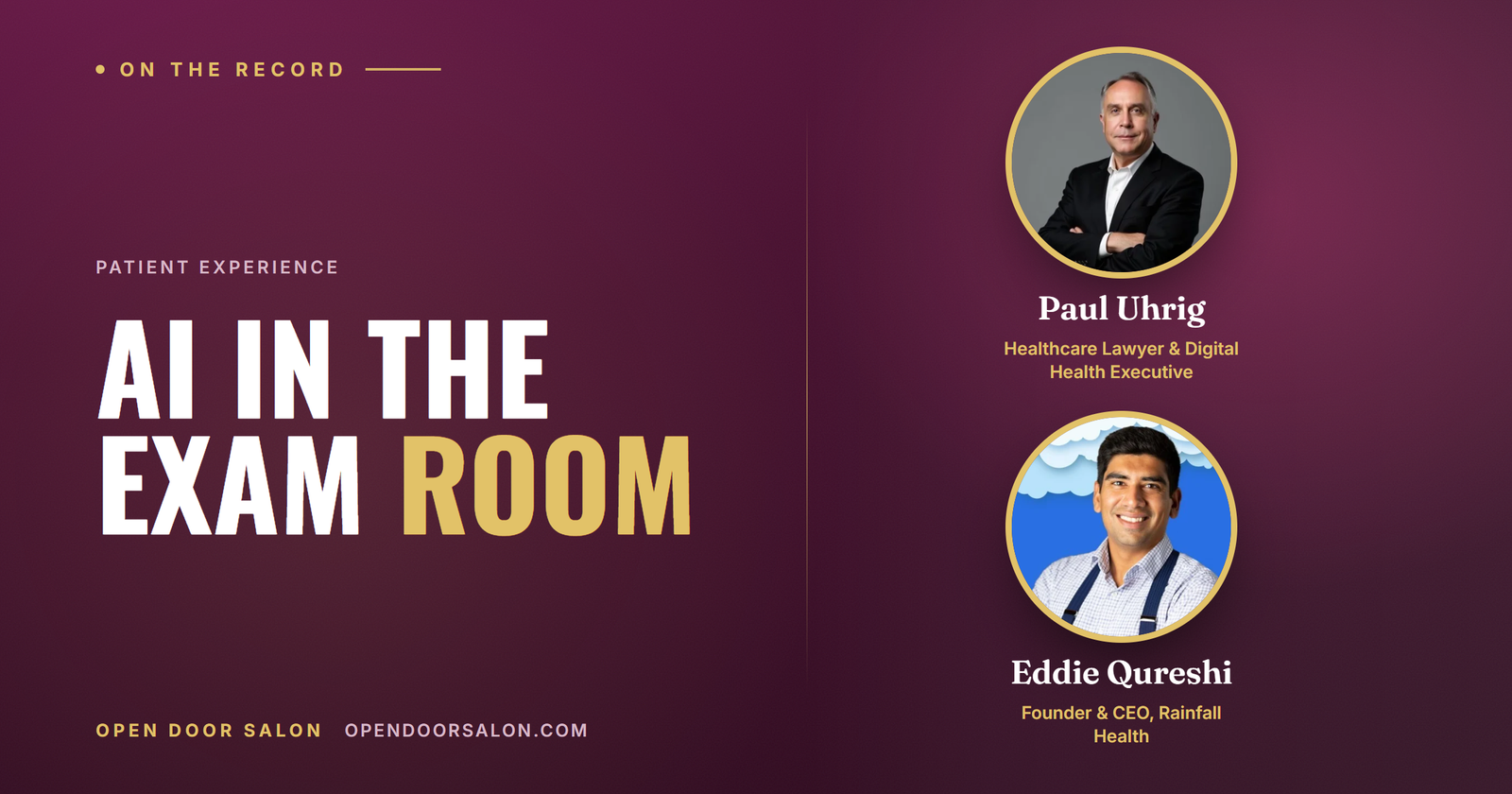
AI is changing doctor-patient conversations because patients now arrive having already talked to one. With their medical records connected to large language models such as ChatGPT and Claude, many come in with sharper questions and sometimes with a proposed plan of care. Paul Uhrig, a healthcare lawyer and former chief legal and digital health officer at Bassett Healthcare Network, told Lori Ellis on Open Door Salon that this can produce a better informed patient, and can also lock a patient into the wrong plan. Eddie Qureshi, founder and CEO of Rainfall Health, said it is part of a wider shift in which patients behave like consumers.
What has changed in the exam room?
The starting point of the conversation. Uhrig traced the shift through what a clinician told him recently:
It used to be that the patient would come in with just their symptoms, right? And the clinician would then do his or her job.
For the past 20 years or so, patients also arrived with whatever Dr. Google had told them. The newest step is different in kind, because the patient’s own records are now part of what the model sees:
Now that patients can connect their medical records to LLMs like Claude and ChatGPT, I think it really has changed the conversation.
What do patients bring to the visit now?
Sharper questions, and sometimes a plan. Uhrig described what patients bring with them as a result:
They now come in not only with the symptoms, but they come in often with better questions about their care and sometimes with the proposed plan of care for their care, right?
He placed it at the end of a long effort on patient access to data and interoperability, and said earlier milestones, such as connecting records to a phone’s health app, did not change what a patient could actually do in the same way.
Is it good for patients to use AI before a visit?
It can be, and Uhrig called it a double-edged sword. The upside is a better informed and more engaged patient. The risk is what happens when the model’s answer is wrong:
That may lock the patient into thinking this should be the course of action when the physician really wants to recommend a different conversation or a different plan of care.
Lori Ellis said healthcare providers who have been on the show describe the same tension: AI giving patients misinformation, or an answer that is not wrong but leaves out what matters. That gap, she said, is where a provider is needed.
How should health systems respond?
By planning for it. Uhrig said health systems should embrace that it is happening and talk it through with the patient instead of challenging them, and he raised a practical consequence:
You maybe even think about what’s the length of the encounter now because you’ve got this extra dynamic.
A patient who arrives with a plan needs time to have it engaged with, and a visit sized for the old conversation may not have room for that. One AI tool is already in the exam room on the clinician’s side: ambient listening, which drafts the visit note so the clinician can stay focused on the patient.
Why are patients acting like consumers?
Because they compare healthcare with everything else they use. Qureshi said the change is the one other industries already went through, arriving late in healthcare:
The fact that I can click on an app and have like an actual physical product delivered to my home a few hours later, and then I’m looking at my health care, which is a service and has data, and ... I can’t get it for months. To me as an individual, there’s a disconnect.
He was relaying a point made to him by an executive who sits on the boards of several global consumer brands: hospitality, retail and leisure all had to rebuild around the internet, and healthcare is going through the same change a little later, because however the industry segments them, patients and consumers are the same people. He said the signal for vendors and health tech leaders is that people want care in closer to real time, delivered in a way that fits how they already live:
Meeting them where they are versus asking them to shift their behaviors to comply with a system that’s still evolving.
What does this mean for patient privacy?
It raises it, because the records patients connect to these tools usually leave the protections they had inside the health system. That question is covered in our earlier post on whether health data in ChatGPT is protected by HIPAA. The gap between hospitals adopting digital tools and patients still struggling to reach a doctor is a thread from an earlier episode with a hospital CIO and a community advocate on the digital divide. On the health system side, the same two guests explain why hospital AI pilots so often fail to scale.
For a sense of what happens after the visit, see our earlier post on the 30 days after surgery under Medicare’s TEAM model.
Companies that want to reach the leaders who follow this conversation can learn about sponsoring Open Door Salon.
This post is drawn from the recorded, on-the-record conversation between Lori Ellis, Paul Uhrig and Eddie Qureshi on Open Door Salon.