“There’s a 15 Minute Window on a Certain Tuesday” | Why Your Biotech Can’t Get Funded | Stone & Wiklund
What you’ll learn
- Why VCs stopped funding platform technologies and now want a single asset with a binary outcome
- What the 15-minute window is, and why founders keep missing it
- How companies fall between the cracks between a seed round and a Series A
- Why tools and manufacturing tech stay underinvested even as the biology depends on them
- What a fundable biotech now has to bring to investors, and why Europe is part of the pitch
Every founder who has raised money knows the feeling of being told no for reasons that have nothing to do with the science. Edwin Stone gave that feeling a shape, and it is the reason this episode has the title it does.
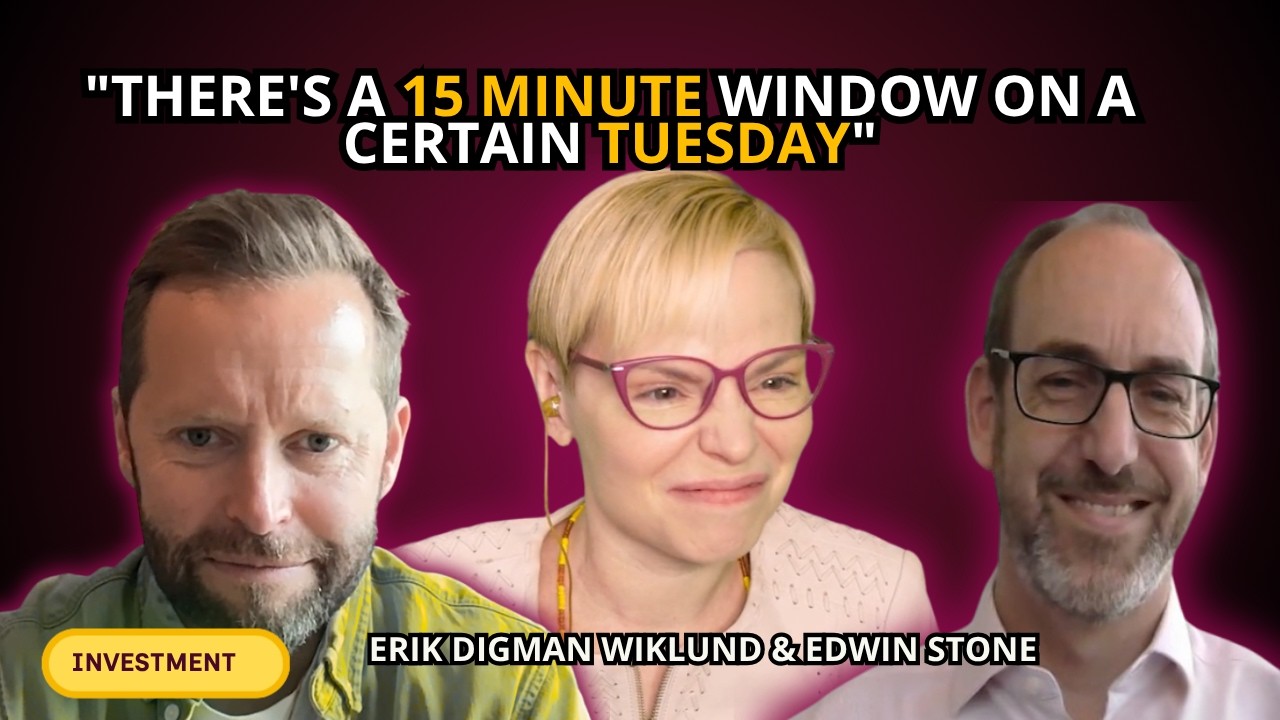
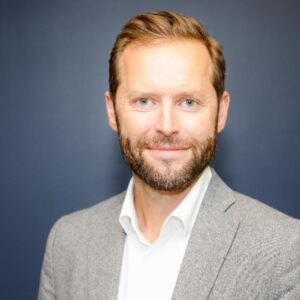
“For investors there is probably about a 15-minute window on a certain Tuesday where you fit into the right window,” he says. “It does appear there is a very very narrow window of time which may be measured in minutes when you are absolutely at the right window for an investor.” Stone is CEO of Cellular Origins, which builds robotic automation for cell therapy manufacturing, and describes “20 years working with entrepreneurs” behind the observation.
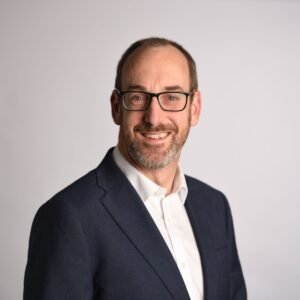
Erik Digman Wiklund hit it from the other side. CEO of Circio Holding, which develops a circular RNA expression platform alongside next-generation AAV gene therapies, he was told by venture investors that his company was simultaneously too early and too late. He stopped trying to fit and raised the money somewhere else entirely.
The platform problem
The clearest structural change both men describe is what investors now want to buy. “VC investors have stopped investing into platforms,” Wiklund says. “They now want much more clean asset plays. They want one program, take it to the clinic. They want disease so that it’s a binary bet on that being approved or not.”
That is a difficult thing to be on the wrong side of when your company is, by construction, a platform. Circio’s technology expresses genes through circular RNA, which is not an asset so much as a way of making many assets. Wiklund describes having to force-fit an equity story into an asset-centric shape that never really suited it, and eventually declining to. “We actually opted for moving this technology into a listed company and raising money in the public markets instead,” he says, “which turned out to be much easier and allowed us to raise $35 million.”
Stone’s theory for why platforms fell out of favor does not blame the platforms. It blames what the industry did with the money. “There was a huge amount of capital sunk into building facilities. Every biotech had its own manufacturing facility,” he says, with tens if not hundreds of millions deployed. “That’s always going to be an expensive way to build an industry.” The capital inefficiency was real. It may simply have been attributed to the wrong cause.
Falling between the cracks
The mechanics of the funding gap are more specific than most founders realize, and Wiklund lays them out precisely. A founding investor now anchors roughly half of a Series A and funds the company all the way through to a clinical readout. That works if you were built inside that system. If you were not, the structure has no slot for you.
“You may have something super compelling, but you fall between the cracks,” he says. “You may be too late for that founding round, and then you may have investors who don’t have the network or the sufficient capital to anchor up your Series A.”
The consequence is a company that is neither failing nor fundable. It has data, it has a story, and it has no route to the round that would take it forward.
Investors move in herds
Both guests independently arrive at concentration as the deeper problem. Capital is not scarce so much as it is clustered. At the time of recording, the cluster was in vivo CAR-T, and Wiklund watched five new companies appear in a single week pursuing what looked to him like the same approach already heading into the clinic.
He has seen where that ends. In the PD-1 wave, roughly a dozen approvals followed and only two or three produced a real commercial return. The pattern repeats and the cost is paid elsewhere: whole areas fall out of fashion and stay there. He names vaccines, where he says the current environment has made funding close to unavailable, and antibiotic resistance, where the medical need is not in question and the commercial case is.
Stone frames the same behavior as an odd inversion. Retail investors are told to diversify. Venture portfolios are frequently the opposite, and the market inherits that shape.
What falls out of favor, and who catches it
The cost of the herd is paid by whatever it is not looking at, and Wiklund names two. Vaccines are the sharper case. He describes an environment where “capital is fleeing out of that now” and where the people he spoke to at ASGCT were blunt that “right now you can’t do vaccines.” Circular RNA is his own example of the knock-on: the format was originally pursued to improve on COVID vaccines, and those same companies have redirected into in vivo CAR-T because that is where the money went. His expectation is that “there’s going to be several years now where we lose out on vaccine development.” The second is antibiotic resistance, where he notes the “massive medical need” and the commercial case that does not follow it.
The unexpected counterweight is big pharma. Wiklund reports hearing proactively from pharma companies that in areas like gene therapy “there is a responsibility for us to make sure that companies with interesting technologies are funded,” even when the science is earlier than they would normally transact on. Their reasoning is self-interested and honest: post-COVID fundraising has been hard enough that “we feel pressured to get in earlier to do some sort of support deals in order to get to that data,” because otherwise the data may never exist at all.
The part of the industry nobody funds
Stone’s answer for the most underfunded corner is his own, and he makes the argument carefully because of that. “I think broadly tools and tech, and I’m not just talking about our business, I’m talking about that in the broader sense,” he says. “I think historically is very underinvested given the disproportionate impact it can have on a space.”
The reason is structural rather than dismissive. Tools businesses earn revenue only after capital has already reached the therapeutic developers who buy from them, so they lag the cycle. Stone also argues their risk profile is genuinely different: a robotics provider’s return is not staked on one therapy succeeding, which makes it a bet on an industry rather than on a molecule.
He is equally clear that tools and therapeutics should not be forced into the same company, because value arrives on different timelines. A therapeutic accumulates risk for years and then resolves at approval. Tools accrue value gradually as sales expand across many programs.
Why first-in-human is moving
The cost of getting to the readout that gates everything has moved sharply. Wiklund, citing the CEO of Strand Therapeutics, reports that “the cost of getting to a phase one data point has gone up by 4x” in under a decade, at “a time where capital is constrained in biotech, this is highly concerning.”
That arithmetic is pushing early development east. “What we’re going to see is a shift to a lot of clinical development going first in man in China,” he says. “There you have pathways to much more cost-efficient clinical data. You can do IIT so investigator-initiated phase one trials with no approval from central authorities, only by hospital IRBs.” Stone adds that China already runs the majority of cell and gene therapy trials, part of a broader shift in where research money now goes.
His concern is what happens next. Therapies developed under a distributed, hospital-side model do not transfer cleanly into centralized Western manufacturing, and the industry has not solved tech transfer. He describes a major pharma company with an approved therapy whose motivation for automation is not cost at all. “One of their big concerns is actually about transferability of therapies,” he says, and “a manual process is really hard to tech transfer locally, let alone globally.” Left unsolved, the outcome is geographic inequality in who can actually receive these therapies.
What a fundable company looks like now
Asked what investors will expect by 2028, Wiklund describes a market that has already changed. “The rounds are larger. You see fewer companies getting funded, but those deals that are done are usually very substantial.” The driver is that nobody assumes a follow-on round exists, so a company is funded to its readout or not at all.
Stone’s list is shorter and blunter. Certainty about your market, evidenced rather than asserted. Fiscal discipline, because the era of covering its absence with more capital is over. And a willingness to test the thing in the market earlier than feels comfortable, which in his experience is what separates the strong founders from the rest.
Wiklund closes with an argument he now makes directly to American investors, and it is really a claim about what these therapies cost to build. “The cost of operating in Sweden is between 1/3 and 1/2 of the cost in the US,” he says. “It’s just so much more capital efficient to operate in most countries in Europe these days.” When capital is the constraint, burn rate stops being an operational detail and becomes part of the pitch.
There is probably about a 15-minute window on a certain Tuesday where you fit into the right window.
Key takeaways
- Platforms fell out of favor. Investors want one program taken to the clinic, not a technology that could produce many.
- Circio went public instead. Unable to force-fit a platform into an asset-shaped pitch, it listed and raised $35 million.
- The funding window is narrow and badly timed. Too early for two years, then too late by the time you call back.
- Founding VCs now anchor about half a Series A, so a company built on angels can be too advanced for one round and not ready for the next.
- Tools and tech are structurally underfunded, because they only earn revenue after capital has already reached the therapeutic developers.
- Every biotech built its own factory. Stone argues that build-out, not the platform model, is what made the industry look capital-inefficient.
- Reaching phase 1 data costs about four times what it did less than a decade ago, on Wiklund's account of the Strand Therapeutics CEO.
- First-in-human is moving to China, where investigator-initiated trials need only hospital IRB approval, and which now runs the majority of cell and gene therapy trials.
- Automation is a tech-transfer argument, not just a cost one. A manual process is hard to move between sites, which is how geographic inequality in access takes hold.
- Operating in Sweden costs a third to a half of the US equivalent, which Wiklund now uses as an argument to US investors.
Key Questions, Answered
Why have VCs stopped funding platform technologies?
VC investors have stopped investing into platforms. They now want much more clean asset plays. They want one program, take it to the clinic. They want disease so that it's a binary bet on that being approved or not.
Wiklund on the post-COVID reset. Investors moved from backing a technology to backing a single asset with a binary outcome.
What can a platform company do when VCs will not fund it?
We actually opted for moving this technology into a listed company and raising money in the public markets instead, which turned out to be much easier and allowed us to raise $35 million.
Circio went public rather than force-fitting a platform story into an asset-shaped VC pitch.
Which part of cell and gene therapy is most underinvested?
I think broadly tools and tech, and I'm not just talking about our business, I'm talking about that in the broader sense. I think historically is very underinvested given the disproportionate impact it can have on a space.
Stone argues enabling technology is funded late because it only earns revenue after capital reaches the therapeutic developers.
Why did every biotech building its own manufacturing facility become a problem?
There was a huge amount of capital sunk into building facilities. Every biotech had its own manufacturing facility... there was tens if not hundreds of millions being deployed... that's always going to be an expensive way to build an industry.
Stone's theory for why platforms got labelled capital-inefficient. The manufacturing build-out, not the platform model, may be what burned the capital.
How much more expensive has it become to reach phase 1 data?
The cost of getting to a phase one data point has gone up by 4x... a time where capital is constrained in biotech, this is highly concerning.
Wiklund citing the CEO of Strand Therapeutics. Four times the cost to reach the readout that still gates everything.
Why is early clinical development moving to China?
What we're going to see is a shift to a lot of clinical development going first in man in China. There you have pathways to much more cost-efficient clinical data. You can do IIT so investigator-initiated phase one trials with no approval from central authorities, only by hospital IRBs.
Wiklund on cost and speed. Stone adds that China now runs the majority of cell and gene therapy clinical trials.
Why does manufacturing automation matter for getting therapies across borders?
One of their big concerns is actually about transferability of therapies... one of their big reasons for wanting to bring automation in is about the ability to tech transfer products between geographies... A manual process is really hard to tech transfer locally, let alone globally.
Stone on why a major pharma with an approved therapy wants automation. Labour-heavy processes do not move between sites, which is how geographic inequality sets in.
Why do promising biotechs fall between the cracks between seed and Series A?
You may have something super compelling, but you fall between the cracks. You may be too late for that founding round, and then you may have investors who don't have the network or the sufficient capital to anchor up your Series A.
Founding VCs now anchor about half of a Series A, so a company built on angels can be too advanced for one round and not ready for the next.
What is the 15-minute window for raising investment?
For investors there is probably about a 15-minute window on a certain Tuesday where you fit into the right window... It does appear there is a very very narrow window of time which may be measured in minutes when you are absolutely at the right window for an investor.
Edwin Stone's phrase for investor timing, and the line that named this episode. Too early for two years, then too late by the time you call.
What does a fundable biotech look like now?
The rounds are larger. You see fewer companies getting funded, but those deals that are done are usually very substantial... This is driven by uncertainty as to whether a company is going to be able to do a subsequent fund raise.
Fewer, larger rounds that carry a company all the way to data, because nobody assumes a follow-on round is available.
Is Europe now a cheaper place to build a biotech?
The cost of operating in Sweden is between 1/3 and 1/2 of the cost in the US. It's just so much more capital efficient to operate in most countries in Europe these days.
Wiklund's pitch to US investors. With capital constrained, the burn rate difference becomes an argument in itself.
Resources
- Circio Holding Erik Digman Wiklund's company, developing circular RNA gene expression.
- Cellular Origins Edwin Stone's company, building robotic automation for cell therapy manufacturing.
- ASGCT American Society of Gene and Cell Therapy, the meeting both guests reference throughout.
Need the life-sciences signal but short on time?
Get the free quarterly briefing: every guest from the quarter, in one sitting. What decides whether a therapy reaches a patient, gets funded, and can be trusted.