
Frank Watanabe and Josh Fessel on Cash Discipline and the Coming Research Divot
What you’ll learn
- Why cash discipline applies to healthy biotechs and not only to struggling ones
- What investors now expect a management team to answer on MFN pricing, tariffs, onshoring and the FDA
- Why the me-too strategy is closing as an option, and what Chinese competition has to do with it
- How a shock to federal research funding becomes an 8 to 10 year divot in the commercial pipeline
- What state-level learning health systems and central IRBs could change about where research happens
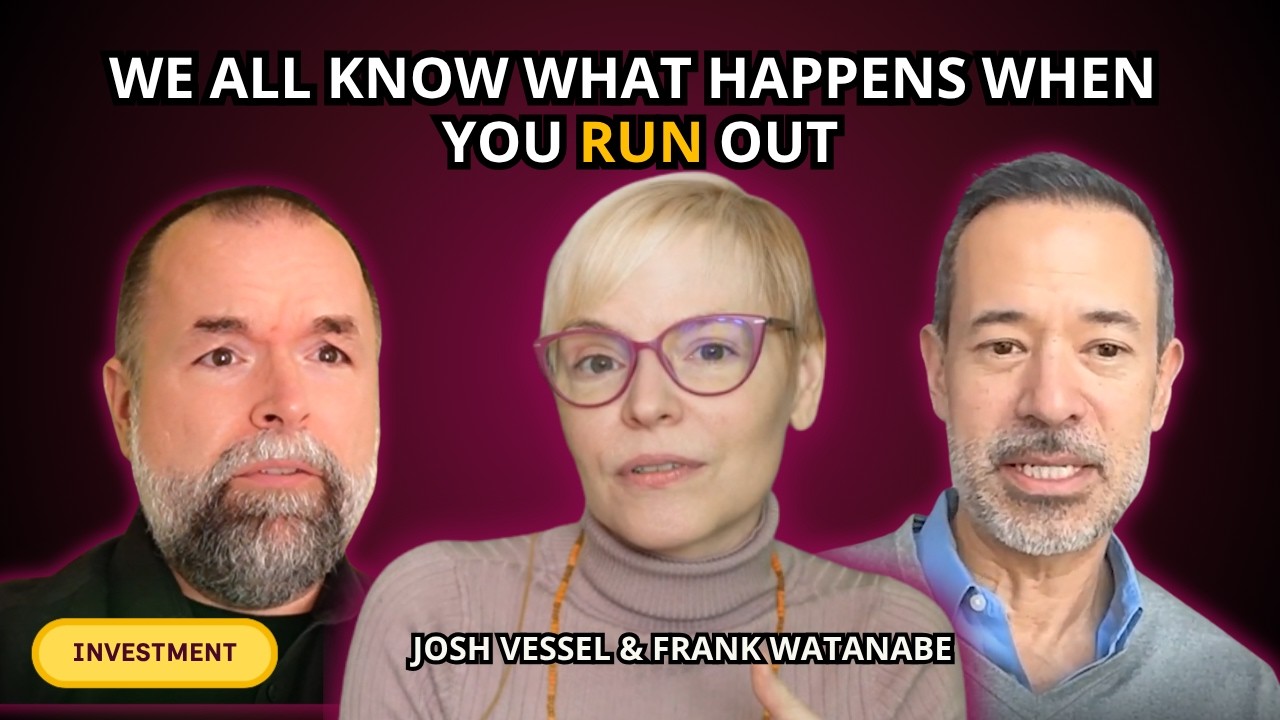
Cash discipline is the advice every biotech CEO is giving right now. Frank Watanabe gives it, then adds the harder claim: that the shock to federal research funding cuts a divot out of the scientific pipeline, and that the divot reaches commercial companies eight to ten years later. Josh Fessel ran translational medicine at the NIH until 2025, and can say what that shock looked like from the inside.
Frank Watanabe is president and CEO of Arcutis Biotherapeutics, a dermatology company based in Los Angeles, and vice chair of the Biotechnology Innovation Organization. He came into the industry from a career in national security, took a job at Eli Lilly, and has stayed in biopharma for thirty years, eight of them as an executive at Amgen.
Josh Fessel is a physician-scientist who served as chief medical officer and director of the Office of Translational Medicine at the National Center for Advancing Translational Sciences, part of the NIH. He trained in internal medicine and pulmonary critical care, ran a lab, and entered federal service through the National Heart, Lung, and Blood Institute. He resigned from federal service in March 2025 and now works in clinical-research artificial intelligence at Dyania Health.
Cash is like oxygen
Asked what he would tell a struggling CEO, Watanabe reached for the line he uses on his own team. “Cash is like oxygen and we all know what happens when you run out of oxygen,” he says. He applies it to healthy companies too, because nobody controls when the tank refills: “even for the companies that aren’t struggling, it’s absolutely vital right now for everyone to be very very judicious with their expenditures of capital.”
The money is still there, he says, and the bar has moved. “I think that investors have become much more discriminating in the investments they’re making than five years ago,” he says. The operating symptoms surface before the balance sheet does, which is a pattern operators on this show have described in detail.
The me-too window is closing
Watanabe’s advice to companies raising money starts with being clear about what the company is. “I think that the days of the me-too strategy are probably waning particularly given the competitive pressure that we’re seeing from China,” he says. A fast follower will be outcompeted. A first-or-best program still works, provided the founder can articulate why and name the “competitive moat if you will around your product.”
He also expects a founder to have a position on the policy set investors already model: most favored nation pricing, tariffs, onshoring of manufacturing, and uncertainty at the FDA. A team that cannot answer, he says, “will significantly erode their confidence in you as an investment and as a management team.” Where capital goes when the standard venture path closes is the whole subject of a later conversation on this show.
Federal funding as a single point of failure
Lori Ellis put the same question to Fessel from the academic and civil-service side. His answer is one word, three times. “My advice would be diversified, diversified, diversified in terms of how you support the research enterprise,” he says. Many labs, departments and academic medical centers have “something close to a single point of failure in terms of their research enterprise and it’s federal funding,” and he watched how quickly that stopped being stable.
His second piece is to think globally. There are markets well beyond the United States, and he says regulatory agencies in other countries may be more predictable and stable right now than the one here. It also produces a piece of mentorship he says pains him to give: early-career scientists who could build a life outside the United States should look at their options. “I would rather have them in science somewhere than not at all,” he says.
The divot arriving in eight to ten years
Watanabe asked to add to Fessel’s answer, and took it to the basic-research end. That work is hard for commercial companies to fund because the payoff sits too far out, so the shock to federal funding lands where nobody is counting. “We’re not going to see the full impact of this turmoil that we’ve seen in biomedical research probably for another 8 to 10 years,” Watanabe says. “There’s going to be this divot cut out of the scientific pipeline.” It reaches commercial and late clinical stage companies at the end of that delay.
Fessel agreed. At an investor panel, one of the investors said plainly what NIH grants are for: “Look, if you want to do early high risk basic research, that’s necessary. Write an R01 for that.” Fessel treats that as exactly right, and as the problem: the work is nobody’s commercial sweet spot and still has to happen. Founders working the same squeeze from inside a company get a venture investor’s version of the same squeeze.
A near-peer competitor, and talent that is already moving
Watanabe frames China’s position as a decision made years before anything changed here. It picked biotechnology as an industry of the future, invested heavily, and the results are visible now. “It’s been a very long time since the United States had a near peer competitor in science and technology,” he says, dating the last one to the Second World War.
Fessel tracks the same shift through people. Canada, the EU with France in front, and Australia have all made clear that US-based scientific talent has a home with them. He remembers “a posting for something like 20 funded fellowship positions and early faculty positions in Canada, another 20 or 30 assistant professor level positions posted by the Karolinska Institute,” and draws the consequence: people who move their lives generally keep living them where they moved. Watanabe names changes to the H-1B program as curtailing the inflow. “The best and the brightest in the entire world moved to the United States,” he says.
Two readings of AI, both with limits
“I probably fall more in the AI skeptic camp,” Watanabe says. He grants real promise in drug discovery and calls protein-folding prediction an incredibly powerful technology, then holds the line on scope: large parts of biomedical research still have no clear answer about what AI will do for them.
Fessel, who discloses a paid seat on the medical advisory board of Dyania Health, arrives near the same place from the other side. He expects genuinely impactful roles for AI in accelerating drug discovery and clinical research, and he is equally plain about the money. “There’s a lot of what Alan Greenspan might have called irrational exuberance about AI in the health care and biopharma space,” he says.
Fifty kids in a trench coat
Fessel’s proposal is state-level. Public and land-grant universities already exist as infrastructure, and he wants them built into what he calls a state-level learning health system: research and care-delivery institutions partnered with their communities and with private-sector interests in the same state, able to tell a sponsor what enrollment to expect and by when. “The joke has been that the United States is 50 kids in a big trench coat pretending to be a country,” he says, and reads that unevenness as opportunity.
Watanabe believes there are biotechnology companies in 49 of the 50 states, and names the fix he would want a state to make first. Individual institutional review boards are among the hardest parts of doing research at a university, alongside contracting and technology transfer. “If a state really wants to be competitive, clean that up, use the central IRBs,” he says, “and the research will flood to your state.”
Both land on cooperation as the short-term move. Fessel calls it co-opetition, and the question under it is simple: “What can we do better together than any of us could do individually apart?” He was the federal lead for the SMART IRB program, built to bridge institutions and federal agencies, and his point is about timing: the partnership building should start well before you need it.
The decisions that were hardest
Watanabe named two, both financial, both in the same stretch. Arcutis went through two rounds of layoffs in late 2023 and early 2024, at a company of about 350 people where everyone knows everyone. “It’s a little bit like filling up the boats on the Titanic,” he says. The second was a financing done in the fourth quarter of 2023 at $2.50 a share, against a stock he says was near $30 by the recording. “If you run out of money, you run out of air and that’s end of the game.”
Fessel named leaving federal service in 2025, a decision he says was unexpected and absent from his contingency planning at the start of that year. What settled it was a limit on what the job could still do. “I cannot protect people and programs from… the seat that I had,” he says, and describes what was happening as out of keeping with rigorous science, with his own values, and with his oath as a physician.
Watanabe’s closing advice is institutional. Small companies have no Washington office; at Eli Lilly and at Amgen he had roughly a hundred colleagues in DC. “Full disclosure, I am the vice chairman of BIO,” he says, and the reason he gives for the time is “BIO effectively is the Washington office for the biopharmaceutical industry,” especially for its smaller companies.
There’s going to be this divot cut out of the scientific pipeline.
Key takeaways
- Cash discipline is not a distress measure. Watanabe applies it to healthy companies too, because nobody controls when the tank can be refilled.
- The bar for capital moved and the capital did not leave. Investors are far more discriminating than five years ago, and good science attached to a good product still raises.
- Talk to generalists, not only healthcare specialists. Watanabe sees promising growth shoots on the generalist side, and expects that if the AI trade unwinds, some of that money finds its way back to biopharma.
- Fast-follower strategies are running out of room. Chinese competitive pressure is the reason Watanabe tells founders to be first or best and to be able to name the moat.
- Federal funding is a single point of failure for many research institutions. Fessel’s advice is to diversify the support base before the next shock, and he treats the culture change as the hard part.
- The pipeline damage arrives on an 8 to 10 year delay. Watanabe expects a divot cut out of the scientific pipeline that reaches commercial and late clinical stage companies years after the funding shock.
- Other countries are actively recruiting. Fessel cites funded fellowship and early-faculty postings in Canada and 20 to 30 assistant professor positions at the Karolinska Institute, and notes that people who relocate rarely relocate back.
- Both put hard limits on what AI will do here. Watanabe sits in the skeptic camp and names protein folding as the clear win. Fessel, who advises a clinical research AI company, calls the surrounding money irrational exuberance.
- The state is an underused unit of innovation. Fessel wants land-grant and public universities built into state-level learning health systems. Watanabe’s first fix is replacing individual IRBs with central ones.
- This too shall pass, but you have to weather it. Watanabe’s closing counsel is to be exceedingly judicious with resources, expect the turmoil to settle, and get involved in the industry’s Washington representation rather than float.
Key Questions, Answered
What should a biotech CEO prioritize in a hard funding environment?
Cash is like oxygen and we all know what happens when you run out of oxygen
Frank Watanabe’s standing line to his own team at Arcutis, and he extends it to companies that are not struggling, because nobody controls when the tank can be refilled.
Is a me-too or fast-follower strategy still viable in biotech?
I think that the days of the me-too strategy are probably waning particularly given the competitive pressure that we’re seeing from China
Watanabe tells founders a fast follower will be outcompeted, and that a first-or-best program still raises if the moat can be articulated.
How should a research institution reduce its funding risk?
My advice would be diversified, diversified, diversified in terms of how you support the research enterprise
Josh Fessel, formerly of the NIH, on why labs, departments and academic medical centers need more than one source of support.
When will cuts to biomedical research funding reach the drug pipeline?
We’re not going to see the full impact of this turmoil that we’ve seen in biomedical research probably for another 8 to 10 years. There’s going to be this divot cut out of the scientific pipeline
Watanabe puts a number on the delay. Basic research is hard for commercial companies to fund, so the shock lands years later, on late clinical stage and commercial companies.
Are other countries recruiting US scientific talent?
a posting for something like 20 funded fellowship positions and early faculty positions in Canada, another 20 or 30 assistant professor level positions posted by the Karolinska Institute
Fessel names Canada, the EU with France in front, and Australia, and notes that people who relocate their lives rarely relocate back.
Does the United States still lead in science and technology?
It’s been a very long time since the United States had a near peer competitor in science and technology
Watanabe dates the last near-peer to the Second World War. He says stiff competition generally forces you to raise your game, and warns that the US must be careful not to cede leadership in biomedical research to China.
Is there an AI bubble in health care and biopharma?
There’s a lot of what Alan Greenspan might have called irrational exuberance about AI in the health care and biopharma space
Fessel, who holds a paid seat on the medical advisory board of Dyania Health, thinks the bubble is real and still expects genuinely useful applications to survive it.
Can individual states drive biomedical innovation on their own?
The joke has been that the United States is 50 kids in a big trench coat pretending to be a country
Fessel reads the unevenness of the fifty states as opportunity, and wants public and land-grant universities built into state-level learning health systems.
What one change would make a state more competitive for clinical research?
If a state really wants to be competitive, clean that up, use the central IRBs... and the research will flood to your state
Watanabe names individual institutional review boards, alongside contracting and technology transfer, as the hardest part of running research at a university.
What can the industry do together in the short term?
What can we do better together than any of us could do individually apart?
Fessel calls it co-opetition, and argues the partnership building has to start well before you need it.
What is the hardest decision a biotech CEO has to make?
we went through two rounds of layoffs in late 2023 and early 2024
Watanabe names layoffs at a company of about 350 people, and a financing done at $2.50 a share, as the two hardest things he has had to do in the current funding environment.
Why did a senior NIH official leave federal service?
I cannot protect people and programs from... the seat that I had
Fessel describes an unexpected decision, made because what was happening was out of keeping with rigorous science, his own values, and his oath as a physician.
What can a small biotech do about Washington policy?
BIO effectively is the Washington office for the biopharmaceutical industry
Watanabe, who discloses on air that he is vice chair of BIO, points smaller companies without a DC presence at the trade organization.
Resources
- BIO Board of Directors The Biotechnology Innovation Organization’s own board page. Frank Watanabe is listed as Vice Chair of the executive committee; verified 2026-09-03.
- Frank Watanabe, Arcutis Biotherapeutics Arcutis leadership page for its president and CEO.
- National Center for Advancing Translational Sciences NCATS, the NIH center where Josh Fessel served as chief medical officer and director of the Office of Translational Medicine.
- NIH Research Project Grant (R01) The grant mechanism the investor on Fessel’s panel named as the right home for early high-risk basic research.
- SMART IRB The national IRB reliance initiative Fessel was the federal lead for, built to let institutions rely on a single review.
Need the life-sciences signal but short on time?
Get the free quarterly briefing: every guest from the quarter, in one sitting. What decides whether a therapy reaches a patient, gets funded, and can be trusted.