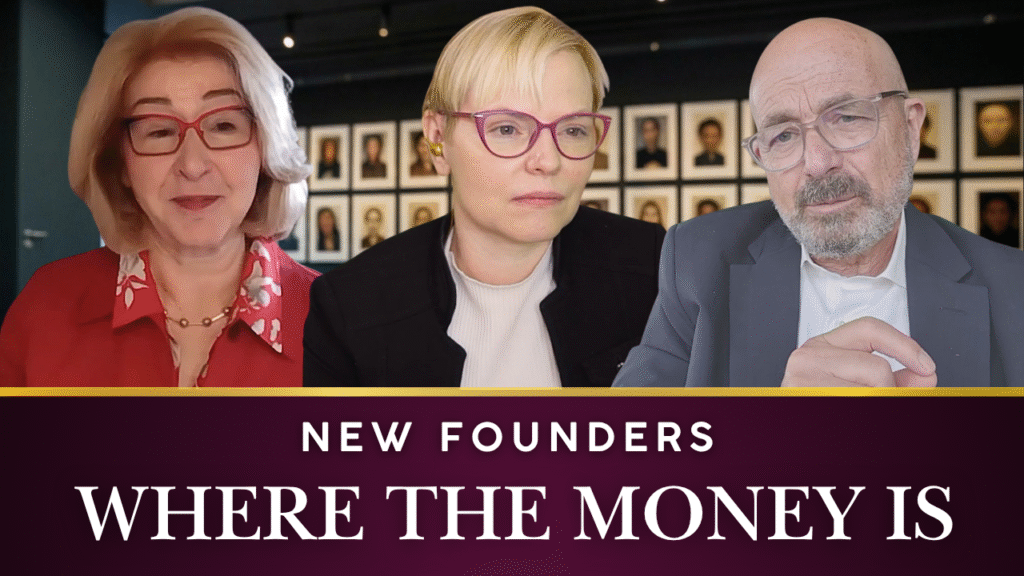
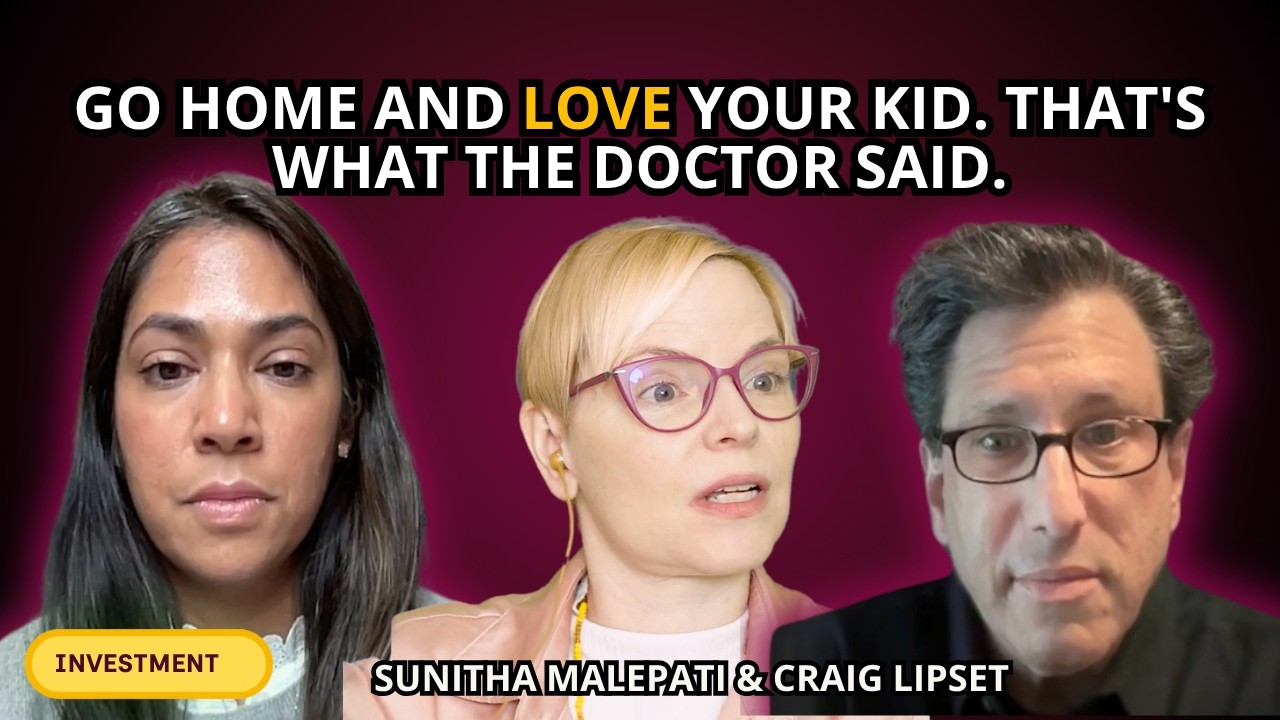
Sunitha Malepati and Craig Lipset on Patient-Led Drug Development for Ultra-Rare Disease
What you’ll learn
- Why the pharmaceutical business model cannot scale to 7,000 to 10,000 rare conditions
- How a patient organization funds a program past the IND-enabling wall
- What bundling and blending mean in a rare disease finance model
- Why states are becoming a unit of drug development policy
- What the pioneering parent programs proved, and what they still lack
Craig Lipset argues that the pharmaceutical business model cannot cover thousands of individually small disease populations, and that the field has to stop asking it to. Sunitha Malepati is building what comes next: a financing model for the patient organizations now running these programs themselves.
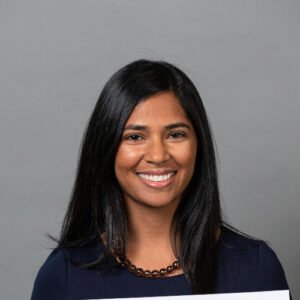
Sunitha Malepati is the founder of the Buffalo Initiative, a patient-led effort to advance drug development for ultra-rare disease that operates as a program of Renaissance Philanthropy. An attorney by background, she came into the field through her family, after her daughter was diagnosed with a CACNA1A-related neurogenetic disorder shortly before her third birthday.
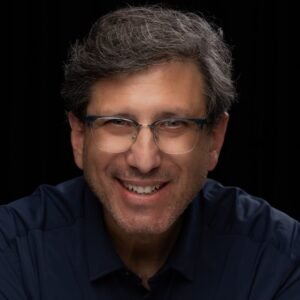
Craig Lipset is the founder of Clinical Innovation Partners and a clinical leader for the Buffalo Initiative. He is co-founder and co-chair of the Decentralized Trials & Research Alliance, a nonprofit working to make clinical research more accessible, and previously served as head of clinical innovation at Pfizer. He has worked in drug development for more than two decades.
Three years to a diagnosis, and nothing after it
Malepati was an attorney doing something else entirely when her daughter was diagnosed, after a search that was long by any standard and short against the field’s average. “We were almost three years of working at trying to find a diagnosis which I know is actually short compared to the average which is seven to eight years to just get a diagnosis,” she says.
The physician told the family nothing could be done, that no treatments were on the horizon, and that they should go home and love their kid. They went to PubMed instead and found the opposite. “There was a lot of research going on in the space but not much of it if at all was being translated into therapies or medications,” she says. The science was there. Nothing was carrying it toward a medicine. “We’ve got to make something happen because no one else is going to do it,” she says.
Rare is not rare in aggregate
Lipset puts the scale first. Rare disease is “an aggregate of diseases that spread so wide and thin, 7,000, maybe 10,000,” he says, and a geneticist recently told him “even 10,000 maybe a lowball number for the total number of rare and ultra rare conditions out there.” Most have no robust therapeutic option, at a point when the mechanism and delivery strategy are understood.
He reached the ultra-rare end of that range through his inbox. Lipset is himself a patient with sarcoidosis, a rare disease that does have pharmaceutical programs behind it; writing about that publicly brought messages from families whose conditions had none. “Craig, you seem to care about rare and you seem to know your way around pharma. Can you get pharmaceutical companies to call us back?” Under each one sat the same premise: “if we get it to the state of an IND or near an IND, that’s when industry comes in and does the heavy lifting.”
Why the industry does not pick these up
That premise is what he wants retired. “But pharma’s not coming. And we have to stop begging pharma to come because if we try to guilt and beg pharma to take interest, it doesn’t fit their business model,” he says. When budgets tighten the position gets worse: “large publicly traded pharmaceutical companies had to scale back some of their pipelines… these are the first assets to go.”
Malepati gives the arithmetic. “We cannot rely on pharma or even smaller biotech to solve this massive crisis that we have in rare disease drug development. The model just doesn’t work,” she says. These diseases affect small, geographically dispersed populations, and the venture-backed structure funding most early programs has to clear a return: “you’ve got to take a bet on diseases that have enough of a population to recoup that investment and that risk that you’re putting in.” That calculation, she says, “doesn’t always work in the favor of these small disease populations.”
A third category of drug development sponsor
Lipset frames what follows as an expansion of who may sponsor. A few decades ago a biotech developed an asset to an IND and licensed it out, because the cost and expertise sat elsewhere. “We’re now starting to see the same phenomenon just extended to now this new category of drug development sponsors, the most highly motivated drug development sponsors out there,” he says, meaning patient-led organizations. He expects artificial intelligence and emerging regulatory flexibilities to accelerate it by democratizing the technology and expertise.
In his account the invitation has flipped: “groups like Buffalo are inviting pharma to partner with them and they’re looking for partners. Their doors are open.”
Lemonade stands, and the wall behind them
Money for a patient organization comes from fundraisers, family and friends, and stops where it gets expensive. “We talk about this colloquially as like a lemonade stand and bake sales. And you’re able to get the science to a point, but then you really need a large amount of capital,” she says. The wall is usually IND-enabling studies or the first trial.
Buffalo is built to cover that stretch. “What we’re trying to do is create this alternate model that’s a blended finance model that will essentially be given out in the form of debt or loans,” she says. Buffalo takes its money back through a royalty when a program is licensed, acquired or approved, and waits: “we are very patient with this capital,” ten-year capital in her description. The other half is aggregation, since most investors cannot take an equity stake in a nonprofit program. It has a close cousin in venture philanthropy, where a nonprofit deploys capital on investment terms and recycles the returns.
Lipset names the two moves. “One is this element of bundling and the other is this blending,” he says. Bundling assets into a portfolio spreads risk; blending family offices, philanthropy and grant capital raises more.
States as a unit of innovation
Ellis brought in California, which funds regenerative medicine through the California Institute for Regenerative Medicine, and an earlier conversation with a former chief medical officer at the NIH translational-science center who expected states to act. His own case for state-level research systems is on this show.
Malepati sees the pull already working. “California is definitely leading the way here and it’s driving organizations, both patient organizations as well as small biotech companies… to set up shop in California,” she says, and she knows of no other state considering it. Lipset adds a reason a governor might listen: “you can think about the economic impact of state Medicaid programs,” where the costs of severe childhood disability land, alongside what a rare diagnosis does to household earnings. Lipset calls California “a bit of an outlier,” at “the third, fourth, fifth largest economy on the planet,” so others may have to work regionally.
The parents who did it first
The individual version of this already works. Malepati points to milasen and the work of Julia Vitarello, to Terry Pirovolakis for SPG50, and to John Crowley for Pompe disease, families who assembled the infrastructure themselves and “made it to the finish line for their loved one,” in her words. Lipset sees the same pattern in Japan, Israel and across Europe, and in US foundations like FoxG1 and TESS pursuing a therapy for an N of one or a small identified cluster. Emily Whitehead’s family said yes to a therapy no child had received.
What is missing is the scaffolding around those stories. “There’s no systemic solution here that supports these efforts as an actual asset class or an actual separate industry class,” Malepati says, so each group starts at ground zero and repeats the last one’s mistakes. She treats the patient search as global by default, and flags US innovation moving offshore as a risk worth watching.
Whether any of it pays for itself
Lipset states the economics without hedging them. “These therapeutics can generate an economic return. These therapeutics can be self-sustaining, just not at the levels of return that traditional pharma are used to,” he says.
Getting that heard is the hardest part of Malepati’s job. The biggest challenge at Buffalo, she says, is “this misconception that these programs or these targets can’t generate a financial return. They absolutely can.” She needs impact capital willing to sit ten years below venture returns. Her advice to biotech: “we don’t often think of patient groups as being able to develop drugs and I think we’re increasingly showing that there are groups that are able to do that.”
Lipset’s hardest experience is the one that sent him here. “I used to lead innovation in a very large pharmaceutical company, one of the biggest on the planet. And I did that believing that these organizations can change. And perhaps they can, but I just don’t believe that they are built to make even the incremental changes that we aspire to in a short enough time frame,” he says. The urgency in this community is “exactly what’s needed to help derisk some of the innovations,” and he expects industry to fast-follow once a path is proven. For investors, the analogy is the airline business: “not everybody is going to launch United or Delta. There’s a lot of small regional players that serve different markets.”
Pharma’s not coming. And we have to stop begging pharma to come.
Key takeaways
- Rare is not rare in aggregate. Lipset puts the field at 7,000 to 10,000 conditions, with a geneticist telling him even 10,000 may be low, and most of them without a robust therapeutic option.
- The IND handoff most families expect does not happen. The premise in Lipset’s inbox was that industry takes over near an IND. When pipelines are cut, these are the first assets dropped.
- The arithmetic, not the appetite, is the blocker. A venture-backed program has to recoup its risk, and Malepati says that calculation does not always work in the favor of these small, geographically dispersed disease populations.
- A third class of sponsor is emerging. Development moved from large pharma, to biotech, and now to patient-led organizations, and Lipset expects AI and regulatory flexibility to accelerate it.
- The invitation has reversed. Patient groups spent years asking to be partners on pharma programs. Buffalo now invites pharma to partner on its own, and publishes a portfolio tracker so the assets are visible.
- Fundraisers get you to the science and no further. Malepati’s lemonade stands and bake sales fund the early work; the wall is the IND-enabling studies or the first clinical trial.
- Blended finance plus a portfolio is the proposed fix. Debt or loans rather than equity, repaid by royalty at licensing or approval, on ten-year capital, with programs bundled so efficiencies and bottlenecks are shared.
- States have reasons of their own to act. California draws organizations through its regenerative medicine funding, and Lipset points to state Medicaid exposure and lost household earnings as the local economics.
- The individual model works and does not scale. Milasen, SPG50 and Pompe all began as one family’s program, and Malepati says nothing exists to support this work as an asset class.
- The category can pay for itself, below venture returns. Lipset calls these therapeutics self-sustaining; Malepati says the hardest part of her job is persuading investors that the proposition is investable at all.
Key Questions, Answered
How long does it take to get a rare disease diagnosis?
We were almost three years of working at trying to find a diagnosis which I know is actually short compared to the average which is seven to eight years to just get a diagnosis
Sunitha Malepati’s family searched for nearly three years, which she notes is short against a field average of seven to eight.
Why does rare disease research not become treatment?
there was a lot of research going on in the space but not much of it if at all was being translated into therapies or medications for the disease
What Malepati found on PubMed after being told nothing could be done. The science existed and nothing was moving it toward a medicine.
How many rare and ultra-rare diseases are there?
even 10,000 maybe a lowball number for the total number of rare and ultra rare conditions out there
Craig Lipset relays a geneticist’s estimate against the commonly cited 7,000, and notes most of these conditions still have no robust therapeutic option.
Will pharmaceutical companies develop treatments for ultra-rare diseases?
But pharma’s not coming. And we have to stop begging pharma to come because if we try to guilt and beg pharma to take interest, it doesn’t fit their business model
Lipset’s central claim. Thousands of individually small populations do not fit the pharmaceutical business model, and when pipelines are cut these programs go first.
Why can the pharma model not solve rare disease drug development?
We cannot rely on pharma or even smaller biotech to solve this massive crisis that we have in rare disease drug development. The model just doesn’t work
Malepati’s version of the same point. A venture-backed program has to clear a return, and small, geographically dispersed populations do not carry one.
Who can sponsor drug development now?
We’re now starting to see the same phenomenon just extended to now this new category of drug development sponsors, the most highly motivated drug development sponsors out there
Lipset traces the expansion from large pharmaceutical companies, to biotech, and now to patient-led organizations, and expects AI and regulatory flexibility to speed it.
Are states funding rare disease drug development?
California is definitely leading the way here and it’s driving organizations, both patient organizations as well as small biotech companies that want to access that funding to set up shop in California
Malepati endorses California’s model as the working example, and says she knows of no other state considering one.
How do patient organizations run out of money?
we talk about this colloquially as like a lemonade stand and bake sales. And you’re able to get the science to a point, but then you really need a large amount of capital to keep going forward after that stage
Fundraisers, family and friends carry a program as far as the science. The wall arrives at the IND-enabling studies or the first clinical trial.
How does the Buffalo Initiative fund ultra-rare programs?
what we’re trying to do is create this alternate model that’s a blended finance model that will essentially be given out in the form of debt or loans to these organizations
Blended finance delivered as debt, timed as the first or last money into a round so the capital is catalytic, and repaid through a royalty at licensing, acquisition or approval.
What are bundling and blending in rare disease finance?
One is this element of bundling and the other is this blending
Lipset’s summary of the model. Bundling assets into a portfolio spreads risk; blending family offices, philanthropy and grant capital raises more than any one source.
Is there a support structure for patient-led drug programs?
there’s no systemic solution here that supports these efforts as an actual asset class or an actual separate industry class
Malepati’s diagnosis of the gap. Individual families have reached the finish line, and every new group still starts at ground zero.
Can ultra-rare therapeutics generate a return?
These therapeutics can generate an economic return. These therapeutics can be self-sustaining, just not at the levels of return that traditional pharma are used to
Lipset on the economics. A self-sustaining return is available at a level below what large pharmaceutical companies expect.
What is the hardest part of funding ultra-rare drug development?
this misconception that these programs or these targets can’t generate a financial return. They absolutely can
Malepati names investor disbelief as Buffalo’s biggest challenge, and says her financial model shows these programs can return capital over a ten-year horizon.
Resources
- The Buffalo Initiative The patient-led drug development effort Sunitha Malepati founded, operating as a program of Renaissance Philanthropy.
- Buffalo Initiative therapeutic pipeline portfolio The portfolio tracker Craig Lipset refers to, listing the nonprofit patient-led programs Buffalo is working with.
- Decentralized Trials & Research Alliance The nonprofit Lipset co-founded and co-chairs. Its own 2026 speakers page lists him as Co Founder, Co Chair; verified 2026-09-03.
- CACNA1A Foundation The foundation for the neurogenetic disorder Malepati’s daughter was diagnosed with, where she serves as vice president.
- California Institute for Regenerative Medicine The California state agency funding regenerative medicine, cited in the episode as the one working state-level model.
- Mila’s Miracle Foundation Julia Vitarello’s foundation for her daughter Mila, whose custom antisense drug milasen is the parent-led case Malepati names first.
Need the life-sciences signal but short on time?
Get the free quarterly briefing: every guest from the quarter, in one sitting. What decides whether a therapy reaches a patient, gets funded, and can be trusted.