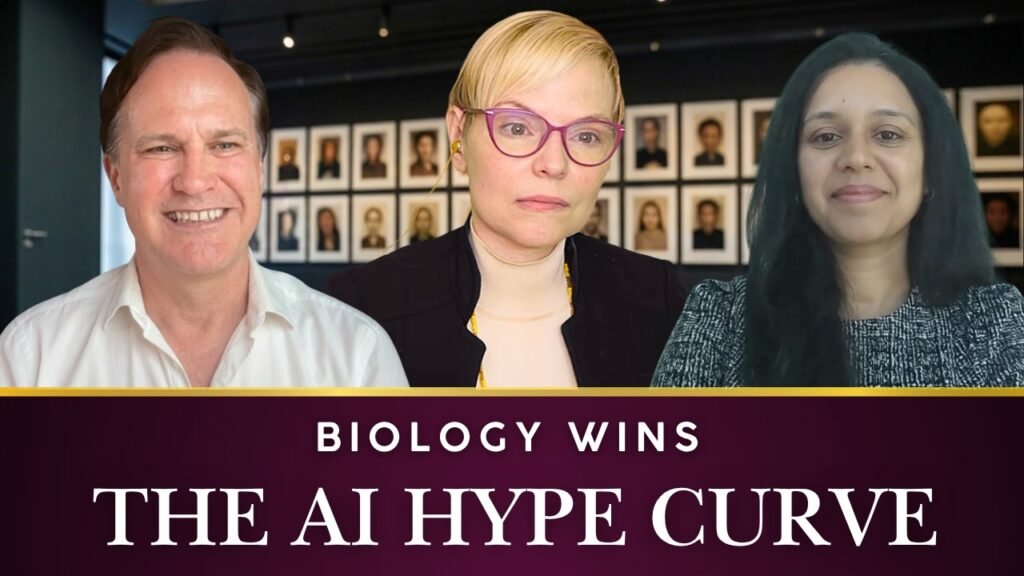
“Why Is CVS Selling Party Packs of M&Ms Alongside Ozempic?” | Pashazadeh & Rees

What you’ll learn
- Why tirzepatide became the highest-selling drug in the world, and what that unlocked
- What atypical side effects an emergency physician is seeing that are not on the label
- Why appetite suppression costs lean mass, and why that matters after the prescription ends
- What an up to 80% discontinuation rate says about the support that was never built
- How investors repriced GLP-1s between 2025 and 2026, and why smaller players struggle
The best-selling drug in the world right now treats obesity, and the argument on this episode is not about whether it works. It is about what it costs, who manages the aftermath, and why the pharmacy selling it stocks its checkout aisle the way it does.
Ali Pashazadeh is founder and CEO of Treehill Partners. He trained as a surgeon, spent years in investment banking, and still practices emergency medicine, so he sees GLP-1 complications arrive through the door and sees the same drug class from the capital side.
Jon Rees is CEO and co-founder of MitoRx Therapeutics, developing a mitochondria-targeted small molecule intended to treat metabolically unhealthy obesity without suppressing appetite at all. Building the alternative makes him specific about what the current class does well and what it does to the body to get there.
One note before you watch. We have to apologize for the video quality. Ali’s recording corrupted.
A market that did not exist a decade ago
Rees starts with the cultural shift rather than the pharmacology. He remembers “the stigma that was attached to people living with overweight and obesity” from childhood and how completely that has moved. The drugs did not just treat a condition, they opened a market, and he puts a number on the scale of it: “on the basis of last quarter sales of tirzepatide,” he says, “across both obesity and T2D,” the figure is “13 billion in the last full quarter, first quarter 26.”
He also points at where the effect is visible outside a clinic. Supermarket shelves have changed. So have gyms, where he describes “a plethora of resistance machines” being used by people on GLP-1s “attempting to safeguard their muscle mass.” That detail is the episode’s argument in miniature.
The benefits are real, and nobody can say why
Pashazadeh is careful not to overstate or dismiss. The trials are reading out positive well beyond weight, in the central nervous system and in renal function among others. Then he asks the question the field has not answered. “The question then becomes why are we seeing it?” he says. A single drug class working across that many unrelated systems is close to unprecedented. “The only time we’ve seen it before in history is probably aspirin.”
He is equally careful about what a trial can tell you. A clinical study, in his framing, is “a bit like a driving test”: a short artificial window, variables fixed, one outcome measured. In practice every patient’s course differs. He describes a man who needed heart surgery and both knees replaced, was diabetic and morbidly obese, and had waited roughly seven years because he was never clinically fit to operate on. “For him, the diabetes has gone away, the obesity has gone away,” Pashazadeh says. “He’s now fit enough to have cardiac surgery after which he’ll then have his knees done.”
Kidney stones, and the edge of what is known
The complications he sees are not the ones on the label. “I’ve seen patients who have gone on to GLP-1s who’ve never had kidney stones all of sudden have kidney stones,” he says, in patients who had lost significant weight and were not dehydrated, which removes the obvious explanation. He has seen visual disturbances too.
His conclusion is about the field rather than the drug. “We’re in the infancy of understanding GLP-1s,” he says. Once enough patients have been on them long enough, he expects distinct cohorts to separate out, each with its own benefit and side-effect profile. That knowledge does not exist yet.
The cost of a starvation response
Rees locates most of the side-effect profile in one mechanism. The adverse effects, he argues, largely trace back to appetite suppression, and appetite suppression is only one of several routes to changing body composition. His objection is not that the drugs fail. It is the price of the route.
“There’s a cost to a starvation response,” he says, “and one of those costs appears to be the loss of lean mass.” He frames that as a question of control rather than tolerability: “I see that as taking away the autonomy of the patient to manage their weight.” A patient who keeps their lean mass reaches the end of a course better equipped to hold the result. One who does not, does not.
Nobody knows enough to educate anyone
Asked whether patients understand the risks they accept, Pashazadeh answers about clinicians instead. “I don’t think we as a group know enough to be able to fully understand what the risk is, to quantify the risk, and then to be accurately educating each patient,” he says. When a patient returns to a prescriber with a complication, the honest answer available is that it might have happened anyway.
Underneath that he makes a biological argument that reframes the whole class. These drugs do something therapeutics rarely do, which is shut a system down rather than modulate it, and systems exist for reasons. He walks through the parallels: exogenous testosterone lowers endogenous production, dietary cholesterol changes hepatic output, hormonal cycles are regulated but not indefinitely. “It would be naive to think that you could shut down any organ system or any axis and not expect long-term sequelae,” he says, either on the drug or coming off it as the body rebounds.
Rees is blunter about how the class has been sold. “I get the distinct impression that what’s happened with the marketing of GLP-1s has gone beyond the normal bounds of medical marketing,” he says. He rejects the framing for his own program: “So, are we shutting something down? No, we’re restoring metabolic flexibility.”
Most people stop, and then the weight returns
The discontinuation figures are the part of this that should worry everyone. Rees states the arithmetic plainly. “If we take the facts that up to 80% of the patients are ceasing therapy within a year and we know the consequences of cessation are weight bounce back, but the purpose was to lose weight, I think we have a bit of a problem.”
Pashazadeh thinks the reason is structural, not educational. Obesity is a behavior driven by consumption, treated biologically, with nothing wrapped around it. He points to alcohol and nicotine dependence, where the interventions that helped most came with psychologists and nutritionists attached, then names what is missing here: “one would think that there would be GLP-1 clinics, and I don’t see any in the UK, for example, that support these patients through that journey.” The support gap and the dropout rate are the same fact. “I think if we had that, we wouldn’t have up to 81% of patients coming off it.”
Food is the hardest case of all. Abstinence is available for alcohol and cigarettes. “The relationship with food is much more complicated because you have to eat.”
Why is CVS selling party packs of M&M’s alongside Ozempic
Rees puts part of the responsibility upstream of medicine entirely. “I think there’s a public responsibility to regulate the sale of very sugary, very fatty addictive type foods” positioned at supermarket checkouts, he says, then asks the question that gives the episode its title: “why is CVS selling like 5-kilo party packs of M&M’s alongside Ozempic?”
The point is not the candy. It is that a health system can spend heavily on drugs that reverse a metabolic state, do nothing about the conditions producing it, and then treat the dropout rate as a patient failing.
The investors already moved
Pashazadeh’s read on capital is the sharpest turn in the conversation, because it happened fast. Ask him in mid-2026 and he gives a different answer than in late 2025, when the class looked like a magic bullet. Pricing has fallen to roughly a third. Scale did the rest: “The GLP-1s have become so big that this is a large cap pharma play.” Smaller players now struggle to attract investors who assume big pharma will simply acquire whatever works.
His comparison is to the last time private capital stepped aside from something that large. “Very much like we saw in COVID, the investors in my mind just took a big step back where they said, okay, this is a government play. You don’t need my private capital or my public capital.” That risk posture is the same one smaller biotechs have been living with for two years.
Rees sees the same shift from the other side, and reads it as discipline rather than retreat. Some large US venture funds have “moved to clinical stage only” here. He does not treat that as cowardice: “it’s probably a good thing that some investors are humble enough to say that they don’t necessarily think that they can make a good judgment on where to invest prior to the clinic.”
The question both land on is the one the trials were never built to answer. Whether this class extends life, and for whom, will not come out of a six-month study. It comes out of following the patients who took it, which has barely started.
Rees closes on why he is doing any of it. His wife asked him what he wanted on his gravestone. He had an answer, and then a better one. “That changed to he made a new medicine and he was a good dad.”
Why is CVS selling like 5-kilo party packs of M&M's alongside Ozempic?
Key takeaways
- The class is a market event, not just a clinical one. Tirzepatide alone booked roughly 13 billion dollars in a single quarter across obesity and type 2 diabetes.
- The benefits extend well past weight, and the mechanism is unexplained. Positive readouts span neurological and renal endpoints, which Pashazadeh says has only one real precedent in aspirin.
- The complications turning up are not the labeled ones. Kidney stones in patients with no risk factor, and visual disturbances, in an emergency department that sees them first.
- Appetite suppression has a price, and it is lean mass. Rees argues that cost removes the patient's ability to manage their own weight once the drug stops.
- These drugs shut a system down rather than modulate it. Pashazadeh says it would be naive to expect no long-term consequence from that, either on the drug or coming off it.
- Up to 80% of patients stop within a year, and cessation reverses the outcome the prescription was written for.
- Nobody built the wrap-around care. The interventions that worked in alcohol and nicotine dependence came with psychologists and nutritionists attached. GLP-1 clinics largely do not exist.
- Investors already repriced the category. Pricing fell to roughly a third, the space became a large-cap pharma play, and private capital stepped back the way it did during COVID.
Key Questions, Answered
What have GLP-1s changed about the obesity market?
on the basis of last quarter sales of tirzepatide... across both obesity and T2D... 13 billion in the last full quarter, first quarter 26
Jon Rees frames the class as a market event as much as a clinical one. Tirzepatide is now the highest-selling drug in the world.
Why do GLP-1s appear to help so many unrelated conditions?
The question then becomes why are we seeing it?... The only time we've seen it before in history is probably aspirin.
Trials are reading out positive across neurological and renal endpoints with no accepted explanation. Ali Pashazadeh reaches for aspirin as the only precedent.
What side effects are physicians seeing that are not on the label?
I've seen patients who have gone on to GLP-1s who've never had kidney stones all of sudden have kidney stones
Ali Pashazadeh describes atypical complications in patients with no obvious risk factor, alongside visual disturbances.
What does losing weight through appetite suppression cost?
There's a cost to a starvation response, and one of those costs appears to be the loss of lean mass... I see that as taking away the autonomy of the patient to manage their weight
Jon Rees ties most of the side-effect profile to a starvation response, and the loss of lean mass to a loss of patient control.
Do patients understand the risks before they start?
I don't think we as a group know enough to be able to fully understand what the risk is, to quantify the risk, and then to be accurately educating each patient
Ali Pashazadeh argues clinicians cannot educate patients about risks the field has not yet quantified.
What happens when patients stop taking a GLP-1?
If we take the facts that up to 80% of the patients are ceasing therapy within a year and we know the consequences of cessation are weight bounce back, but the purpose was to lose weight, I think we have a bit of a problem
Jon Rees states the arithmetic plainly. Most patients discontinue inside a year, and cessation returns the weight the drug was prescribed to remove.
Why do so many patients come off the drug?
one would think that there would be GLP-1 clinics, and I don't see any in the UK, for example, that support these patients through that journey... I think if we had that, we wouldn't have up to 81% of patients coming off it
Ali Pashazadeh points at missing wrap-around care rather than patient failure. The support gap and the dropout rate are the same fact.
Why is CVS selling party packs of M&M's alongside Ozempic?
I think there's a public responsibility to regulate the sale of very sugary, very fatty addictive type foods... why is CVS selling like 5-kilo party packs of M&M's alongside Ozempic?
Jon Rees puts part of the responsibility upstream of medicine, on the sale of the foods that produce the condition being treated.
Why is food harder to moderate than alcohol or nicotine?
The relationship with food is much more complicated because you have to eat.
Abstinence is not an available strategy, so limiting access does not work the way it does for other dependencies.
How have investors changed their view of GLP-1s?
The GLP-1s have become so big that this is a large cap pharma play.... Very much like we saw in COVID, the investors in my mind just took a big step back where they said, okay, this is a government play. You don't need my private capital or my public capital.
Ali Pashazadeh describes capital stepping back as the category became a large-cap play, and compares it directly to COVID.
Why did Ali Pashazadeh leave full-time medicine?
the team had to then argue for 6 hours with management why we didn't just do a couple of hundred pounds... lip balm cuz that was cheaper for the system... I realized at that point that we weren't fully looking after the patient's benefit
A breast cancer reconstruction his team had agreed with the patient, argued down on cost. Ali Pashazadeh treats it as the moment the economics displaced the clinical decision.
Resources
- Treehill Partners Ali Pashazadeh's healthcare advisory and investment firm.
- MitoRx Therapeutics Jon Rees's company, developing mitochondria-targeted small molecules for metabolic health.
- Ali Pashazadeh on LinkedIn Founder and CEO, Treehill Partners. Surgeon and former investment banker.
- Jon Rees on LinkedIn CEO and Co-Founder, MitoRx Therapeutics.
- Treehill Partners on LinkedIn Company page.
- MitoRx Therapeutics on LinkedIn Company page.
Need the life-sciences signal but short on time?
Get the free quarterly briefing: every guest from the quarter, in one sitting. What decides whether a therapy reaches a patient, gets funded, and can be trusted.