Field notes on life sciences, biotech, and the people moving the industry forward. Written for the operators, not the headlines.

Due diligence for licensing drugs from China: a local bilingual team, site visits, IP review, partner ownership checks and global trial standards.
Read article →
Why big pharma is licensing drugs from China: patent cliffs, 4,000 Chinese biotechs needing capital, and assets often already tested in patients.
Read article →
Foreign investor due diligence often stops at four checks. Two former intelligence officers on board ties, hiring patterns and where to start.
Read article →
Why are trade secret lawsuits hard to win? Two former intelligence officers on weak evidence, sensitive proof and why small biotechs absorb the loss.
Read article →
How to detect insider threats in biotech: two former intelligence officers on vetting, digital patterns of behavior and early foreign patent filings.
Read article →
What is ambient listening in healthcare? A former health system legal chief explains how AI drafts the clinical note and why it stuck with clinicians.
Read article →
Why do hospital AI pilots fail to scale? A former health system legal chief and an AI founder on rollout plans, real priorities and aligned incentives.
Read article →
How is AI changing doctor-patient conversations? Patients now arrive with LLM-shaped questions and plans. A healthcare lawyer and an AI founder explain.
Read article →
Is health data in ChatGPT protected by HIPAA? A healthcare lawyer explains why records in consumer AI apps fall outside it and what governs them.
Read article →
What is the CMS TEAM model? The founder of Rainfall Health explains Medicare’s mandatory model for the 30 days after surgery and where AI fits.
Read article →
A former Sequoia partner found early round size inversely correlated with success. Should biotech startups raise less money early? Two investors answer.
Read article →
Two biotech investors on whether warm introductions still matter in venture capital, and what actually counts as a connection when you do not have one.
Read article →Get the free quarterly briefing: every guest from the quarter, in one sitting. What decides whether a therapy reaches a patient, gets funded, and can be trusted.

AbbVie Ventures reviewed more than 660 biotech opportunities and made five investments. Christian Schubert and Mike Goguen on where the rest fall out.
Read article →
How do biotech companies prioritize their pipeline? A board chair and investment banker on choosing between assets and cutting a program that works.
Read article →
How long do biotech M&A deals take? An investment banker on why a deal announced at JPM usually started nine months earlier, and what founders can...
Read article →
When should a biotech plan for reimbursement? An investment banker and ISCT’s commercialization chief on payers and the aducanumab lesson.
Read article →
What is CMC in cell and gene therapy? An investment banker and ISCT’s commercialization chief on why manufacturing sinks startups and how to plan for it.
Read article →
What is a target product profile? An investment banker and ISCT’s commercialization chief explain why founders should write the label first.
Read article →
What is crown jewel analysis? A retired Air Force general explains how to identify the data that matters most to a company and protect it first.
Read article →
Who is responsible for cybersecurity in a biotech with no CISO? A retired Air Force general explains why the CEO owns the risk and what to...
Read article →
A venture firm's diligence files map a whole sector. A retired Air Force general explains what a VC due diligence data breach gives an adversary.
Read article →
Amgen, Boston Scientific and McKesson all disclosed cyber incidents in summer 2026. A retired Air Force general explains why he reads them as a pattern.
Read article →
Why is biology hard for AI? Paul Agapow and Nindhana Paranthaman on discovered versus invented data, and why models trained elsewhere break in the clinic.
Read article →
How to reduce protocol amendments in clinical trials: two drug development leaders on the unglamorous work with the clearest return on offer.
Read article →
Why do biotechs chase the same drug target? Nindhana Paranthaman and Paul Agapow on target herding, me-too drugs, and what investors should look for.
Read article →
Can a digital twin replace a patient in a clinical trial? Paul Agapow and Nindhana Paranthaman on why the objection is logical, and where twins do...
Read article →
A biotech CEO on cutting good programs at a company that is not out of money, and why placing the people through the network is part...
Read article →
A biotech co-founder describes the obligation that outlives the company: patients on therapy stay on therapy, which turns a wind-down into logistics.
Read article →
A biotech co-founder reduces the pivot-or-close decision to three questions about hypothesis, cash and time, and explains what two answers of no means.
Read article →
Two biotech leaders on the signals that appear months before a cash crunch, why they arrive unlabeled, and how to tell which ones change the plan.
Read article →
Should startups put AI in their pitch deck? A biotech CEO raising money right now left it out entirely, and explains why.
Read article →
How to prompt AI for scientific research: build checkpoints into the request instead of accepting whatever arrives at the end.
Read article →
Why is AI so expensive for companies to run? A biotech CEO on the roughly ninety percent of the real cost that providers are still absorbing.
Read article →
Who is liable for AI mistakes in drug development? Two biotech CEOs on where the responsibility for AI-generated data actually lands.
Read article →
Why do AI errors in biotech take months to find? A cell line takes nine months to build, and a bad input does not fail until...
Read article →
Jeremy Levin's management team voted against buying Medarex. He wrote his resignation on a napkin to force it through. The deal brought Bristol-Myers Squibb ipilimumab.
Read article →
Boston and San Francisco are no longer the only options. Jeremy Levin and Sara Jane Demy on the biotech hubs forming in Miami, Houston and the...
Read article →
Family offices once handed their money to venture funds. Jeremy Levin and Sara Jane Demy on why they now deploy directly, and what founders should do...
Read article →
Biotech CEOs once doubted Chinese science. Sara Jane Demy of Demy-Colton on what changed and why her members now treat the data as reproducible.
Read article →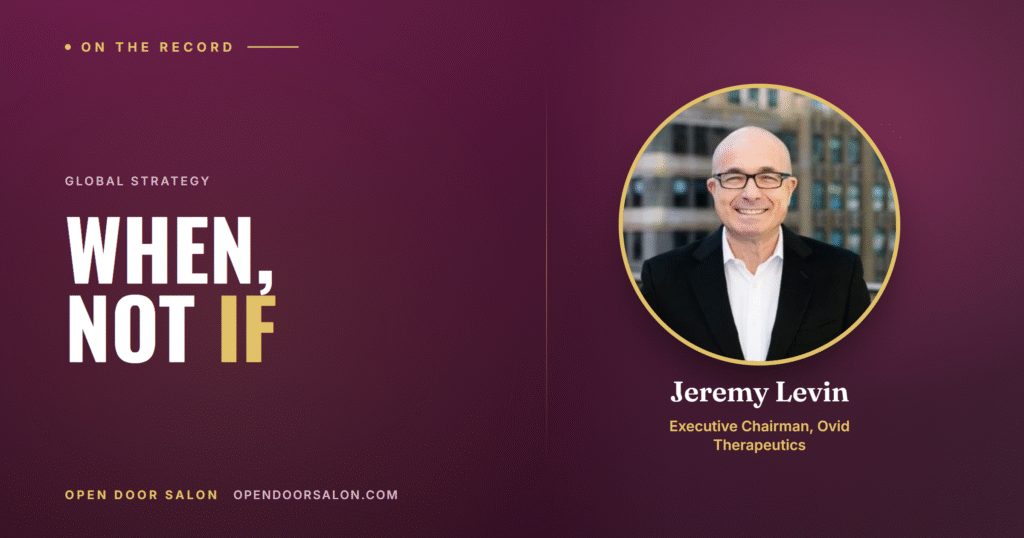
Jeremy Levin, former CEO of Teva, on China's 25-year biotech strategy, its 2035 target, and why he says the real question is when China leads, not...
Read article →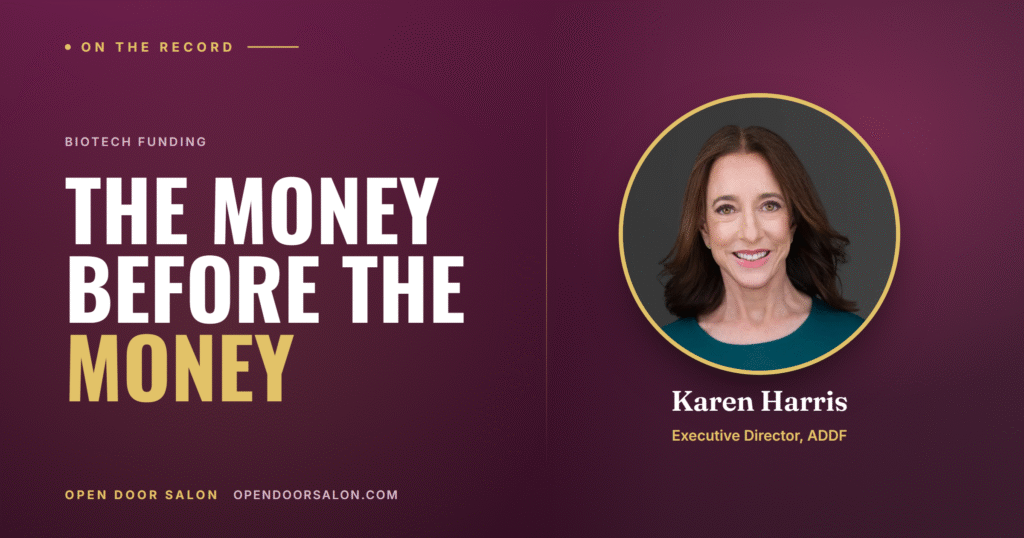
Venture philanthropy funds drugs a VC cannot yet touch, then hands them off. An ADDF executive and a seed investor on where the two models meet...
Read article →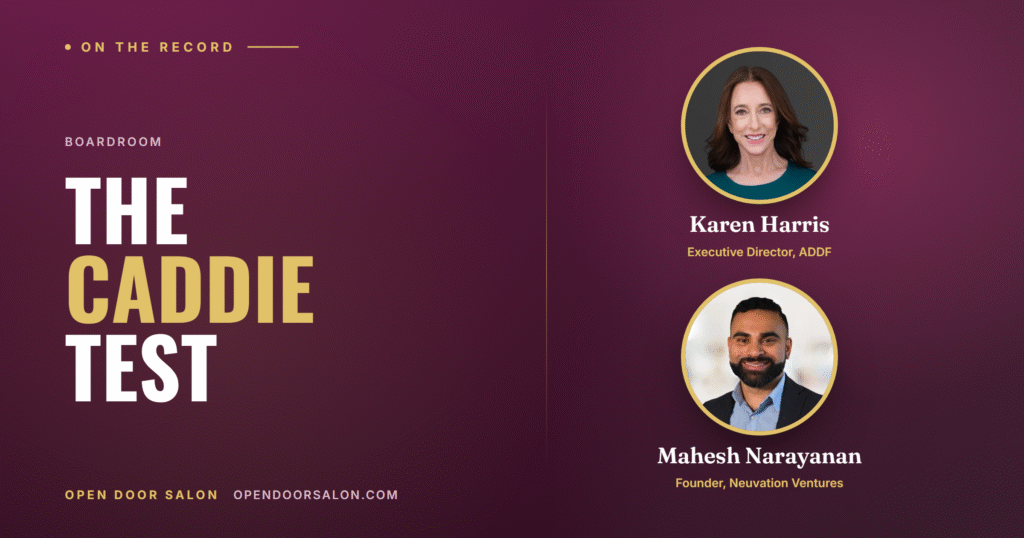
Two brain health investors on how they read a founder, the red flags that end a deal, and the diligence test one firm runs without telling...
Read article →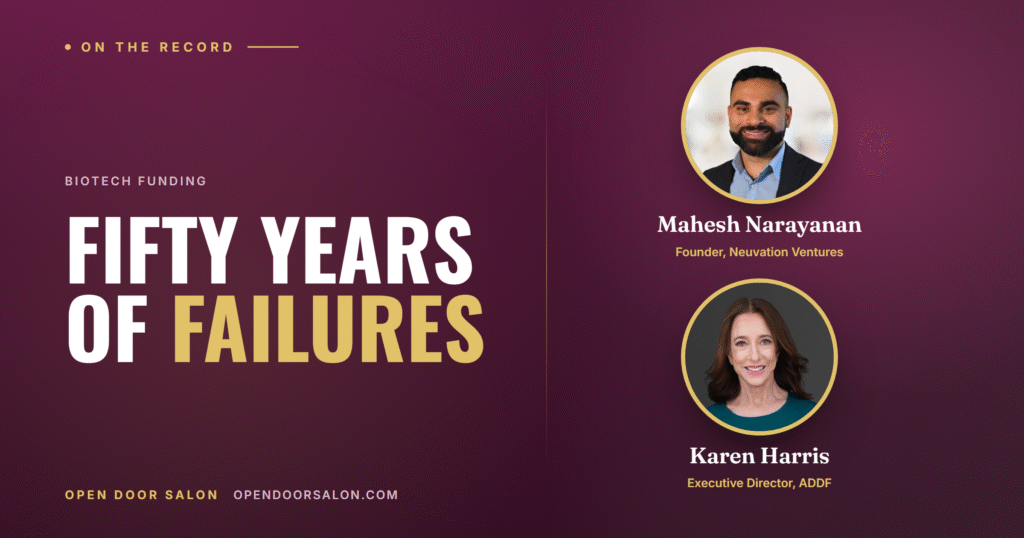
Fifty years of failures made investors cautious about neuroscience. Two brain health investors on what earned that caution and what has actually changed.
Read article →
NIH, DARPA, ARPA-H and the Department of War all fund brain health. A seed investor on why nearly every company in his portfolio has a dual-use...
Read article →
Anthem now covers blood-based Alzheimer's biomarker testing, and a broader policy lands October 1. What the shift means for patients and diagnostics developers.
Read article →
What should a biotech vendor contract require? Right to audit, breach notification, and a real off-boarding process. A pharma security VP walks the lifecycle.
Read article →
Who owns the data in a collaboration agreement? Most biotech contracts barely say. An IP trial lawyer on the four-sentence clause that gives it away.
Read article →
What do nation state hackers want from biotech? Not ransom. A pharma security VP and an IP trial lawyer on the roadmap they are really after.
Read article →
Why is anonymized data a national security risk? Because state actors want population-level data, and current rules protect the individual instead.
Read article →
Why are small biotechs a cyber target? Because they hold the newest R&D. An IP trial lawyer and a pharma security VP on the size-versus-technology mistake.
Read article →
What are the risks of unproven stem cell therapy? ISCT's Bambi Grilley on the desperation economy sending families abroad, and the financial ruin.
Read article →
How far away is in vivo gene therapy? ISCT's Jaap Jan Boelens on why in vivo gene therapy for genetic disease is likely more than a...
Read article →
Why does gene therapy reimbursement take so long? ISCT's Bambi Grilley on the million-dollar float when an insurer says yes but pays a year later.
Read article →
What is a single-case agreement in gene therapy? ISCT's Jaap Jan Boelens on why sickle cell patients walk away from a cure when the paperwork drags.
Read article →
Approval isn't availability. ISCT's Bambi Grilley on why approved gene therapies aren't available to patients: manufacturing scale and reimbursement.
Read article →
Is a Chinese medical device a security risk? Christian Espinosa argues country of origin is a signal, not a control, and points to the CMS8000 backdoor.
Read article →
Reimbursement strategy has to start at product design, not after FDA clearance. Edwin Lindsay on the mistake that cost one medtech startup six years.
Read article →
A USB port, Bluetooth, or NFC can make your product an FDA cyber device. Christian Espinosa explains the any-way-to-connect test and its misuse cases.
Read article →
Can you vibe code a medical device? Christian Espinosa on why AI-generated code fails FDA scrutiny and where it belongs in a regulated build.
Read article →
An FDA cybersecurity deficiency letter can run 37 pages and starts a 180-day clock. Christian Espinosa explains what it means and how to respond.
Read article →
Robert Califf and Vid Desai on what FDA staff turnover costs sponsors: guidance you cannot bank on, lost precedent, and re-litigated study designs.
Read article →
Vid Desai, the FDA's first CIO, on why Elsa and programs like it stall: temporary funding, operating costs, and the question most executives ask wrong.
Read article →
Vid Desai and Robert Califf on China's research funding passing the US, why phase one trials run cheaper there, and what a US strategy needs.
Read article →
Operation TrialBlazer aims at the FDA. Robert Califf, twice its Commissioner, says the real delay is research sites that are slow and expensive.
Read article →
As US and European funding frays, China is expanding its health diplomacy. Prashant Yadav on why the model is different, and what it leaves out.
Read article →
The US is still the largest funder of global health. Prashant Yadav on why wealthy and emerging economies haven't raised their share, and what fills the...
Read article →
The FDA spent 75 years becoming the world's gold-standard regulator. Prashant Yadav on why that confidence is eroding, and why it crosses party lines.
Read article →
When war hits, clinical trials stop and patients lose treatment they depend on. Anna Titkova on what happened in Ukraine and what it means for research.
Read article →
A lot of US drug ingredients trace back to one or two locations in China. A former Marine intelligence officer on the concentration risk regulators are...
Read article →
The BIOSECURE Act names five companies and binds federal contractors. A former Marine intelligence officer explains why the rules are likely to widen.
Read article →
Intellectual property rarely leaves the way people think. A former Marine intelligence officer breaks down the three ways IP is stolen in China.
Read article →
What is the COINS Act? The 2025 law screens US investment in some Chinese tech. A House bill would add biotech; a former Marine intel officer...
Read article →
Why won't insurance cover gene therapy? Two industry leaders on the employment-linked insurance problem that stalls one-time cures in the US.
Read article →
Why don't eligible patients get cell therapy? Only 20% in the US do. Hewitt and Holder on referral, capacity, and the commercial fix.
Read article →
Are there alternatives to Chinese biotech suppliers? A counterintelligence expert on why the "China is the only option" assumption is worth testing.
Read article →
Charles River's Matthew Hewitt and L.E.K.'s Jeff Holder on how to pay for one-time cell therapy when US insurance is built for monthly refills.
Read article →
How to map sub-tier supply chain risk: a former Marine Corps intelligence officer on why third-party checks miss the danger hiding in tiers 3 to 5.
Read article →
Does the BIOSECURE Act apply to private companies? A former Marine Corps intelligence officer explains the commercial-channel gap the law leaves open.
Read article →
Cell and gene therapies can cure diseases that were recently untreatable. They are also among the most expensive medicines ever made, which is why “why is...
Read article →